Category: The Lord Jesus

Hope in the Darkness 

Jeremiah 31:16-26 New International Version 

16 This is what the Lord says:

“Restrain your voice from weeping
    and your eyes from tears,
for your work will be rewarded,”
declares the Lord.
    “They will return from the land of the enemy.
17 So there is hope for your descendants,”
declares the Lord.
    “Your children will return to their own land.

18 “I have surely heard Ephraim’s moaning:
    ‘You disciplined me like an unruly calf,
    and I have been disciplined.
Restore me, and I will return,
    because you are the Lord my God.
19 After I strayed,
    I repented;
after I came to understand,
    I beat my breast.
I was ashamed and humiliated
    because I bore the disgrace of my youth.’
20 Is not Ephraim my dear son,
    the child in whom I delight?
Though I often speak against him,
    I still remember him.
Therefore my heart yearns for him;
    I have great compassion for him,”
declares the Lord.

21 “Set up road signs;
    put up guideposts.
Take note of the highway,
    the road that you take.
Return, Virgin Israel,
    return to your towns.
22 How long will you wander,
    unfaithful Daughter Israel?
The Lord will create a new thing on earth—
    the woman will return to[a] the man.”

23 This is what the Lord Almighty, the God of Israel, says: “When I bring them back from captivity,[b] the people in the land of Judah and in its towns will once again use these words: ‘The Lord bless you, you prosperous city, you sacred mountain.’ 24 People will live together in Judah and all its towns—farmers and those who move about with their flocks. 25 I will refresh the weary and satisfy the faint.”

26 At this I awoke and looked around. My sleep had been pleasant to me.

1
Out of my bondage, sorrow, and night,
Jesus, I come! Jesus, I come!
Into Thy freedom, gladness, and light,
Jesus, I come to Thee!
Out of my sickness into Thy health,
Out of my want and into Thy wealth,
Out of my sin and into Thyself,
Jesus, I come to Thee!
2
Out of my shameful failure and loss,
Jesus, I come! Jesus, I come!
Into the glorious gain of Thy cross,
Jesus, I come to Thee!
Out of earth’s sorrows into Thy balm,
Out of life’s storm and into Thy calm,
Out of distress to jubilant psalm,
Jesus, I come to Thee!
3
Out of unrest and arrogant pride,
Jesus, I come! Jesus, I come!
Into Thy blessed will to abide,
Jesus, I come to Thee!
Out of myself to dwell in Thy love,
Out of despair into raptures above,
Upward for aye on wings like a dove,
Jesus, I come to Thee!
4
Out of the fear and dread of the tomb,
Jesus, I come! Jesus, I come!
Into the joy and pleasure, Thine own,
Jesus, I come to Thee!
Out of the depths of ruin untold,
Into the flock Thy love doth enfold,
Ever Thy glorious face to behold,
Jesus, I come to Thee!

Re blog – Edward Elgar

This morning I bring to you a blog with a difference.

The story of the Enigma Variations is an amusing one. Tired from a day of giving violin lessons, Elgar returned home to improvise a theme on the piano. His wife liked it and he comically tried to imagine how some of their musical friends may play the piece instead, hence the proper title of Variations on an Original Theme (Enigma) Op 36.

The collected pieces were known as Engima for two reasons. The first puzzle inside it is to tie the likely personalities to the variations, a game which Elgar himself gave away when he wrote some notes for (of all things) a pianola roll version of his music. The second puzzle contained in the music is far more subtle, and concerns a musical link that ties all the variations together. Elgar himself said that the theme is never actually heard and that the element that links the pieces is of the ‘slightest texture’ and therefore that ‘the chief character is never on stage’. Elgar never gave the game away about the identity of the piece and took the solution to his grave in St Wulstan’s Catholic Church in Little Malvern in 1934. He actually thought any suitably educated person would solve it on hearing the first performance. No one did, and no one has.

Others have wished the theme to be more obvious than all of this and have suggested that the musical link is anything from God Save the Queen, through Auld Lang Syne and (more promisingly) Bach’s The Art of the Fugue. Others have taken a more tortuous look at things and have suggested that the theme is in fact a reflection of Elgar’s own Christian faith, particularly in the context of some wordplay concerning biblical quotations. No one is ever going to know for certain and that, to me, is appealing.

The ninth variation was given the name ‘Nimrod’ after the biblical reference to Noah’s great-grandson of the same name who was a gifted hunter. It pays tribute to Elgar’s great friend Augustus J Jaeger (whose surname in German translates to ‘Hunter’) who managed to keep Sir Edward’s hopes up while he was still trying to make his mark on the world of music. Elgar attempted to capture Jaeger’s nobility in the slowness of the piece and (allegedly) tried to make a musical reproduction of a a conversation they once had late at night concerning the slow movements of Beethoven’s slow pieces. Indeed, the first few bars closely resemble the very start of the second movement of Beethoven’s Eighth Piano Sonata (also called Pathetique). Having said that, the piece also quotes from Mendelssohn at one point as well.

Perhaps it’s due to the fact that the piece is always played at the Cenotaph on Rememberance Sundays that this piece of music captures – maybe more than even his celebrated Pomp and Circumstance – the essence of Britishness in a few pithy musical phrases. Jaeger’s personal nobility aside, its slowness and languid fluidity seems to speak of stoical endurance, making do, fighting to the last bullet and of a small ‘c’ variery of conservatism that the sceptred isle will probably never shake off as long as we exist.

As for the music, I’ve loved this one variation above all the others since I was a child. Like everyone else I probably know it best from a muted brass band playing it on some Sunday every November, but the orchestral version offers so much more. The music appears to climb endlessly, like some kind of Escher staircase (or Shepard tone), playing with cadence, crescendo, tension and release in the most masterful of ways.

Jonathan Scott playing Elgar’s Nimrod on the largest organ in the world

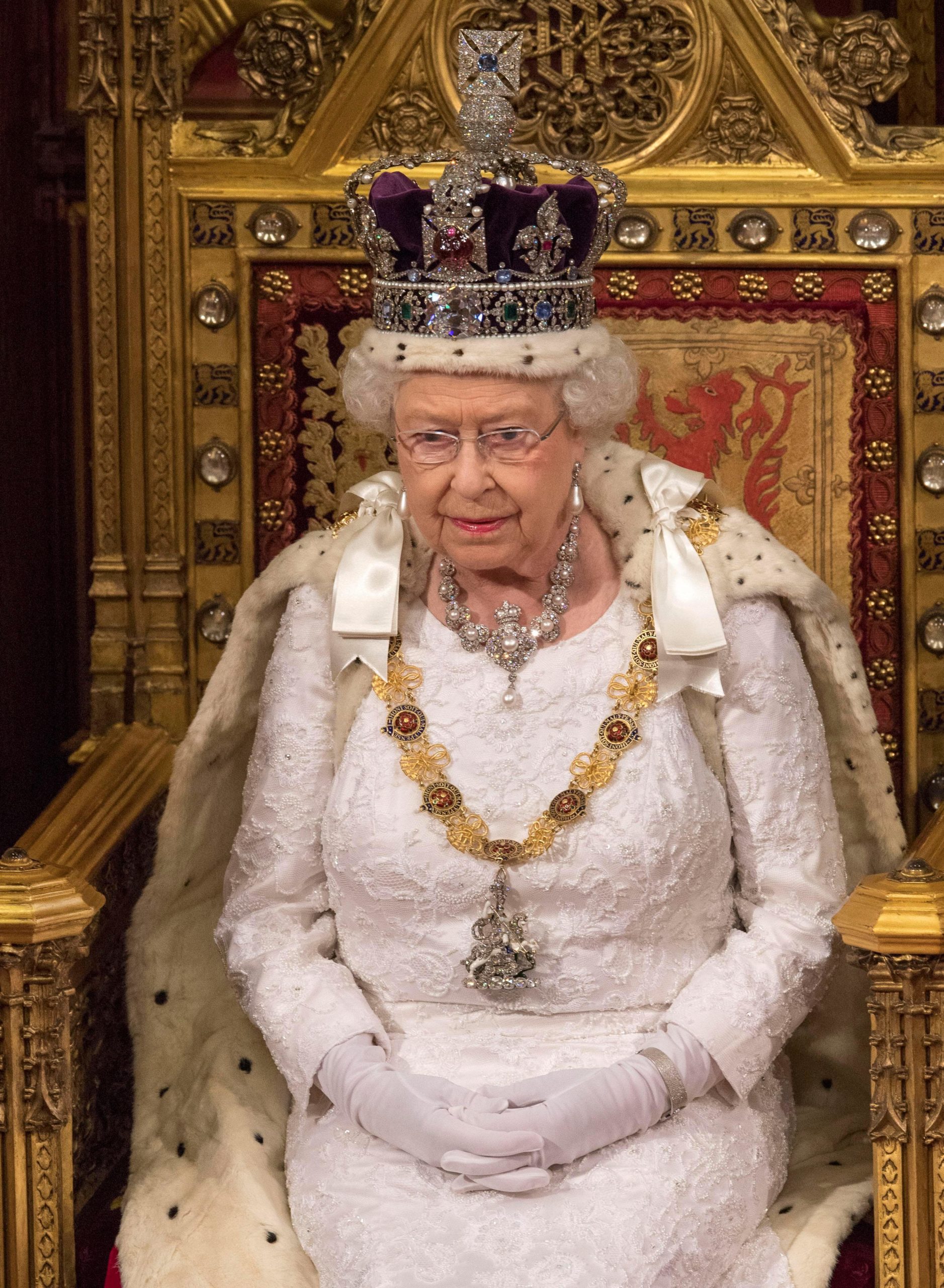
Queen Elizabeth dies at 96

Kenneth's avatarBrain disorders & other General topics of the day

BALMORAL, Scotland, Sept 8 – Queen Elizabeth, Britain’s longest-reigning monarch, the nation’s figurehead and a towering presence on the world stage for seven decades, died peacefully at her home in Scotland on Thursday aged 96.

“The death of my beloved Mother, Her Majesty The Queen, is a moment of the greatest sadness for me and all members of my family,” the new king, her eldest son Charles, said.

“I know her loss will be deeply felt throughout the country, the Realms and the Commonwealth, and by countless people around the world,” the 73-year-old said in a statement.

News that the queen’s health was deteriorating emerged shortly after midday on Thursday when her doctors said she was under medical supervision, prompting her family to rush to Balmoral Castle in Scotland to be by her side.

Thousands gathered outside Buckingham Palace, in central London, and there was a stunned silence when the…

View original post 33 more words