I first heard this song sang a few years ago and i liked it the moment I heard it. It’s a song of Love, it’s a song about the broken hearted afraid to take the chance, soul’s afraid of dying. Also it reminds us that what lies beneath the snow in winter, in spring there blooms a flower called The Rose.
58 “Shout it aloud, do not hold back. Raise your voice like a trumpet. Declare to my people their rebellion and to the descendants of Jacob their sins. 2 For day after day they seek me out; they seem eager to know my ways, as if they were a nation that does what is right and has not forsaken the commands of its God. They ask me for just decisions and seem eager for God to come near them. 3 ‘Why have we fasted,’ they say, ‘and you have not seen it? Why have we humbled ourselves, and you have not noticed?’
“Yet on the day of your fasting, you do as you please and exploit all your workers. 4 Your fasting ends in quarreling and strife, and in striking each other with wicked fists. You cannot fast as you do today and expect your voice to be heard on high. 5 Is this the kind of fast I have chosen, only a day for people to humble themselves? Is it only for bowing one’s head like a reed and for lying in sackcloth and ashes? Is that what you call a fast, a day acceptable to the Lord?
6 “Is not this the kind of fasting I have chosen: to loose the chains of injustice and untie the cords of the yoke, to set the oppressed free and break every yoke? 7 Is it not to share your food with the hungry and to provide the poor wanderer with shelter— when you see the naked, to clothe them, and not to turn away from your own flesh and blood? 8 Then your light will break forth like the dawn, and your healing will quickly appear; then your righteousness[a] will go before you, and the glory of the Lord will be your rear guard. 9 Then you will call, and the Lord will answer; you will cry for help, and he will say: Here am I.
“If you do away with the yoke of oppression, with the pointing finger and malicious talk, 10 and if you spend yourselves in behalf of the hungry and satisfy the needs of the oppressed, then your light will rise in the darkness, and your night will become like the noonday. 11 The Lord will guide you always; he will satisfy your needs in a sun-scorched land and will strengthen your frame. You will be like a well-watered garden, like a spring whose waters never fail. 12 Your people will rebuild the ancient ruins and will raise up the age-old foundations; you will be called Repairer of Broken Walls, Restorer of Streets with Dwellings.
13 “If you keep your feet from breaking the Sabbath and from doing as you please on my holy day, if you call the Sabbath a delight and the Lord’s holy day honourable, and if you honour it by not going your own way and not doing as you please or speaking idle words, 14 then you will find your joy in the Lord, and I will cause you to ride in triumph on the heights of the land and to feast on the inheritance of your father Jacob.” For the mouth of the Lord has spoken.
Cocoa Tea, whose real name was Colvin George Scott, was a celebrated Jamaican reggae singer and songwriter. Born on September 3, 1959, in Clarendon Parish, Jamaica, he became one of the most popular reggae artists from the 1980s onwards. Known for his smooth vocals and socially conscious lyrics, he created timeless hits like “Rocking Dolly,” “I Lost My Sonia,” and “Rikers Island.”
Sadly, Cocoa Tea passed away on March 11, 2025, at the age of 65 in Fort Lauderdale, Florida. He had been battling lymphoma since 2019 and faced complications from pneumonia in the last six months of his life. Despite his health struggles, he remained positive and hopeful until the end
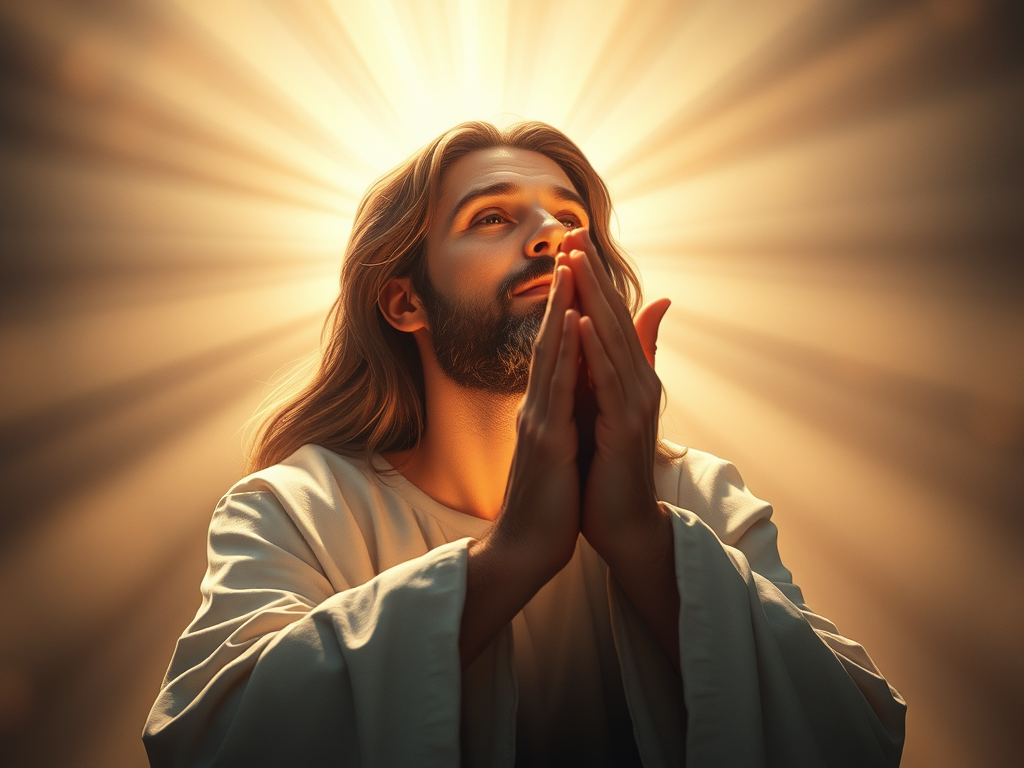
Faith can be an incredible source of strength during tough times. Here are a few ways it can help:
Providing Hope: Faith often nurtures a sense of hope, reminding individuals that difficult circumstances are temporary and that better days lie ahead.
Offering Perspective: Belief in something greater can put challenges into a broader context, offering reassurance that there’s a purpose or plan even in hardship.
Building Community: Faith often connects individuals to supportive communities, like congregations or groups, where they can find encouragement and understanding.
Instilling Resilience: Trust in God, or a higher power, can inspire perseverance and courage, enabling people to face adversity with greater strength.
Encouraging Reflection: Through prayer, meditation, or worship, faith encourages self-reflection and peace of mind, which can be grounding in chaotic times.
17 On his arrival, Jesus found that Lazarus had already been in the tomb for four days. 18 Now Bethany was less than two miles[b] from Jerusalem, 19 and many Jews had come to Martha and Mary to comfort them in the loss of their brother. 20 When Martha heard that Jesus was coming, she went out to meet him, but Mary stayed at home.
21 ‘Lord,’ Martha said to Jesus, ‘if you had been here, my brother would not have died. 22 But I know that even now God will give you whatever you ask.’
23 Jesus said to her, ‘Your brother will rise again.’
24 Martha answered, ‘I know he will rise again in the resurrection at the last day.’
25 Jesus said to her, ‘I am the resurrection and the life. The one who believes in me will live, even though they die; 26 and whoever lives by believing in me will never die. Do you believe this?’
27 ‘Yes, Lord,’ she replied, ‘I believe that you are the Messiah, the Son of God, who is to come into the world.’
28 After she had said this, she went back and called her sister Mary aside. ‘The Teacher is here,’ she said, ‘and is asking for you.’ 29 When Mary heard this, she got up quickly and went to him. 30 Now Jesus had not yet entered the village, but was still at the place where Martha had met him. 31 When the Jews who had been with Mary in the house, comforting her, noticed how quickly she got up and went out, they followed her, supposing she was going to the tomb to mourn there.
32 When Mary reached the place where Jesus was and saw him, she fell at his feet and said, ‘Lord, if you had been here, my brother would not have died.’
33 When Jesus saw her weeping, and the Jews who had come along with her also weeping, he was deeply moved in spirit and troubled. 34 ‘Where have you laid him?’ he asked.
‘Come and see, Lord,’ they replied.
35 Jesus wept.
36 Then the Jews said, ‘See how he loved him!’
37 But some of them said, ‘Could not he who opened the eyes of the blind man have kept this man from dying?’
Verse 1 O Christ, You wept when grief was raw, and felt for those who mourned their friend; Come close to where we would not be and hold us, numbed by this life’s end.
Verse 2 The well-loved voice is silent now and we have much we meant to say; collect our lost and wandering words and keep them, till the endless day.
Verse 3 We try to hold what is not here and fear for what we do not know; Oh, take our hands in Yours, good Lord, and free us, free now to let our friend go.
Verse 4 In all our loneliness and doubt through what we cannot realise, address us from Your empty tomb and speak of the life, that never dies
When I consider your heavens, the work of your fingers, the moon and stars, which you have set in place, what is mankind that you are mindful of them, human beings that you care for them? You have made them a little lower than the angels and crowned them with glory and honour. You made them rulers over the works of your hands; you put everything under their feet.
They shall come from the east,
they shall come from the west,
And sit down in the Kingdom of God;
Both the rich and the poor,
the despised, the distressed,
They’ll sit down in the Kingdom of God.
And none will ask what they have been
Provided that their robes are clean;
They shall come from the east,
they shall come from the west,
And sit down in the Kingdom of God.
2.
They shall come from the east,
they shall come from the west,
And sit down in the Kingdom of God;
To be met by their Father and welcomed and blessed,
And sit down in the Kingdom of God.
The black, the white, the dark, the fair,
Your colour will not matter there;
They shall come from the east,
they shall come from the west,
And sit down in the Kingdom of God.
3.
They shall come from the east,
they shall come from the west,
And sit down in the Kingdom of God;
Out of great tribulation to triumph and rest
They’ll sit down in the Kingdom of God.
From every tribe and every race,
All men as brothers shall embrace;
They shall come from the east,
they shall come from the west.
And sit down in the Kingdom of God.
I suppose you could say this is part 2 of yesterday’s blog “God’s Creation” .
The Bible and this video gives us this wonderful image of heaven. A place where there are no wars, no evil. Everything is peaceful. I think the words of the above song are very fitting.
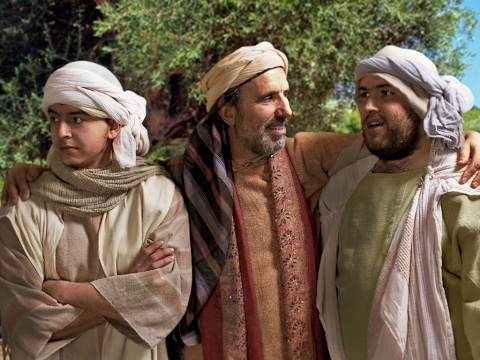
28“What do you think? There was a man who had two sons. He went to the first and said, ‘Son, go and work today in the vineyard.’
29“ ‘I will not,’ he answered, but later he changed his mind and went.
30“Then the father went to the other son and said the same thing. He answered, ‘I will, sir,’ but he did not go.
31“Which of the two did what his father wanted?”“The first,” they answered. Jesus said to them, “Truly I tell you, the tax collectors and the prostitutes are entering the kingdom of God ahead of you.
32For John came to you to show you the way of righteousness, and you did not believe him, but the tax collectors and the prostitutes did. And even after you saw this, you did not repent and believe him.
I can think of six people who had or still have an impact on my Faith the immediate ones obviously being my mother and late father and of course both sets of grandparents.
Apart from my Mother and Father, though I loved my Grandparents very much Faith wise there are two that stuck out and that was my father’s father and my mother’s mother who was a very wise woman.
I think it would be safe to say I got more advise than i did my father’s father as he died before 80 where as my mother’s mother lived passed 100 years old.
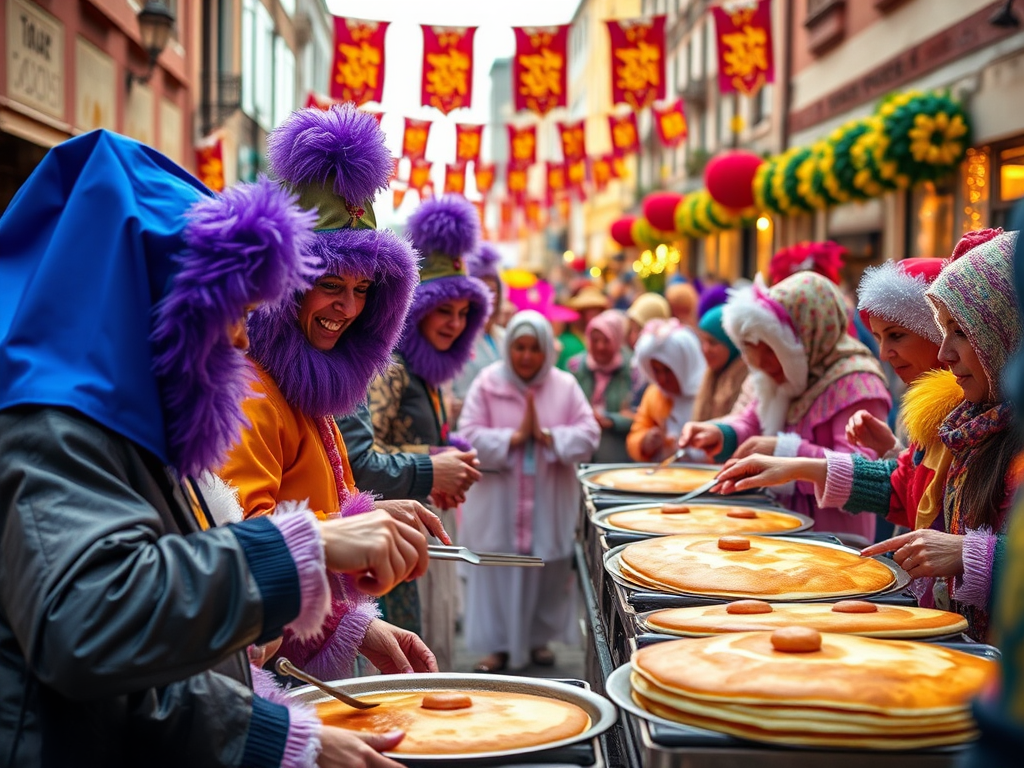
Shrove Tuesday, also known as Pancake Day, is a special day celebrated in many Christian countries. It is observed the day before Ash Wednesday, which marks the beginning of Lent. Shrove Tuesday is traditionally a day of indulgence, where people enjoy rich foods like pancakes before the fasting period of Lent begins. The name “Shrove” comes from the word “shrive,” which means to confess sins and seek absolution.
In Scotland, as well as in other countries, people often celebrate by making and eating pancakes. It’s a day filled with fun, food, and sometimes even pancake races! Have you got any special plans for Shrove Tuesday?






 Christian Devotions, Health and General issues of the day