Category: The Lord Jesus

Nova’s Wise Words Wednesdays
sleep apnea

all day long
i think about
going back to bed,
i am tired
all the time,
i have no energy
for anything past
mid afternoon,
why am i still up?

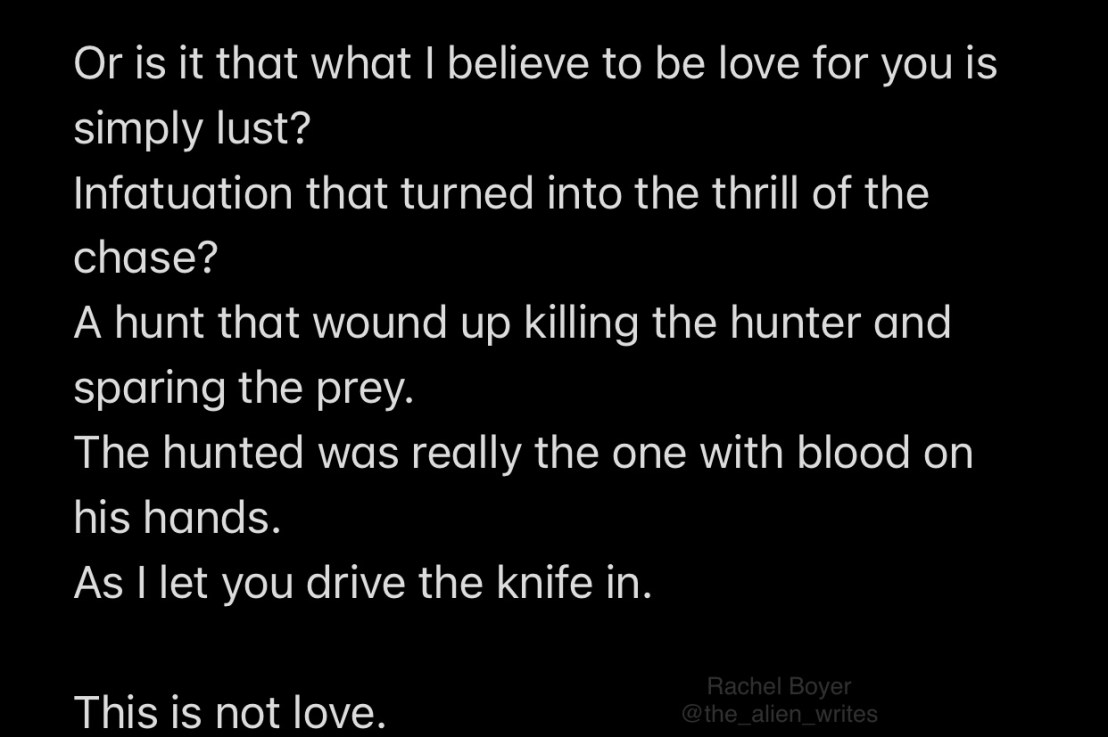
– Rosie Tor Raekül, 202103162111 C.S.T.
BlogchatterA2Z

D for Dreams, Desire, Destiny and Dynamic way of expressing your thoughts.
#BlogchatterA2Z Free Verse form of poetry became current in English poetry in 20 th Century.
Free Verse Poetry
Called the verse libre of French during 19 th century is the modern form of poetry
Free verses are Poet’s friendly version of Poems. As you have all liberty to express your feelings without any restrictions of lines, rhythms or pattern.
Most of the beginners start their poetic journey from free verses. Rigidness in the structure of poetry may sometimes be a hindrance for some poets but adapting free verses form of poetry can be a boon.

Free verse is an open form that has no predetermined structure and prescribed length of poetry. The Liberty of writing with no frame allows you the flexibility so desired.

Layers of happiness
Her meek voice had a tinge of sourness,
Her weak body…
View original post 127 more words
Happy Easter
Christ has a risen from the grave.
Up from the grave he arose! As the song puts it.
#BlogchatterA2Z
Artist, a maestro of life.
Hola people,
Nothing soothes the soul like portraying the feelings and thoughts to connect with you all. Recuperating from the pandemic crises and suffusing the skipped breaths are not possible but we can definitely add joy and happiness to the distorted lives of many.
And #blogchatterA2Z has provided this wonderful opportunity to enumerate the Maestroes of life.

I would like to dedicate my blog to all the artists under the firmament whose altruistic vision of life impacts the world.
To understand an artist you need a child's heart and an irrational mind.
Have you noticed yourself when you are in the close proximity of artists, you feel the positive vibes of life? No matter the one who is in your fervour of taste or not, Yet he carries an aura of an enthusiastic life.
Caste, creed and…
View original post 444 more words
Playing Church
I would like to dedecate this post especially the song to a fellow blogger, Caralyn beautybeyondbones.com
Come, let’s worship him and bow down. Let’s kneel before the LORD who made us, because he is our God and we are the people he takes care of and the sheep that he tends. Psalm 95: 6-7, NCV
After seeing a poster on facebook about Playing Church I was prompted to look up the internet and find out what the bible said about it only to come up with this fascinating story.
“When I was a little girl, I loved to play church with my friends. We would line chairs up in rows and pull out a cardboard box we used for the pulpit. Then the great debate began over who would preach and who would sing. The more aggressive kids wanted the up-front jobs while the quiet ones were happy to just sit and watch the “show”. Sometimes one of the kids would pretend to be the Holy Ghost walking around the chairs saying “Boo!” If the leaders did a good job, we would play church for hours. However, if they were not entertaining enough, the kids in the chairs would soon get bored and go in search of more exciting recreation in the front yard. All in all, playing the church game was great fun and a delightful way to pass an afternoon.”
Whilst there are many people who Play this game let us remind ourselves of the woman who was dramatically changed as the result of experiencing true worship. Her amazing story is found in Luke 7:36-50:
“Now one of the Pharisees invited Jesus to have dinner with him, so he went to the Pharisee’s house and reclined at the table. When a woman who had lived a sinful life in that town learned that Jesus was eating at the Pharisee’s house, she brought an alabaster jar of perfume, and as she stood behind him at his feet weeping, she began to wet his feet with her tears. Then she wiped them with her hair, kissed them and poured perfume on them. When the Pharisee who had invited him saw this, he said to himself, “If this man were a prophet, he would know who is touching him and what kind of woman she is–that she is a sinner.” Jesus answered him, “Simon, I have something to tell you.” “Tell me, teacher,” he said. “Two men owed money to a certain moneylender. One owed him five hundred denarii, and the other fifty. Neither of them had the money to pay him back, so he canceled the debts of both. Now which of them will love him more?” Simon replied, “I suppose the one who had the bigger debt canceled.” “You have judged correctly,” Jesus said. Then he turned toward the woman and said to Simon, “Do you see this woman? I came into your house. You did not give me any water for my feet, but she wet my feet with her tears and wiped them with her hair. You did not give me a kiss, but this woman, from the time I entered, has not stopped kissing my feet. You did not put oil on my head, but she has poured perfume on my feet. Therefore, I tell you, her many sins have been forgiven–for she loved much. But he who has been forgiven little loves little.” Then Jesus said to her, “Your sins are forgiven.” The other guests began to say among themselves, “Who is this who even forgives sins?” Jesus said to the woman, “Your faith has saved you; go in peace.” (NIV)
Obedience
Jesus replied, “Anyone who loves me will obey my teaching. My Father will love them, and we will come to them and make our home with them.”
Yet again I was listening to a song of the same title on you tube last night which prompted me to write this blog.
It’s a song that invites us to listen and to respond to Jesus’s calling as he not only knocks at the door of our hearts and in doing so we may feel his presence, Help us to realise what you want us to be.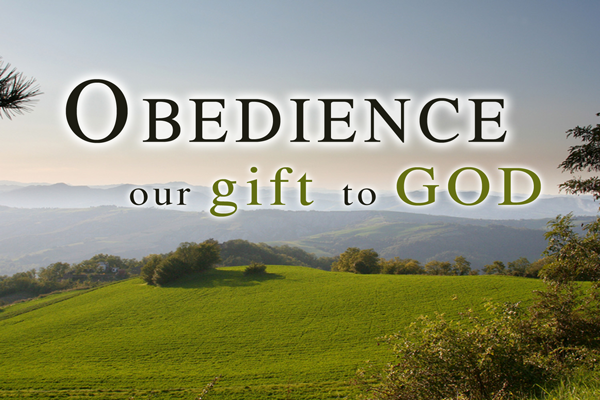
Here is the words for you to follow:
Lord I hear you knocking Hear your voice appealing Open the door of your heart Let me enter in and Take a centre of your life Controlling every part Come follow me on the way of the cross This is the moment you must start
Chorus: Lord I respond to your claims on my life With obedience to that you will ask
Lord, knowing you in the way of the cross This will be my task Lord I know you’re prompting Know your spirit surging Be my desire for today Make my will your choice and Meet no other voice That calls to walk another way Come follow me on the way of the cross This is the moment to obey
Lord, knowing you in the way of the cross This will be my task Lord I know your presence Be your call to service Be what you want me to be Serve and to your brothers Give your life for others As I do at Calvary Come follow me on the way of the cross This is the moment to be free
Chorus: Lord I respond to your claims on my life With obedience to that you will ask Lord, knowing you in the way of the cross This will be my task Your cross, my task
Biofeedback for Epilepsy, Pain, Parkinson’s and More…

This breakthrough news comesfrom Bottom Line Health…
“People with Epilepsy, Parkinson’s Disease, Attention Deficit Disorder (ADD) or addictions may be able to learn how to ‘think themselves better’ by altering their brain waves to improve their symptoms.
A new form of treatment called biofeedback (also known as neurofeedback) has a unique focus on controlling brain wave activity rather than skin temperature, heart rate, breathing and muscle tension.
Biofeedbacknow is used with a wide scope of health issues, including not only those listed above but also autism, chronic pain, post traumatic stress disorder, depression and anxiety…
High-Tech Mind-Body Medicine
According to research, many neurological problems involve disordered brain waves. Biofeedback helps patients learn to set them right.
The brain produces brain waves at varying electrical frequencies measured in hertz (cycles per second).
Delta — 1 to 3 Hz and the slowest of all, is mostly seen during sleep.
Theta —…
View original post 543 more words