What a beautiful name
The song What a Beautiful Name by Hillsong Worship was written by Brooke Ligertwood and Ben Fielding. The inspiration behind the song comes from Colossians 1, which speaks about the supremacy and glory of Christ. The writers wanted to capture the beauty, wonder, and power of Jesus’ name in the lyrics and melody.
The song became immensely popular in Christian worship settings and even won a Grammy Award for Best Contemporary Christian Music Performance/Song. Ligertwood described the songwriting process as happening in a small cubicle in Sydney over a few days
Fear
Isaiah 41 New International Version
The Helper of Israel
41 “Be silent before me, you islands!
Let the nations renew their strength!
Let them come forward and speak;
let us meet together at the place of judgement.
2 “Who has stirred up one from the east,
calling him in righteousness to his service[a]?
He hands nations over to him
and subdues kings before him.
He turns them to dust with his sword,
to windblown chaff with his bow.
3 He pursues them and moves on unscathed,
by a path his feet have not travelled before.
4 Who has done this and carried it through,
calling forth the generations from the beginning?
I, the Lord—with the first of them
and with the last—I am he.”
5 The islands have seen it and fear;
the ends of the earth tremble.
They approach and come forward;
6 they help each other
and say to their companions, “Be strong!”
7 The metalworker encourages the goldsmith,
and the one who smooths with the hammer
spurs on the one who strikes the anvil.
One says of the welding, “It is good.”
The other nails down the idol so it will not topple.
8 “But you, Israel, my servant,
Jacob, whom I have chosen,
you descendants of Abraham my friend,
9 I took you from the ends of the earth,
from its farthest corners I called you.
I said, ‘You are my servant’;
I have chosen you and have not rejected you.
10 So do not fear, for I am with you;
do not be dismayed, for I am your God.
I will strengthen you and help you;
I will uphold you with my righteous right hand.
11 “All who rage against you
will surely be ashamed and disgraced;
those who oppose you
will be as nothing and perish.
12 Though you search for your enemies,
you will not find them.
Those who wage war against you
will be as nothing at all.
13 For I am the Lord your God
who takes hold of your right hand
and says to you, Do not fear;
I will help you.
14 Do not be afraid, you worm Jacob,
little Israel, do not fear,
for I myself will help you,” declares the Lord,
your Redeemer, the Holy One of Israel.
15 “See, I will make you into a threshing sledge,
new and sharp, with many teeth.
You will thresh the mountains and crush them,
and reduce the hills to chaff.
16 You will winnow them, the wind will pick them up,
and a gale will blow them away.
But you will rejoice in the Lord
and glory in the Holy One of Israel.
Camping
Calm Waters
Luke 23 New International Version
The Crucifixion of Jesus
26 As the soldiers led him away, they seized Simon from Cyrene, who was on his way in from the country, and put the cross on him and made him carry it behind Jesus. 27 A large number of people followed him, including women who mourned and wailed for him. 28 Jesus turned and said to them, “Daughters of Jerusalem, do not weep for me; weep for yourselves and for your children. 29 For the time will come when you will say, ‘Blessed are the childless women, the wombs that never bore and the breasts that never nursed!’ 30 Then
“‘they will say to the mountains, “Fall on us!”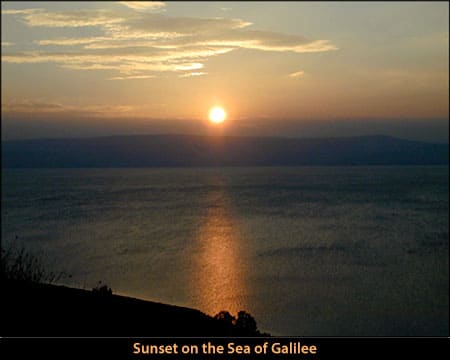
and to the hills, “Cover us!”’[b]
31 For if people do these things when the tree is green, what will happen when it is dry?”
32 Two other men, both criminals, were also led out with him to be executed. 33 When they came to the place called the Skull, they crucified him there, along with the criminals—one on his right, the other on his left. 34 Jesus said, “Father, forgive them, for they do not know what they are doing.”[c] And they divided up his clothes by casting lots.
35 The people stood watching, and the rulers even sneered at him. They said, “He saved others; let him save himself if he is God’s Messiah, the Chosen One.”
36 The soldiers also came up and mocked him. They offered him wine vinegar 37 and said, “If you are the king of the Jews, save yourself.”
38 There was a written notice above him, which read: this is the king of the jews.
39 One of the criminals who hung there hurled insults at him: “Aren’t you the Messiah? Save yourself and us!”
40 But the other criminal rebuked him. “Don’t you fear God,” he said, “since you are under the same sentence? 41 We are punished justly, for we are getting what our deeds deserve. But this man has done nothing wrong.”
42 Then he said, “Jesus, remember me when you come into your kingdom.[d]”
43 Jesus answered him, “Truly I tell you, today you will be with me in paradise.”
Having just returned from a week holiday in the Lake District in England (Windermere) and seeing the calm waters of Lake Windermere. It reminded me of the fact that our Lord and Saviour walked on the waters of the sea of Galilee.
The above reading ties in with the video
In The Garden
John 20 English Standard Version
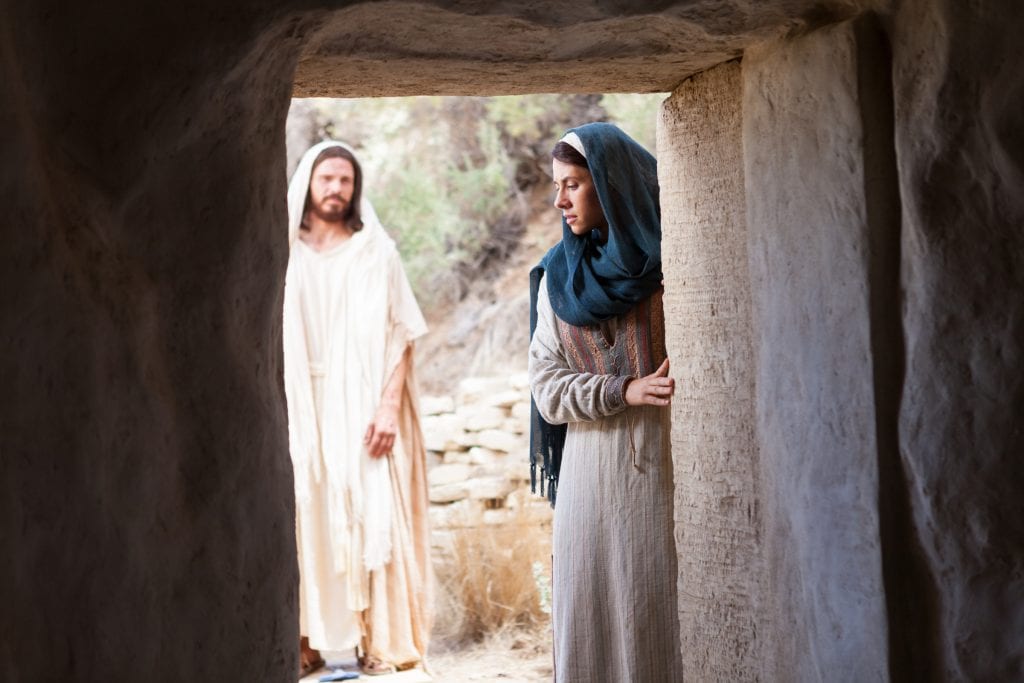
Jesus Appears to Mary Magdalene
11 But Mary stood weeping outside the tomb, and as she wept she stooped to look into the tomb. 12 And she saw two angels in white, sitting where the body of Jesus had lain, one at the head and one at the feet. 13 They said to her, “Woman, why are you weeping?” She said to them, “They have taken away my Lord, and I do not know where they have laid him.” 14 Having said this, she turned around and saw Jesus standing, but she did not know that it was Jesus. 15 Jesus said to her, “Woman, why are you weeping? Whom are you seeking?” Supposing him to be the gardener, she said to him, “Sir, if you have carried him away, tell me where you have laid him, and I will take him away.” 16 Jesus said to her, “Mary.” She turned and said to him in Aramaic,[b] “Rabboni!” (which means Teacher). 17 Jesus said to her, “Do not cling to me, for I have not yet ascended to the Father; but go to my brothers and say to them, ‘I am ascending to my Father and your Father, to my God and your God.’” 18 Mary Magdalene went and announced to the disciples, “I have seen the Lord”—and that he had said these things to her.
The Story Behind In The Garden
Here is the account of how this beautiful hymn was written from the hymn writer, C. Austin Miles, himself, “One day in April 1912, I was seated in the dark room where I kept my photographic equipment, and also my organ. I drew my Bible toward me and it opened at my favorite book and chapter, John chapter twenty. I don’t know if this was by chance or by the work of the Holy Spirit. I will let you the reader decide. That story of Jesus and Mary in John 20 had lost none of its power and charm.
It was though I was in a trance, as I read it that day, I seemed to be part of the scene. I became a silent witness to that dramatic moment in Mary’s life when she knelt before her Lord and cried, “Rabboni”. I rested my hands on the open Bible, as I stared at the light blue wall. As the light faded, I seemed to be standing at the entrance of a garden, looking down a gently winding path, shaded by olive branches. A woman in white, with head, bowed, hand clasping her throat, as if to choke back her sobs, walked slowly into the shadows. It was Mary. As she came unto the tomb, upon which she placed her hand, she bent over to look in and ran away.
John, in a flowing robe, appeared looking at the tomb. Then came Peter, who entered the tomb, followed slowly by John. As they departed, Mary reappeared leaning her head upon her arm at the tomb, she wept. Turning herself, she saw Jesus standing there, so did I. I knew it was He. She knelt before Him, with arms outstretched, and looking into His face cried, “Rabboni”.
I awakened in sunlight, gripping my Bible with my muscles tense, and nerves vibrating, under the inspiration of the Holy Spirit. I wrote as quickly as the words could be formed the lyrics exactly as it is sung today. That same evening, I wrote the tune. It is sung today as it was written in 1912.”
Gethsemane

Gethsemane, Gethsemane,
Where Jesus knelt and prayed;
The soldiers came to capture Him,
By friends He was betrayed.
Where Jesus bled and died;
For me He bore the taunts and jeers,
For me was crucified.
Dark sepulchre, dark sepulchre,
Where Jesus’ body lay;
But Satan’s powers He overcame
O glorious Easter Day.
O victory, O victory,
Christ died to make men whole.
He gave me life by giving His;
The ransom for my soul.
Easter Monday

The Bible makes no mention of Easter or Easter Monday. There is no requirement as a church to celebrate it, but there is prohibition either.
Easter Monday as we know is the day after Christ’s resurrection where he said for 40 days appearing to believers and giving ministry. He also healed the sick and proved to doubter’s he was the son of God.
Easter Monday, also called Bright Monday or Renewal Monday, is the beginning of Bright Week. It is common to douse people in water, representing the new life of baptism, and play games with Easter eggs. Such as Easter egg hunt or rolling your a hard boiled egg down a hill (which represents the stone being rolled away).
He is Risen

The hymn “Up from the Grave He Arose,” also known as “Christ Arose,” was written by Robert Lowry in 1874. Lowry, a Baptist preacher and hymn writer, was inspired by the resurrection story in the Gospel of Luke. While reflecting on the significance of Jesus’ triumph over death, he composed both the lyrics and the melody in a spontaneous moment at his home. The hymn captures the victorious and celebratory spirit of Easter, emphasizing Christ’s victory over the grave
Jesus paid the Price
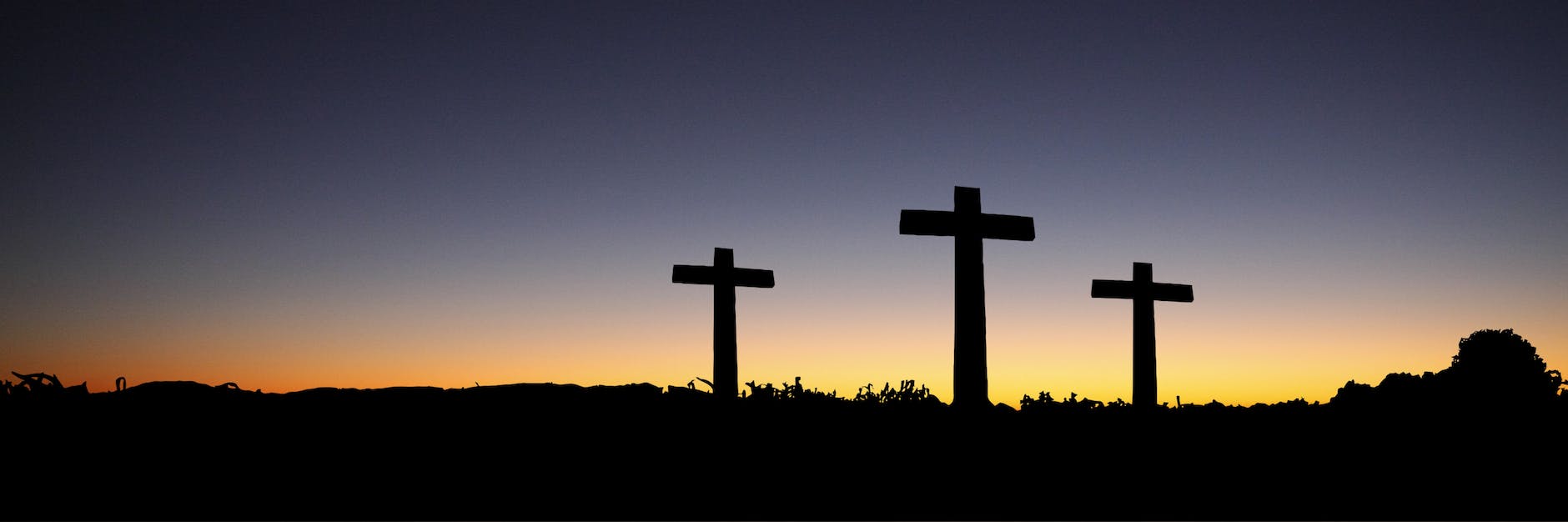
Jesus not only paid the price for all our wrongdoings on the Cross
He then went to conquer death.
For those whose faith is in Christ,
Death is not just a doorway from the land of the dying to the land of the living.
On a hill far away stood an old rugged cross
The emblem of suffering and shame
And I love that old cross where the Dearest and Best
For a world of lost sinners was slain
So I’ll cherish the old rugged cross
Till my trophies at last I lay down
I will cling to the old rugged cross
And exchange it someday for a crown
. Oh, that old rugged cross, so despised by the world
Has a wondrous attraction for me
For the dear Lamb of God left His glory above
To bear it to dark Calvary
. In that old rugged cross, stained with blood so divine
A wondrous beauty I see
For ’twas on that old cross Jesus suffered and died
To pardon and sanctify me
. To the old rugged cross I will ever be true
Its shame and reproach gladly bear
Then He’ll call me someday to my home far away
Where His glory forever I’ll share
 Christian Devotions, Health and General issues of the day