18 At that time the disciples came to Jesus and asked, “Who, then, is the greatest in the kingdom of heaven?”
2 He called a little child to him, and placed the child among them.3 And he said: “Truly I tell you, unless you change and become like little children, you will never enter the kingdom of heaven.4 Therefore, whoever takes the lowly position of this child is the greatest in the kingdom of heaven.5 And whoever welcomes one such child in my name welcomes me.
Jesus, Friend of little children,
be a friend to me;
take my hand, and ever keep me
close to thee.
Teach me how to grow in goodness,
daily as I grow;
thou hast been a child, and surely
thou dost know.
Step by step, O lead me onward,
Upward into youth;
Wiser, stronger, still becoming
In Thy truth.
Never leave me, nor forsake me;
ever be my friend;
for I need thee, from life’s dawning
to its end.
There are moments in the Christian life when a song doesn’t just give us words to sing — it gives us a place to stand. Grace Alone is one of those songs. It reminds us that every part of our salvation, every step of our journey, every breath of hope we carry is rooted not in our strength, but in the overflowing kindness of God.
The Father loved us long before we ever looked in His direction. He saw our wandering, our weariness, our attempts to fix ourselves, and He called us home. His grace is not a reward for the righteous; it is a gift for the lost.
The Son stepped into our world with purpose — not to improve us, but to rescue us. He bore the weight we could never carry, paid the debt we could never settle, and opened the way we could never find. His grace is not an idea; it is a cross, a sacrifice, a victory.
The Spirit awakened what was dead within us. He softened what was stubborn, illuminated what was dark, and breathed life where there was none. His grace is not a feeling; it is transformation, renewal, and power.
When we say “grace alone,” we are not making a theological slogan — we are confessing a miracle. We are acknowledging that we stand where we stand today only because God has acted in love, in mercy, and in relentless compassion.
Perhaps today you need that reminder. Perhaps you’ve been trying to earn what God has already given. Perhaps you’ve been carrying guilt that grace has already answered. Perhaps you’ve been walking in your own strength when the Spirit is ready to carry you.
Let this truth settle deeply: You are held, saved, and sustained by grace alone. Not partly grace. Not grace plus effort. Grace from the Father who calls, grace from the Son who redeems, grace from the Spirit who renews.
And because grace began your story, grace will finish it.
🙏 Prayer
Lord,Thank You for the grace that found me,the grace that saved me,and the grace that keeps shaping me.Teach me to rest in Your kindness,to trust Your work in my life,and to walk each day in the strength You provide.Father, Son, and Holy Spirit —let Your grace be the song of my heartand the anchor of my hope.Amen.
21 From that time on Jesus began to explain to his disciples that he must go to Jerusalem and suffer many things at the hands of the elders, the chief priests and the teachers of the law, and that he must be killed and on the third day be raised to life.
22 Peter took him aside and began to rebuke him. “Never, Lord!” he said. “This shall never happen to you!”
23 Jesus turned and said to Peter, “Get behind me, Satan! You are a stumbling block to me; you do not have in mind the concerns of God, but merely human concerns.”
24 Then Jesus said to his disciples, “Whoever wants to be my disciple must deny themselves and take up their cross and follow me.25 For whoever wants to save their life[f] will lose it, but whoever loses their life for me will find it.26 What good will it be for someone to gain the whole world, yet forfeit their soul? Or what can anyone give in exchange for their soul?27 For the Son of Man is going to come in his Father’s glory with his angels, and then he will reward each person according to what they have done.
28 “Truly I tell you, some who are standing here will not taste death before they see the Son of Man coming in his kingdom.”
The words and music of this song written by two former General’s of The Salvation Army mean so much to me that I find myself somehow returning to it quite a lot. Maybe it’s the fact that it’s a simple tune with such true and earnest words to it
Pip: Faith, health, and the general chaos of being alive — if there's a better brief for a devotional site, I haven't found it.
Mara: Kenneth has been writing on exactly that territory, and today we're looking at a piece that sits right at the heart of it — the image of Christ standing at a closed door, and what it asks of us.
Pip: Let's start with that image, and the hymn behind it.
Light of the World
Mara: This segment is about a single, persistent image — Jesus outside a shut door, waiting. The post asks, quietly, what it means that the door is still closed.
Pip: The hymn at the centre of the post makes the stakes plain. The setup is William How's words, carried through three verses of mounting weight, and the second verse lands hardest: "O Jesus, thou art knocking; and lo, that hand is scarred, and thorns thy brow encircle, and tears thy face have marred: O love that passeth knowledge, so patiently to wait! O sin that hath no equal, so fast to bar the gate!"
Mara: What that verse is doing is connecting the knocking hand to the crucified hand. The patience isn't abstract — it belongs to someone who has already paid a cost. That's what makes the closed door a moral weight, not just a metaphor.
Pip: The post doesn't just stay with the hymn on the page. It opens with a Salvation Army band piece — "The Light of the World," composed by Dean Goffin — and Kenneth notes that if you listen carefully, the bottom end of the band actually emphasises the knocking. The music is performing the theology.
Mara: And then there's Holman Hunt's painting of the same scene — Jesus standing outside a door with no handle on the outside — which Kenneth places at St Paul's Cathedral in London. Text, music, and canvas all working the same image from different angles.
Pip: Kenneth closes by admitting he was moved to tears watching the video he'd chosen to accompany the post. For a piece about a door that's been left shut, that's a fairly direct answer to the question it raises.
Mara: The image of waiting — patient, scarred, unhurried — is the thing that carries across all three forms. The door remains the listener's to open.
Pip: A hymn, a painting, a brass band — three different languages for the same invitation.
Mara: And the door still has no handle on the outside. That's the detail that stays with you.
Pip: There's something quietly radical about a site that holds together colonoscopies and resurrection in the same week — as if the body and the soul both deserve a proper look inside.
Mara: Kenneth covers exactly that this episode — a plain-language guide to what endoscopy actually is and does, and then a reflection on Romans 6 and what it means to be alive in Christ rather than ruled by sin.
Pip: Let's start with what happens when doctors need a closer look.
What Endoscopy Is and Why It Matters
Mara: The post on endoscopy sets out to demystify a procedure that many people find daunting — what it involves, what it examines, and why a doctor might order one.
Pip: Harvard Health is quoted directly in the piece, and the description is worth reading aloud: "An upper endoscopy allows the doctor to explore the cause of such symptoms as difficulty swallowing, abdominal pain, vomiting up blood, or passing blood in the stool."
Mara: So the upshot is that this is a diagnostic tool with real reach — not just the stomach, but the oesophagus, bowel, bladder, lungs, and womb, depending on the type ordered.
Pip: And the types have names most of us have never had reason to learn — gastroscopy, colonoscopy, bronchoscopy, cystoscopy, hysteroscopy — each one a different entry point into a different system.
Mara: Most procedures take between thirty minutes and two hours, and sedation or local anaesthetic means patients typically feel pressure rather than pain.
Pip: A thin tube with a camera turns out to be doing a lot of quiet, essential work.
Mara: That same idea — seeing clearly what's hidden — carries into the next territory, though the instrument is scripture rather than an endoscope.
Dead to Sin, Alive in Christ
Mara: The post titled Jesus Lives centres on Romans 6, which asks a pointed question: if grace covers sin, does that mean sin no longer matters?
Pip: Paul's answer is immediate and unambiguous — the passage reads, "By no means! We are those who have died to sin; how can we live in it any longer?"
Mara: What this means in practice is that baptism, in Paul's framing, is not a ritual of membership but a participation in death and resurrection — the old self crucified, a new life made possible.
Pip: The stakes sharpen further by verse fourteen: "sin shall no longer be your master, because you are not under the law, but under grace." Grace here is not permission — it's transfer of ownership.
Mara: The reflection closes by connecting the passage to a Salvation Army chorus — "It's no longer I that liveth, but Christ that liveth in me" — which distils the whole argument of Romans 6 into a single repeated line.
Pip: Doctrine set to music tends to travel further than doctrine set to commentary.
Mara: The chorus and the chapter land on the same point: that the life now lived is oriented toward God, not toward the patterns the old self followed.
Pip: A week that moves from the interior of the body to the interior of the self — both asking what's actually going on in there.
Mara: And both suggesting that a clear look, however uncomfortable, is where any honest reckoning begins.
6 What shall we say, then? Shall we go on sinning so that grace may increase?2 By no means! We are those who have died to sin; how can we live in it any longer?3 Or don’t you know that all of us who were baptised into Christ Jesus were baptised into his death?4 We were therefore buried with him through baptism into death in order that, just as Christ was raised from the dead through the glory of the Father, we too may live a new life.
5 For if we have been united with him in a death like his, we will certainly also be united with him in a resurrection like his.6 For we know that our old self was crucified with him so that the body ruled by sin might be done away with,[a] that we should no longer be slaves to sin—7 because anyone who has died has been set free from sin.
8 Now if we died with Christ, we believe that we will also live with him.9 For we know that since Christ was raised from the dead, he cannot die again; death no longer has mastery over him.10 The death he died, he died to sin once for all; but the life he lives, he lives to God.
11 In the same way, count yourselves dead to sin but alive to God in Christ Jesus.12 Therefore do not let sin reign in your mortal body so that you obey its evil desires.13 Do not offer any part of yourself to sin as an instrument of wickedness, but rather offer yourselves to God as those who have been brought from death to life; and offer every part of yourself to him as an instrument of righteousness.14 For sin shall no longer be your master, because you are not under the law, but under grace.
Whilst reading this piece of scripture i am reminded of a chorus well known in The Salvation Army
It’s no longer I that liveth,
But Christ that liveth in me,
It’s no longer I that liveth,
But Christ that liveth in me.
He lives! He lives!
Jesus is alive in me.
It’s no longer I that liveth,
But Christ that liveth in me.
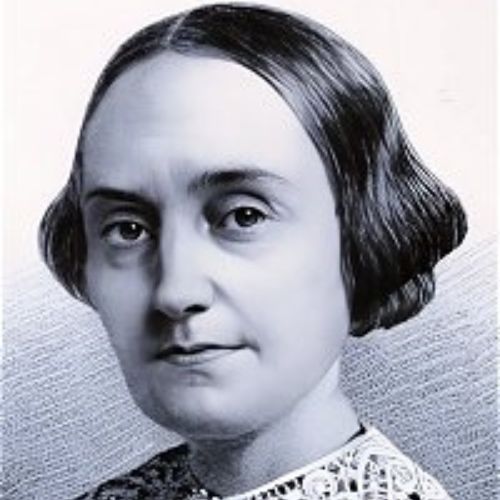
Lydia Baxter (1809–1874) was an American poet and hymnwriter, best remembered for deeply devotional hymns that became staples of 19th‑century Sunday School and evangelistic movements.
Who She Was
Born: Lydia Odell, 2 September 1809, Petersburgh, New York
Died: 23 January 1874, New York City
Affiliation: Baptist
Spouse: Col. John C. Baxter
She became a Christian at a young age under the ministry of Rev. Eber Tucker, a Baptist missionary. Her conversion, along with her sister’s, helped lead to the formation of a Baptist church in her hometown.
After marriage she moved to New York City, where her home became a gathering place for ministers, musicians, and writers—despite her being bedridden for nearly 30 years due to chronic illness.
Her Hymn Writing
Lydia Baxter wrote many hymns for:
Baptist Sunday School Unions
Evangelistic services
Annual hymn collections in New York churches
Her writing is marked by:
Simplicity
Emotional warmth
Strong devotional focus on Jesus’ name, comfort, and hope
Most Famous Hymns
1. “Take the Name of Jesus with You” (1870)
Her best‑known hymn today, written for composer W. H. Doane. It reflects her personal reliance on the name of Jesus as a source of comfort during illness.
2. “There Is a Gate That Stands Ajar” (c. 1872)
Written for S. J. Vail, later popularised by Philip Bliss and Ira Sankey. It became widely sung in the U.S., England, and Scotland.
3. “The Gate Ajar for Me”
Another widely‑loved hymn, influential in the early ministry of Ira D. Sankey.
Other notable hymns include:
One by One We Cross the River
In the Fadeless Springtime
Cast Thy Net Again, My Brother
Publications
Gems by the Wayside (1855) — a collection of religious poetry
Legacy
Despite lifelong suffering, Lydia Baxter’s hymns radiate hope, patience, and confidence in Christ. Her work became central to the Moody–Sankey revival era and remains beloved in many hymnals today.
1 Come, let us sing for joy to the Lord; let us shout aloud to the Rock of our salvation. 2 Let us come before him with thanksgiving and extol him with music and song.
3 For the Lord is the great God, the great King above all gods. 4 In his hand are the depths of the earth, and the mountain peaks belong to him. 5 The sea is his, for he made it, and his hands formed the dry land.
6 Come, let us bow down in worship, let us kneel before the Lord our Maker; 7 for he is our God and we are the people of his pasture, the flock under his care.
Today, if only you would hear his voice, 8 “Do not harden your hearts as you did at Meribah,[a] as you did that day at Massah[b] in the wilderness, 9 where your ancestors tested me; they tried me, though they had seen what I did. 10 For forty years I was angry with that generation; I said, ‘They are a people whose hearts go astray, and they have not known my ways.’ 11 So I declared on oath in my anger, ‘They shall never enter my rest.’”
Joy Webb a member of The Joystrings of The Salvation Army wrote many songs. One of the was entitled “I want to Sing it”
20 Now there were some Greeks among those who went up to worship at the festival. 21 They came to Philip, who was from Bethsaida in Galilee, with a request. ‘Sir,’ they said, ‘we would like to see Jesus.’ 22 Philip went to tell Andrew; Andrew and Philip in turn told Jesus.
23 Jesus replied, ‘The hour has come for the Son of Man to be glorified.24 Very truly I tell you, unless a grain of wheat falls to the ground and dies, it remains only a single seed. But if it dies, it produces many seeds.25 Anyone who loves their life will lose it, while anyone who hates their life in this world will keep it for eternal life.26 Whoever serves me must follow me; and where I am, my servant also will be. My Father will honour the one who serves me.
One day You’ll make everything new, Jesus
One day You will bind every wound
The former things shall all pass away
No more tears
One day You’ll make sense of it all, Jesus
One day every question resolved
Every anxious thought left behind
No more fear
When we all get to heaven
What a day of rejoicing that will be
When we all see Jesus
We’ll sing and shout the victory
One day we will see face to face, Jesus
Is there a greater vision of grace
And in a moment, we shall be changed
On that day
And one day we’ll be free, free indeed, Jesus
One day all this struggle will cease
And we will see Your glory revealed
On that day
And when we all get to heaven
What a day of rejoicing that will be
When we all see Jesus
We’ll sing and shout the victory
The hymn was written in 1870 by Lydia Odell Baxter, a woman whose life was marked by chronic illness and long periods of confinement. For nearly thirty years, she lived as an invalid, often bedridden, yet her room became a place where pastors, evangelists, and Christian workers came not to comfort her—but to be comforted by her.
Despite constant pain, Lydia radiated a deep, unshakeable joy. Her “secret,” as she told visitors, was simple but profound:
“I have a very special armor. I have the Name of Jesus.”
Whenever discouragement crept in, she would whisper His name, and peace would return.
📖 Her Love for Biblical Names
During her years of illness, Lydia became a devoted student of Scripture, especially fascinated by the meanings of biblical names. She loved to talk about them with friends—names like Sarah (“princess”), Samuel (“asked of God”), and Isaac (“laughter”). But her favourite name, the one she clung to in suffering, was Jesus—“Savior.”
This deep affection for the name of Christ naturally blossomed into the hymn we know today.
✍️ Writing the Hymn
Lydia wrote “Take the Name of Jesus with You” just four years before her death, while still confined to her bed. The text was later set to music by William H. Doane and first published in 1871 in Pure Gold for the Sunday School.
The hymn quickly spread, becoming especially popular during the Moody–Sankey revival campaigns of the late 19th century. Its message—carry Jesus’ name as a shield, a comfort, and a joy—resonated deeply with believers everywhere.
💬 Why the Hymn Still Speaks
Knowing Lydia’s story gives the hymn a richer texture. These weren’t abstract words; they were the lived testimony of a woman who found strength in the name of Jesus when her body failed her. Her sickroom became a sanctuary of encouragement, and her hymn continues that ministry today.
It’s no wonder the Salvation Army and many evangelical traditions still treasure it—you can almost feel her faith woven into every line.