Pip: There is something quietly stubborn about faith — it keeps knocking, keeps promising a better world, and somehow keeps finding a brass band to make the point.
Mara: Kenneth's posts this episode do exactly that — moving from a beloved Salvation Army piece built around the image of Christ at the door, to a vision of the new creation where that door is finally, fully open. Let's start with the music.
Light at the Door — Salvation Army Band Piece
Pip: The post opens with a piece of band music that carries a very specific theological image — Christ standing outside a closed door, waiting, knocking. The question is what that image actually asks of the listener.
Mara: The hymn woven through Dean Goffin's composition puts it plainly. The third verse reads: "I died for you, my children, and will you treat me so? O Lord, with shame and sorrow we open now the door; dear Savior, enter, enter, and leave us never more."
Pip: That is the whole gospel compressed into a request. Not a demand — a request. The scarred hand knocking, the thorns, the tears — the hymn makes sure you understand the cost before you answer.
Mara: Holman Hunt painted exactly this scene, and the post notes it can be seen in St Paul's Cathedral in London. The image and the music are working the same ground — patience, persistence, the door still shut. Kenneth adds that watching the video moved him to tears, which is its own kind of testimony.
Pip: A brass band reducing a grown man to tears is not a small thing. That is the piece doing its job.
Mara: From a door being knocked on, to a world where the separation is over entirely.
A World Without Grief — New Creation Hope
Mara: The post titled "A Better World" anchors itself in Revelation 21, which describes what happens after the door is opened — not just for one person, but for all of creation.
Pip: And the passage does not soften the contrast. It names what disappears specifically.
Mara: Verse four: "He will wipe every tear from their eyes. There won't be death anymore. There won't be any grief, crying, or pain, because the first things have disappeared."
Pip: That list is not abstract. Death, grief, crying, pain — these are the contents of an ordinary human week. The promise is their permanent removal.
Mara: The post pairs this with a song by the Melbourne Veterans Band. The structure of the song itself maps the contrast — earthly world in the first half of each verse, the better world in the second. The shape of the music carries the argument.
Pip: Salvation Army bands, it turns out, are doing serious theological heavy lifting.
Mara: A door being knocked on, and a world where that waiting finally ends — the two images belong together.
Pip: Next time, we will see what else is standing at the threshold.
Pip: There's something quietly radical about a site that holds together colonoscopies and resurrection in the same week — as if the body and the soul both deserve a proper look inside.
Mara: Kenneth covers exactly that this episode — a plain-language guide to what endoscopy actually is and does, and then a reflection on Romans 6 and what it means to be alive in Christ rather than ruled by sin.
Pip: Let's start with what happens when doctors need a closer look.
What Endoscopy Is and Why It Matters
Mara: The post on endoscopy sets out to demystify a procedure that many people find daunting — what it involves, what it examines, and why a doctor might order one.
Pip: Harvard Health is quoted directly in the piece, and the description is worth reading aloud: "An upper endoscopy allows the doctor to explore the cause of such symptoms as difficulty swallowing, abdominal pain, vomiting up blood, or passing blood in the stool."
Mara: So the upshot is that this is a diagnostic tool with real reach — not just the stomach, but the oesophagus, bowel, bladder, lungs, and womb, depending on the type ordered.
Pip: And the types have names most of us have never had reason to learn — gastroscopy, colonoscopy, bronchoscopy, cystoscopy, hysteroscopy — each one a different entry point into a different system.
Mara: Most procedures take between thirty minutes and two hours, and sedation or local anaesthetic means patients typically feel pressure rather than pain.
Pip: A thin tube with a camera turns out to be doing a lot of quiet, essential work.
Mara: That same idea — seeing clearly what's hidden — carries into the next territory, though the instrument is scripture rather than an endoscope.
Dead to Sin, Alive in Christ
Mara: The post titled Jesus Lives centres on Romans 6, which asks a pointed question: if grace covers sin, does that mean sin no longer matters?
Pip: Paul's answer is immediate and unambiguous — the passage reads, "By no means! We are those who have died to sin; how can we live in it any longer?"
Mara: What this means in practice is that baptism, in Paul's framing, is not a ritual of membership but a participation in death and resurrection — the old self crucified, a new life made possible.
Pip: The stakes sharpen further by verse fourteen: "sin shall no longer be your master, because you are not under the law, but under grace." Grace here is not permission — it's transfer of ownership.
Mara: The reflection closes by connecting the passage to a Salvation Army chorus — "It's no longer I that liveth, but Christ that liveth in me" — which distils the whole argument of Romans 6 into a single repeated line.
Pip: Doctrine set to music tends to travel further than doctrine set to commentary.
Mara: The chorus and the chapter land on the same point: that the life now lived is oriented toward God, not toward the patterns the old self followed.
Pip: A week that moves from the interior of the body to the interior of the self — both asking what's actually going on in there.
Mara: And both suggesting that a clear look, however uncomfortable, is where any honest reckoning begins.
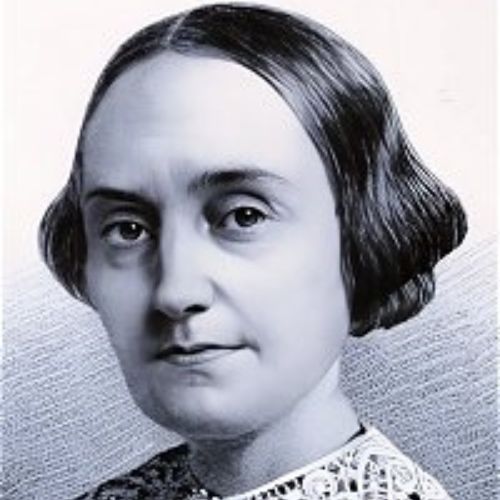
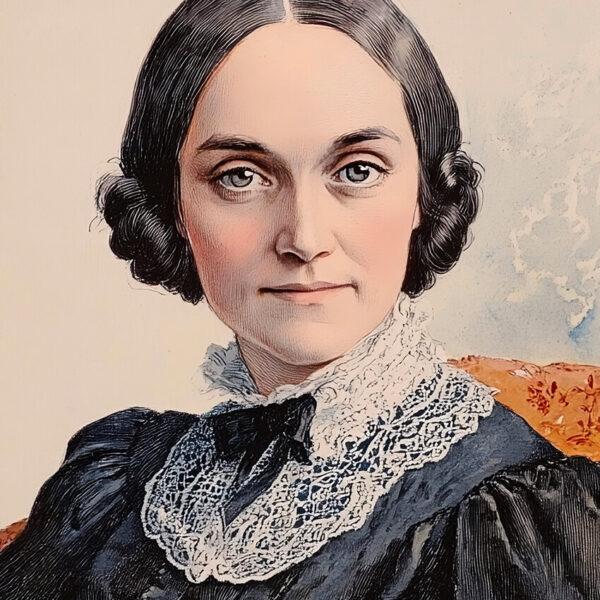
Lydia Baxter (1809–1874) was an American poet and hymnwriter, best remembered for deeply devotional hymns that became staples of 19th‑century Sunday School and evangelistic movements.
Who She Was
Born: Lydia Odell, 2 September 1809, Petersburgh, New York
Died: 23 January 1874, New York City
Affiliation: Baptist
Spouse: Col. John C. Baxter
She became a Christian at a young age under the ministry of Rev. Eber Tucker, a Baptist missionary. Her conversion, along with her sister’s, helped lead to the formation of a Baptist church in her hometown.
After marriage she moved to New York City, where her home became a gathering place for ministers, musicians, and writers—despite her being bedridden for nearly 30 years due to chronic illness.
Her Hymn Writing
Lydia Baxter wrote many hymns for:
Baptist Sunday School Unions
Evangelistic services
Annual hymn collections in New York churches
Her writing is marked by:
Simplicity
Emotional warmth
Strong devotional focus on Jesus’ name, comfort, and hope
Most Famous Hymns
1. “Take the Name of Jesus with You” (1870)
Her best‑known hymn today, written for composer W. H. Doane. It reflects her personal reliance on the name of Jesus as a source of comfort during illness.
2. “There Is a Gate That Stands Ajar” (c. 1872)
Written for S. J. Vail, later popularised by Philip Bliss and Ira Sankey. It became widely sung in the U.S., England, and Scotland.
3. “The Gate Ajar for Me”
Another widely‑loved hymn, influential in the early ministry of Ira D. Sankey.
Other notable hymns include:
One by One We Cross the River
In the Fadeless Springtime
Cast Thy Net Again, My Brother
Publications
Gems by the Wayside (1855) — a collection of religious poetry
Legacy
Despite lifelong suffering, Lydia Baxter’s hymns radiate hope, patience, and confidence in Christ. Her work became central to the Moody–Sankey revival era and remains beloved in many hymnals today.
Pip: There's something quietly remarkable about a site that holds brass bands and biblical farewell speeches in the same breath — as if the Spirit moves equally well through a trombone and a tearful dockside goodbye.
Mara: Kenneth's recent posts do exactly that — moving from the devotional music of Salvation Army composer Howard Davies to Paul's charged farewell address to the Ephesian elders in Acts 20. Let's start with the music.
Howard Davies and Salvation Army Music
Mara: Howard Davies is an internationally known Salvation Army composer whose work spans songster choirs, brass band arrangements, and devotional recordings across multiple countries and decades.
Pip: The post notes that his brass band selection "Songs of Encouragement" from 1978 incorporates melodies including "Guardian Grace," "His Eye Is on the Sparrow," and "Keep on Believing" — and is still available today through the Salvation Army Music Index.
Mara: What that longevity signals is that his music has remained genuinely useful in worship, not just historically interesting. His book Words and Music adds another layer — it documents the stories and inspiration behind the songs, making him a chronicler of Army musical heritage as much as a composer.
Pip: Devotional music with footnotes. There are worse legacies.
Compelled by the Spirit: Paul's Farewell at Miletus
Mara: Acts 20 presents one of the most personally revealing moments in Paul's ministry — a farewell speech where he accounts for his conduct, warns of what's coming, and explains why he's pressing on anyway.
Pip: The post anchors on verse 22, where Paul says directly: "And now, compelled by the Spirit, I am going to Jerusalem, not knowing what will happen to me there."
Mara: That single line carries the weight of the whole passage. He knows hardship is ahead — the Spirit has told him so in every city — yet the compulsion overrides the calculation. The destination is certain; the outcome is not.
Pip: It's a remarkable posture. Not blind faith, not recklessness — he's fully informed and going anyway.
Mara: Verse 24 sharpens it further: "I consider my life worth nothing to me; my only aim is to finish the race and complete the task the Lord Jesus has given me — the task of testifying to the good news of God's grace."
Pip: That's not resignation. That's a man who has genuinely reordered what counts as a loss.
Mara: The farewell itself is visceral. Paul warns the elders that savage wolves will come after he leaves, urges them to guard the flock, and reminds them he worked with his own hands rather than taking from them. When he finishes, they weep and embrace him — grieved most, the text says, that they will never see his face again.
Pip: A dockside goodbye that still lands two thousand years later.
Mara: From a brass band selection still in print after nearly fifty years to a farewell speech still read across the world — both posts are really about what it means to give your work to something larger than yourself.
Pip: Next time, we'll see what else from this corner of the internet is worth the journey.
The hymn was written in 1870 by Lydia Odell Baxter, a woman whose life was marked by chronic illness and long periods of confinement. For nearly thirty years, she lived as an invalid, often bedridden, yet her room became a place where pastors, evangelists, and Christian workers came not to comfort her—but to be comforted by her.
Despite constant pain, Lydia radiated a deep, unshakeable joy. Her “secret,” as she told visitors, was simple but profound:
“I have a very special armor. I have the Name of Jesus.”
Whenever discouragement crept in, she would whisper His name, and peace would return.
📖 Her Love for Biblical Names
During her years of illness, Lydia became a devoted student of Scripture, especially fascinated by the meanings of biblical names. She loved to talk about them with friends—names like Sarah (“princess”), Samuel (“asked of God”), and Isaac (“laughter”). But her favourite name, the one she clung to in suffering, was Jesus—“Savior.”
This deep affection for the name of Christ naturally blossomed into the hymn we know today.
✍️ Writing the Hymn
Lydia wrote “Take the Name of Jesus with You” just four years before her death, while still confined to her bed. The text was later set to music by William H. Doane and first published in 1871 in Pure Gold for the Sunday School.
The hymn quickly spread, becoming especially popular during the Moody–Sankey revival campaigns of the late 19th century. Its message—carry Jesus’ name as a shield, a comfort, and a joy—resonated deeply with believers everywhere.
💬 Why the Hymn Still Speaks
Knowing Lydia’s story gives the hymn a richer texture. These weren’t abstract words; they were the lived testimony of a woman who found strength in the name of Jesus when her body failed her. Her sickroom became a sanctuary of encouragement, and her hymn continues that ministry today.
It’s no wonder the Salvation Army and many evangelical traditions still treasure it—you can almost feel her faith woven into every line.
“Wonderful Words of Life” was written in 1874 by Philip P. Bliss, a gifted composer and evangelist whose music shaped the gospel hymn tradition. Bliss was deeply involved in revival meetings across the U.S., often collaborating with evangelists like Dwight L. Moody and Major Daniel Webster Whittle2.
✍️ Origins and Purpose
Bliss composed the hymn for a Sunday School paper called Words of Life, published by Fleming H. Revell in Chicago.
The hymn was designed to be simple, repetitive, and memorable, making it ideal for teaching children and congregations by rote.
Its lyrics emphasize the beauty, hope, and spiritual nourishment found in Scripture—“Sing them over again to me, wonderful words of life.”
🚂 Tragic Turn
Just two years after writing the hymn, Bliss and his wife Lucy tragically died in a train derailment in 1876.
Their legacy was carried on by fellow musicians like James McGranahan, who continued performing Bliss’s hymns at revival meetings.
📚 Musical Legacy
The hymn gained widespread popularity through inclusion in Gospel Hymns No. 3 (1878) and Sacred Songs and Solos No. 2 in Britain.
Its enduring appeal lies in its gentle melody and uplifting message, often used in worship to evoke reflection and joy.
Philip P. Bliss left behind a remarkable legacy of gospel hymns that continue to resonate with congregations and choirs around the world. Here are some of his most beloved and widely sung works:
🎵 Notable Hymns by Philip P. Bliss
Hymn Title
Theme / Message
Year
Almost Persuaded
Urgency of salvation and decision-making
1871
Hold the Fort
Spiritual perseverance and encouragement
1870
Hallelujah, What a Saviour!
Christ’s redemptive sacrifice and triumph
1875
Let the Lower Lights Be Burning
Evangelism and guiding others to safety
1871
Whosoever Will
Invitation to salvation for all
1870s
Jesus Loves Even Me
Personal assurance of Christ’s love
1871
I Will Sing of My Redeemer
Joyful testimony of salvation
1876
Free from the Law, O Happy Condition
Grace over legalism
1870s
Many of these hymns were published in the Gospel Hymns series, co-edited with Ira D. Sankey, and became staples in revival meetings across the U.S. and Britain2.
William Booth was born in Nottingham on 10 April 1829, the son of Samuel Booth and his second wife Mary (nee Moss), both from Derbyshire.
It was in the open street that this great change passed over me.
Birth and parentage
William Booth was born in Nottingham on 10 April 1829 and had three sisters Ann, Emma and Mary and an elder brother, Henry, who died on his own second birthday. Writing about his father, William said: “My father was a Grab, a Get. He had been born into poverty. He determined to grow rich; and he did. He grew very rich, because he lived without God and simply worked for money; and when he lost it all, his heart broke with it, and he died miserably.”
Pawnbrokers’ Apprenticeship and death of his father
In 1842, when he was aged 13, his father sent him to work as an apprentice to Francis Eames in a pawnbroker’s shop situated in the poorest part of Nottingham. He disliked his job, but it was through this work that his social conscience was stirred and he became aware of the plight of the poor.
In September that same year, his father Samuel became ill and died, though not before making a death-bed repentance. Shortly after, his mother had to leave her the house in Sneinton for a small shop in one of the poor quarters of Nottingham where she earnt a meagre income selling toys, needles, cotton and the like.
Methodism and conversion
It was at this time that William started attending Broad Street Wesley Chapel (Methodist) and in 1844 he had a conversion experience, noting that: “It was in the open street [of Nottingham] that this great change passed over me”.
In 1846 he was impressed by the preaching of the Reverend James Caughey from America and David Greenbury from Scarborough. Encouraged by Greenbury he joined a group of fellow believers who preached in the streets. He delivered his first sermon in Kid Street.
Eventually Booth stopped working at the Pawnbrokers and was out of work for a year.
Marriage
In 1849 William moved to London to find work, briefly returning to pawnbroking but also joining a chapel in Clapham. Through this church he was introduced to his future wife, Catherine Mumford. After becoming an evangelist in the Methodist New Connexion, they married on 16 July 1855, forming a formidable and complimentary lifelong partnership.
Following a brief honeymoon, he was appointed to circuits in Halifax and Gateshead. But, finding this structure restrictive and feeling himself called to itinerant evangelism, he resigned in 1861.
The Christian Mission
Four years later William and Catherine moved to London. It was here that William commenced his first open air evangelistic campaign in Whitechapel, preaching in a tent. This ministry led to the formation of The Christian Mission, with Booth as its leader.
In 1878 The Christian Mission was renamed The Salvation Army. ‘General Booth’, as he was now known, summed up the purpose of this body in the following way: “We are a salvation people – this is our speciality – getting saved and keeping saved, and then getting somebody else saved.” But there was to be frequent opposition to the Army’s methods and principles in its early years.
In Darkest England
After suffering from cancer, Catherine Booth was ‘promoted to Glory’ on 4 October 1890, leaving a significant void in William’s life. In the same month Booth published his major social manifesto, ‘In Darkest England and the Way Out’. He explored various far-reaching ideas, such as providing hostels, employment centres and helping young men learn agricultural trades before emigrating.
Thereafter Booth turned back to preaching and evangelism, with day-to-day administration of the Army passing to his oldest son, Bramwell. The years that followed were difficult ones for William. He had to deal with three of his children leaving The Salvation Army and one dying in a train crash.
Motor Tours
In August 1904 William Booth, always eager to make use of new technology, commenced his first motor tour, travelling from Land’s End to Aberdeen. Six more motor tours followed. Then in the spring of 1905, en route to Australia and New Zealand, General William Booth visited the Holy Land, where he visited many sites of biblical significance.
On his return he was honoured by being given the Freedom of the cities of London and Nottingham. Amongst many other honours, Booth was also awarded an Honorary Doctorate of Civil Law from Oxford University.
Though his eyesight started failing at this stage in his life, it didn’t prevent him from conducting campaigns, with his last trip abroad being to Norway in 1912.
The General lays down his sword
On 17 August 1912, The War Cry reported that the General was “not so well.” Three days later, on 20 August at 10.13 p.m, and following a terrific thunderstorm – as had occurred just prior to the passing of the Army Mother 22 years before – “the old warrior finally laid down his sword”.
In accordance with a widely felt desire, the body of the General lay pavilioned in state at The Congress Hall, Clapton, on the Friday, Saturday and Monday following his passing, when some 150,000 grief-stricken people passed the bier to gaze upon the ivory-like features of “the world’s best-loved man.” The Mayor of South Shields had described him as “The Archbishop of the World.”
A public memorial service was arranged at Olympia on the following Wednesday (28 August 1912), when 35,000 people attended, including Queen Alexandra, who came incognito, and representatives of King George V and Queen Mary. The procession took twenty minutes to pass down the long-extended central aisle.
The funeral was conducted by the new General, Bramwell Booth, at 3.00 p.m. on 29 August, at Abney Park Cemetery, Stoke Newington. The heart of London stood still for nearly four hours as the lengthy procession of some 7,000 Salvationists, including forty bands, wended its five-mile way through densely crowded streets from the Victoria Embankment, no fewer than 580 City and 2,370 Metropolitan police being on duty. The estranged Catherine Booth-Clibborn and Herbert Booth were among the mourners, and Ballington Booth and his wife sent a telegram of love and sympathy.
Bramwell Booth delivered a striking address at the graveside, in the course of which he said: “If you were to ask me, I think I could say that the happiest man I ever knew was the General. He was a glad spirit. He rose up on the crest of the stormy billows, and praised God, and laughed at the Devil’s rage, and went on with his work with joy.”
His legacy was a Salvation Army that numbered 15,875 officers and cadets, operating in 58 lands.
“Blest Are the Pure in Heart” is a hymn based on the Beatitude from Matthew 5:8, which states, “Blessed are the pure in heart, for they shall see God.” This hymn emphasizes the importance of purity of heart in the Christian faith, suggesting that those who maintain a pure heart will be able to see and experience God more fully.
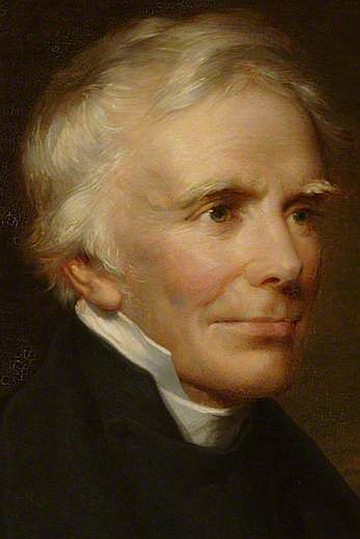
The hymn was written by John Keble, an English churchman and one of the leaders of the Oxford Movement, which sought to revive the Catholic aspects of the Anglican Church in the 19th century. Keble’s hymn reflects his deep theological insights and his desire to inspire a sincere and devout Christian life.