Tag: Bible

Podcast Episode: Body And Belief

Pip: There's something quietly radical about a site that holds together colonoscopies and resurrection in the same week — as if the body and the soul both deserve a proper look inside.

Mara: Kenneth covers exactly that this episode — a plain-language guide to what endoscopy actually is and does, and then a reflection on Romans 6 and what it means to be alive in Christ rather than ruled by sin.

Pip: Let's start with what happens when doctors need a closer look.

What Endoscopy Is and Why It Matters

Mara: The post on endoscopy sets out to demystify a procedure that many people find daunting — what it involves, what it examines, and why a doctor might order one.

Pip: Harvard Health is quoted directly in the piece, and the description is worth reading aloud: "An upper endoscopy allows the doctor to explore the cause of such symptoms as difficulty swallowing, abdominal pain, vomiting up blood, or passing blood in the stool."

Mara: So the upshot is that this is a diagnostic tool with real reach — not just the stomach, but the oesophagus, bowel, bladder, lungs, and womb, depending on the type ordered.

Pip: And the types have names most of us have never had reason to learn — gastroscopy, colonoscopy, bronchoscopy, cystoscopy, hysteroscopy — each one a different entry point into a different system.

Mara: Most procedures take between thirty minutes and two hours, and sedation or local anaesthetic means patients typically feel pressure rather than pain.

Pip: A thin tube with a camera turns out to be doing a lot of quiet, essential work.

Mara: That same idea — seeing clearly what's hidden — carries into the next territory, though the instrument is scripture rather than an endoscope.

Dead to Sin, Alive in Christ

Mara: The post titled Jesus Lives centres on Romans 6, which asks a pointed question: if grace covers sin, does that mean sin no longer matters?

Pip: Paul's answer is immediate and unambiguous — the passage reads, "By no means! We are those who have died to sin; how can we live in it any longer?"

Mara: What this means in practice is that baptism, in Paul's framing, is not a ritual of membership but a participation in death and resurrection — the old self crucified, a new life made possible.

Pip: The stakes sharpen further by verse fourteen: "sin shall no longer be your master, because you are not under the law, but under grace." Grace here is not permission — it's transfer of ownership.

Mara: The reflection closes by connecting the passage to a Salvation Army chorus — "It's no longer I that liveth, but Christ that liveth in me" — which distils the whole argument of Romans 6 into a single repeated line.

Pip: Doctrine set to music tends to travel further than doctrine set to commentary.

Mara: The chorus and the chapter land on the same point: that the life now lived is oriented toward God, not toward the patterns the old self followed.


Pip: A week that moves from the interior of the body to the interior of the self — both asking what's actually going on in there.

Mara: And both suggesting that a clear look, however uncomfortable, is where any honest reckoning begins.

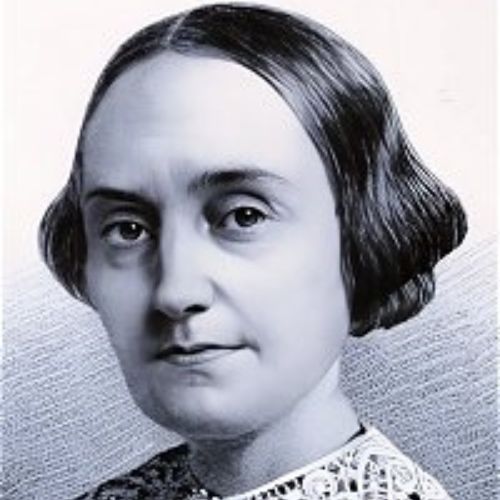
Lydia Baxter

Lydia Baxter (1809–1874) was an American poet and hymnwriter, best remembered for deeply devotional hymns that became staples of 19th‑century Sunday School and evangelistic movements.

Who She Was

  • Born: Lydia Odell, 2 September 1809, Petersburgh, New York
  • Died: 23 January 1874, New York City
  • Affiliation: Baptist
  • Spouse: Col. John C. Baxter

She became a Christian at a young age under the ministry of Rev. Eber Tucker, a Baptist missionary. Her conversion, along with her sister’s, helped lead to the formation of a Baptist church in her hometown.

After marriage she moved to New York City, where her home became a gathering place for ministers, musicians, and writers—despite her being bedridden for nearly 30 years due to chronic illness.

Her Hymn Writing

Lydia Baxter wrote many hymns for:

  • Baptist Sunday School Unions
  • Evangelistic services
  • Annual hymn collections in New York churches

Her writing is marked by:

  • Simplicity
  • Emotional warmth
  • Strong devotional focus on Jesus’ name, comfort, and hope

Most Famous Hymns

1. “Take the Name of Jesus with You” (1870)

Her best‑known hymn today, written for composer W. H. Doane. It reflects her personal reliance on the name of Jesus as a source of comfort during illness.

2. “There Is a Gate That Stands Ajar” (c. 1872)

Written for S. J. Vail, later popularised by Philip Bliss and Ira Sankey. It became widely sung in the U.S., England, and Scotland.

3. “The Gate Ajar for Me”

Another widely‑loved hymn, influential in the early ministry of Ira D. Sankey.

Other notable hymns include:

  • One by One We Cross the River
  • In the Fadeless Springtime
  • Cast Thy Net Again, My Brother

Publications

  • Gems by the Wayside (1855) — a collection of religious poetry

Legacy

Despite lifelong suffering, Lydia Baxter’s hymns radiate hope, patience, and confidence in Christ. Her work became central to the Moody–Sankey revival era and remains beloved in many hymnals today.

Podcast Episode: Faith, Music And Scripture

Pip: There's something quietly remarkable about a site that holds brass bands and biblical farewell speeches in the same breath — as if the Spirit moves equally well through a trombone and a tearful dockside goodbye.

Mara: Kenneth's recent posts do exactly that — moving from the devotional music of Salvation Army composer Howard Davies to Paul's charged farewell address to the Ephesian elders in Acts 20. Let's start with the music.

Howard Davies and Salvation Army Music

Mara: Howard Davies is an internationally known Salvation Army composer whose work spans songster choirs, brass band arrangements, and devotional recordings across multiple countries and decades.

Pip: The post notes that his brass band selection "Songs of Encouragement" from 1978 incorporates melodies including "Guardian Grace," "His Eye Is on the Sparrow," and "Keep on Believing" — and is still available today through the Salvation Army Music Index.

Mara: What that longevity signals is that his music has remained genuinely useful in worship, not just historically interesting. His book Words and Music adds another layer — it documents the stories and inspiration behind the songs, making him a chronicler of Army musical heritage as much as a composer.

Pip: Devotional music with footnotes. There are worse legacies.

Compelled by the Spirit: Paul's Farewell at Miletus

Mara: Acts 20 presents one of the most personally revealing moments in Paul's ministry — a farewell speech where he accounts for his conduct, warns of what's coming, and explains why he's pressing on anyway.

Pip: The post anchors on verse 22, where Paul says directly: "And now, compelled by the Spirit, I am going to Jerusalem, not knowing what will happen to me there."

Mara: That single line carries the weight of the whole passage. He knows hardship is ahead — the Spirit has told him so in every city — yet the compulsion overrides the calculation. The destination is certain; the outcome is not.

Pip: It's a remarkable posture. Not blind faith, not recklessness — he's fully informed and going anyway.

Mara: Verse 24 sharpens it further: "I consider my life worth nothing to me; my only aim is to finish the race and complete the task the Lord Jesus has given me — the task of testifying to the good news of God's grace."

Pip: That's not resignation. That's a man who has genuinely reordered what counts as a loss.

Mara: The farewell itself is visceral. Paul warns the elders that savage wolves will come after he leaves, urges them to guard the flock, and reminds them he worked with his own hands rather than taking from them. When he finishes, they weep and embrace him — grieved most, the text says, that they will never see his face again.

Pip: A dockside goodbye that still lands two thousand years later.


Mara: From a brass band selection still in print after nearly fifty years to a farewell speech still read across the world — both posts are really about what it means to give your work to something larger than yourself.

Pip: Next time, we'll see what else from this corner of the internet is worth the journey.

“Take the Name of Jesus with You”

A Hymn Born in Suffering but Overflowing with Joy

The hymn was written in 1870 by Lydia Odell Baxter, a woman whose life was marked by chronic illness and long periods of confinement. For nearly thirty years, she lived as an invalid, often bedridden, yet her room became a place where pastors, evangelists, and Christian workers came not to comfort her—but to be comforted by her.

Despite constant pain, Lydia radiated a deep, unshakeable joy. Her “secret,” as she told visitors, was simple but profound:

“I have a very special armor. I have the Name of Jesus.”

Whenever discouragement crept in, she would whisper His name, and peace would return.

📖 Her Love for Biblical Names

During her years of illness, Lydia became a devoted student of Scripture, especially fascinated by the meanings of biblical names. She loved to talk about them with friends—names like Sarah (“princess”), Samuel (“asked of God”), and Isaac (“laughter”). But her favourite name, the one she clung to in suffering, was Jesus—“Savior.”

This deep affection for the name of Christ naturally blossomed into the hymn we know today.

✍️ Writing the Hymn

Lydia wrote “Take the Name of Jesus with You” just four years before her death, while still confined to her bed. The text was later set to music by William H. Doane and first published in 1871 in Pure Gold for the Sunday School.

The hymn quickly spread, becoming especially popular during the Moody–Sankey revival campaigns of the late 19th century. Its message—carry Jesus’ name as a shield, a comfort, and a joy—resonated deeply with believers everywhere.

💬 Why the Hymn Still Speaks

Knowing Lydia’s story gives the hymn a richer texture. These weren’t abstract words; they were the lived testimony of a woman who found strength in the name of Jesus when her body failed her. Her sickroom became a sanctuary of encouragement, and her hymn continues that ministry today.

It’s no wonder the Salvation Army and many evangelical traditions still treasure it—you can almost feel her faith woven into every line.

Peace

Luke 2 : 13 – 14

And suddenly there appeared with the angel a multitude of the heavenly host praising God and saying, “Glory to God in the highest, And on earth peace among men with whom He is pleased.”Image result for peace at Christmas

It doesn’t matter which version of scripture you choose to read, you’ll find the word peace used about 150 times. Sometimes it’s used to warn people who are about to lose their sense of peace, and other times it’s part of a standard blessing spoken over God’s people. It’s remarkable how many times the word is used to give a promise or as part of prophecy. Often the word is spoken as a reminder of the peace God gave in the past or given as a word of hope for the present as well as the future. During Advent this year, we’ll look at each of those uses of the word, and hopefully, by focusing on the One born to bring us true peace, we’ll have our most tranquil Christmas celebration ever!

Nowadays we read, hear and see on TV all sorts of evil taking place all over the world. Lets remind ourselves that this is a season of Peace and Joy.

Verse 1]
Behold the star of Bethlehem
The Word of God has become flesh
Unto us a child is born
The Savior of this broken world

[Chorus]
Hear the angel voices
Sing come let us adore Him
Peace has come, for our King is with us

[Verse 2]
Fully God and fully man
He comes for all with open hands
He rules with love on David’s throne
All praise belongs to Christ alone

[Chorus]
Hear the angel voices
Sing come let us adore Him
Peace has come, for our King is with us
Holy, Holy, Holy
Jesus we adore thee
Peace has come, for our King is with us

[Bridge]
Oh come let us adore Him
Christ the Lord
(2x)

Wonderful Words

“Wonderful Words of Life” was written in 1874 by Philip P. Bliss, a gifted composer and evangelist whose music shaped the gospel hymn tradition. Bliss was deeply involved in revival meetings across the U.S., often collaborating with evangelists like Dwight L. Moody and Major Daniel Webster Whittle2.

✍️ Origins and Purpose

  • Bliss composed the hymn for a Sunday School paper called Words of Life, published by Fleming H. Revell in Chicago.
  • The hymn was designed to be simple, repetitive, and memorable, making it ideal for teaching children and congregations by rote.
  • Its lyrics emphasize the beauty, hope, and spiritual nourishment found in Scripture—“Sing them over again to me, wonderful words of life.”

🚂 Tragic Turn

  • Just two years after writing the hymn, Bliss and his wife Lucy tragically died in a train derailment in 1876.
  • Their legacy was carried on by fellow musicians like James McGranahan, who continued performing Bliss’s hymns at revival meetings.

📚 Musical Legacy

  • The hymn gained widespread popularity through inclusion in Gospel Hymns No. 3 (1878) and Sacred Songs and Solos No. 2 in Britain.
  • Its enduring appeal lies in its gentle melody and uplifting message, often used in worship to evoke reflection and joy.

Philip P. Bliss left behind a remarkable legacy of gospel hymns that continue to resonate with congregations and choirs around the world. Here are some of his most beloved and widely sung works:

🎵 Notable Hymns by Philip P. Bliss

Hymn TitleTheme / MessageYear
Almost PersuadedUrgency of salvation and decision-making1871
Hold the FortSpiritual perseverance and encouragement1870
Hallelujah, What a Saviour!Christ’s redemptive sacrifice and triumph1875
Let the Lower Lights Be BurningEvangelism and guiding others to safety1871
Whosoever WillInvitation to salvation for all1870s
Jesus Loves Even MePersonal assurance of Christ’s love1871
I Will Sing of My RedeemerJoyful testimony of salvation1876
Free from the Law, O Happy ConditionGrace over legalism1870s

Many of these hymns were published in the Gospel Hymns series, co-edited with Ira D. Sankey, and became staples in revival meetings across the U.S. and Britain2.

Finding your Life in Jesus

Image result for Finding our Life in Jesus

Matthew 16 New International Version 

Jesus predicts his death

21 From that time on Jesus began to explain to his disciples that he must go to Jerusalem and suffer many things at the hands of the elders, the chief priests and the teachers of the law, and that he must be killed and on the third day be raised to life.

22 Peter took him aside and began to rebuke him. ‘Never, Lord!’ he said. ‘This shall never happen to you!’

23 Jesus turned and said to Peter, ‘Get behind me, Satan! You are a stumbling-block to me; you do not have in mind the concerns of God, but merely human concerns.’

24 Then Jesus said to his disciples, ‘Whoever wants to be my disciple must deny themselves and take up their cross and follow me. 25 For whoever wants to save their life[f] will lose it, but whoever loses their life for me will find it. 26 What good will it be for someone to gain the whole world, yet forfeit their soul? Or what can anyone give in exchange for their soul? 27 For the Son of Man is going to come in his Father’s glory with his angels, and then he will reward each person according to what they have done.

28 ‘Truly I tell you, some who are standing here will not taste death before they see the Son of Man coming in his kingdom.’


Why Worry

Matthew 6 New International Version

Do Not Worry

Photo by Nathan Cowley on Pexels.com

25 “Therefore I tell you, do not worry about your life, what you will eat or drink; or about your body, what you will wear. Is not life more than food, and the body more than clothes? 26 Look at the birds of the air; they do not sow or reap or store away in barns, and yet your heavenly Father feeds them. Are you not much more valuable than they? 27 Can any one of you by worrying add a single hour to your life[e]?

28 “And why do you worry about clothes? See how the flowers of the field grow. They do not labor or spin. 29 Yet I tell you that not even Solomon in all his splendor was dressed like one of these. 30 If that is how God clothes the grass of the field, which is here today and tomorrow is thrown into the fire, will he not much more clothe you—you of little faith? 31 So do not worry, saying, ‘What shall we eat?’ or ‘What shall we drink?’ or ‘What shall we wear?’ 32 For the pagans run after all these things, and your heavenly Father knows that you need them. 33 But seek first his kingdom and his righteousness, and all these things will be given to you as well. 34 Therefore do not worry about tomorrow, for tomorrow will worry about itself. Each day has enough trouble of its own.

Marching On

2 Chronicles 20:14-22

New International Version

14 Then the Spirit of the Lord came on Jahaziel son of Zechariah, the son of Benaiah, the son of Jeiel, the son of Mattaniah, a Levite and descendant of Asaph, as he stood in the assembly.

15 He said: “Listen, King Jehoshaphat and all who live in Judah and Jerusalem! This is what the Lord says to you: ‘Do not be afraid or discouraged because of this vast army. For the battle is not yours, but God’s. 16 Tomorrow march down against them. They will be climbing up by the Pass of Ziz, and you will find them at the end of the gorge in the Desert of Jeruel. 17 You will not have to fight this battle. Take up your positions; stand firm and see the deliverance the Lord will give you, Judah and Jerusalem. Do not be afraid; do not be discouraged. Go out to face them tomorrow, and the Lord will be with you.’”

18 Jehoshaphat bowed down with his face to the ground, and all the people of Judah and Jerusalem fell down in worship before the Lord.19 Then some Levites from the Kohathites and Korahites stood up and praised the Lord, the God of Israel, with a very loud voice.See the source image

20 Early in the morning they left for the Desert of Tekoa. As they set out, Jehoshaphat stood and said, “Listen to me, Judah and people of Jerusalem! Have faith in the Lord your God and you will be upheld; have faith in his prophets and you will be successful.” 21 After consulting the people, Jehoshaphat appointed men to sing to the Lord and to praise him for the splendour of his[a] holiness as they went out at the head of the army, saying:

“Give thanks to the Lord,
    for his love endures forever.”

22 As they began to sing and praise, the Lord set ambushes against the men of Ammon and Moab and Mount Seir who were invading Judah, and they were defeated.

I’ll go in the strength of the Lord
In paths He has marked for my feet;
I’ll follow the light of His word,
Nor shrink from the dangers I meet.
His presence my steps shall attend,
His fullness my wants shall supply;
On Him, till my journey shall end,
My unwavering faith shall rely.

Chorus
I’ll go (I’ll go,) I’ll go in the strength,
I’ll go in the strength of the Lord,
I’ll go, (I’ll go,) I’ll go in the strength,
I’ll go in the strength of the Lord.

I’ll go in the strength of the Lord
To work He appoints me to do;
In joy which his smile doth afford
My soul shall her vigour renew.
His wisdom shall guard me from harm,
His power my sufficiency prove;
I’ll trust His omnipotent arm,
And prove His unchangeable love.

I’ll go in the strength of the Lord
To conflicts which faith will require,
His grace as my shield and reward,
My courage and zeal shall inspire.
Since he gives the word of command,
To meet and encounter the foe,
With his sword of truth in my hand,
To suffer and triumph I’ll go.