1 Peter 1 New International Version – UK

Be holy
13 Therefore, with minds that are alert and fully sober, set your hope on the grace to be brought to you when Jesus Christ is revealed at his coming. 14 As obedient children, do not conform to the evil desires you had when you lived in ignorance. 15 But just as he who called you is holy, so be holy in all you do; 16 for it is written: ‘Be holy, because I am holy.’[a]
This beloved devotional hymn comes to us from British layman William Dunn Longstaff (1822-1894). Since his father was a wealthy ship owner, Longstaff was a person of independent financial means. Due to his generous philanthropy, he was influential in evangelical circles. The Rev. Carlton Young, editor of The United Methodist Hymnal, notes that he followed his friend and persuasive Welsh preacher Arthur A. Rees when he left the Anglican priesthood in 1842 after disagreements with his rector and bishop. As a result, Rees established the Bethesda Free Chapel in Sunderland, where Longstaff served as his church treasurer. He married Joyce Burlinson in 1853 and together they had seven children.
Longstaff befriended a number of well-known evangelists such as William Booth (1829-1912), founder of the Salvation Army. Some of Longstaff’s hymns were published in the official magazine of the Salvation Army magazine, The War Cry, during the 1880s. In 1873 the famous American preacher Dwight L. Moody (1837-1899) and his chief musician Ira D. Sankey (1840-1908) arrived in England to hold a series of evangelistic meetings. The financial sponsor for their revivals died, leaving them with meager means to continue. They were desperately seeking funds, and Longstaff came to their rescue, helping to establish a donor base that allowed Moody to hold revivals in London and Scotland.
Methodist hymnologist Robert Guy McCutchan notes that Longstaff was inspired by the words of Griffith John, a missionary to China, repeated in a meeting in Keswick, England in the early 1880s. John cited I Peter 1:16, “Be ye holy; for I am holy” (KJV), a reference to Leviticus 11:44. The hymn text appeared in Hymns of Consecration, the collection of hymns used during the Keswick event.
Longstaff showed the hymn to Ira Sankey, who in turn passed it on to American songwriter George C. Stebbins (1846-1945) to set in 1882. Stebbins laid it aside and did not recall it until an evangelistic meeting in India, during which the theme of holiness was explored. Stebbins recalled Longstaff’s hymn and set it to music for the revival. He sent his tune HOLINESS to Sankey, who published the hymn in New Songs and Sacred Solos (1888).
Each of the four stanzas begins with the invitation, “Take time to be holy.” The first stanza begins with a devotional request, “speak oft with thy Lord.” The invitation to holiness extends to care for “God’s children” and “those who are weak,” echoing the twin commandments, Matthew 22:36-40, to love God and neighbor.
The second stanza seeks to be alone with Jesus while “the world rushes on.” Through time with Jesus, “like him we shall be,” and, as a result, others will witness this “likeness.” In Methodist theology, this might be seen as a journey toward Christian perfection.
In stanza three, Jesus becomes the “guide” that we follow and trust. The final stanza suggests that when we “Take time to be holy,” our souls become calm. This calmness leads to Jesus’ control in our lives. Control manifests itself in “fountains of love.” This love in turn “fit[s us] for service above.”
Carlton Young distinguishes between Longstaff’s use of holiness and the Wesleyan understanding of personal holiness that demands a “radical change of heart and the resulting release from the bonds of sin as embodied in the Wesleyan precepts of entire sanctification, perfecting grace, perfect love, and Christian perfection.” To illustrate the transforming nature of holiness, the Rev. Young cites a section of the opening stanza of Charles Wesley’s hymn, “Love divine, all loves excelling”:

Take away our bent to sinning;
Alpha and Omega be;
end of faith as its beginning,
set our hearts at liberty.
In addition, Longstaff’s sense of devotional holiness also does not embrace a Wesleyan sense of social justice. This hymn has appeared in Methodist hymnals in the United States since 1901, reflecting the evangelical roots of Methodism in this country
- Take time to be holy, speak oft with thy Lord;
Abide in Him always, and feed on His Word.
Make friends of God’s children, help those who are weak,
Forgetting in nothing His blessing to seek. - Take time to be holy, the world rushes on;
Spend much time in secret, with Jesus alone.
By looking to Jesus, like Him thou shalt be;
Thy friends in thy conduct His likeness shall see. - Take time to be holy, let Him be thy Guide;
And run not before Him, whatever betide.
In joy or in sorrow, still follow the Lord,
And, looking to Jesus, still trust in His Word. - Take time to be holy, be calm in thy soul,
Each thought and each motive beneath His control.
Thus led by His Spirit to fountains of love,
Thou soon shalt be fitted for service above.





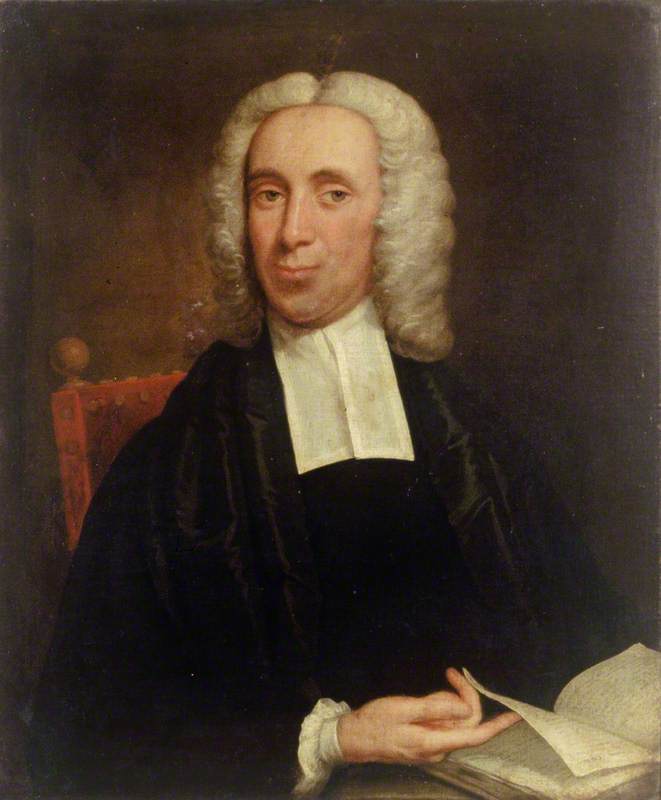 Watts was born in Southampton, England in 1674 and was brought up in the home of a committed religious Nonconformist; his father, also Isaac Watts, had been incarcerated twice for his views. Watts had a classical education at King Edward VI School, learning Latin, Greek, and Hebrew.Watts displayed a propensity for rhyme from an early age. He was once asked why he had his eyes open during prayers, to which he responded:A little mouse for want of stairs-ran up a rope to say its prayers.He received corporal punishment for this, to which he cried:O father, father, pity take And I will no more verses make.[1][2]Watts could not attend Oxford or Cambridge because he was a nonconformist and these universities were restricted to Anglicans—as were government positions at the time. He went to the Dissenting Academy at Stoke Newington in 1690. Much of the remainder of his life centred on that village, which is now part of Inner London.Following his education, Watts was called as pastor of a large independent chapel in London, Mark Lane Congregational Chapel, where he helped train preachers, despite his poor health. He held religious opinions that were more nondenominational or ecumenical than was common for a nonconformist Congregationalist.
 He had a greater interest in promoting education and scholarship than preaching for any particular sect. Watts took work as a private tutor and lived with the Nonconformist Hartopp family at Fleetwood House on Church Street in Stoke Newington. Through them, he became acquainted with their immediate neighbours Sir Thomas Abney and Lady Mary. He eventually lived for a total of 36 years in the Abney household, most of the time at Abney House, their second residence. (Lady Mary had inherited the manor of Stoke Newington in 1701 from her late brother Thomas Gunston.)On the death of Sir Thomas Abney in 1722, his widow Lady Mary and her unmarried daughter Elizabeth moved all her household to Abney House from Hertfordshire, and she invited Watts to continue with them. He particularly enjoyed the grounds at Abney Park, which Lady Mary planted with two elm walks leading down to an island heronry in the Hackney Brook, and he often sought inspiration there for the many books and hymns that he wrote.Watts lived at Abney Hall in Stoke Newington until his death in 1748; he was buried in Bunhill Fields. He left an extensive legacy of hymns, treatises, educational works, and essays. His work was influential amongst Nonconformist independents and religious revivalists of the 18th century, such as Philip Doddridge, who dedicated his best-known work to Watts.


