The story of St. Valentine is quite fascinating and has evolved over centuries. Here’s a brief overview:
Saint Valentine was a third-century Roman priest who lived during a time when Christianity was not widely accepted. Emperor Claudius II had banned marriages for young men, believing that single soldiers made better warriors2. Valentine defied this decree and continued to perform secret weddings for young couples.
Valentine was eventually caught and imprisoned. While in jail, he is said to have cared for fellow prisoners and even cured the jailer’s blind daughter. Before his execution on February 14, 270 AD, he wrote a note to the girl, signing it “From your Valentine,” which is where the tradition of sending Valentine’s cards originated3.
Over time, Valentine’s Day became associated with love and romance, thanks to Geoffrey Chaucer and other writers who linked the day to romantic love in the Middle Ages. Today, it’s celebrated with cards, flowers, chocolates, and other gestures of affection
The song “When My Heart Was So Hard” is a hymn written by Herbert H. Booth. It was first published in 1900 and is often associated with the Salvation Army1. The song reflects Booth’s personal journey and spiritual transformation. The lyrics describe a heart that was once hardened and resistant to salvation, but through a profound experience at the cross, the author found redemption and light1.
The hymn is a powerful reminder of the impact of faith and the possibility of personal change and renewal. It’s a beautiful piece that has resonated with many people over the years.
11 Therefore, take care to follow the commands, decrees and laws I give you today.
12 If you pay attention to these laws and are careful to follow them, then the Lord your God will keep his covenant of love with you, as he swore to your ancestors.13 He will love you and bless you and increase your numbers. He will bless the fruit of your womb, the crops of your land—your grain, new wine and olive oil—the calves of your herds and the lambs of your flocks in the land he swore to your ancestors to give you.14 You will be blessed more than any other people; none of your men or women will be childless, nor will any of your livestock be without young.15 The Lord will keep you free from every disease. He will not inflict on you the horrible diseases you knew in Egypt, but he will inflict them on all who hate you.16 You must destroy all the peoples the Lord your God gives over to you. Do not look on them with pity and do not serve their gods, for that will be a snare to you.
Once again as in so many other parts of the bible we are advised to follow God’s commandments and we are assured of God’s love as mentioned in verse 13.
1. God’s love to me is wonderful, That he should deign to hear The faintest whisper of my heart, Wipe from mine eyes the tear; And though I cannot comprehend Such love, so great, so deep, In his strong hands my soul I trust, He will not fail to keep. Chorus God’s love is wonderful, God’s love is wonderful, Wonderful that he should give his Son to die for me; God’s love is wonderful!
2. God’s love to me is wonderful! My very steps are planned; When mists of doubt encompass me, I hold my Father’s hand. His love has banished every fear, In freedom I rejoice, And with my quickened ears I hear The music of his voice.
3. God’s love to me is wonderful! He lights the darkest way; I now enjoy his fellowship, ‘Twill last through endless day. My Father doth not ask that I Great gifts on him bestow, But only that I love him too, And serve him here below.
3 We know that we have come to know him if we keep his commands. 4 Whoever says, “I know him,” but does not do what he commands is a liar, and the truth is not in that person. 5 But if anyone obeys his word, love for God[a] is truly made complete in them. This is how we know we are in him: 6 Whoever claims to live in him must live as Jesus did.
7 Dear friends, I am not writing you a new command but an old one, which you have had since the beginning. This old command is the message you have heard. 8 Yet I am writing you a new command; its truth is seen in him and in you, because the darkness is passing and the true light is already shining.
9 Anyone who claims to be in the light but hates a brother or sister[b] is still in the darkness.10 Anyone who loves their brother and sister[c] lives in the light, and there is nothing in them to make them stumble. 11 But anyone who hates a brother or sister is in the darkness and walks around in the darkness. They do not know where they are going, because the darkness has blinded them.
Wow! what a theme to follow yesterdays blog on Reconciliation, comes right to the point doesn’t it
As the above reading is telling us, ‘As Christians we are supposed to love one another’, turn the other cheek etc.
As humans it is only natural that personalities will clash even if you are Christians in the same church.
Even I have fell out with people in my Church but I don’t like the atmosphere it creates and usually when things have calmed down that is usually when the apologies come
A little on that’s full of innocence He doesn’t know that something’s out of place Another one dreams murder all night He’s been living full of hatred all his life Well, I guess it’s always been this way A world that’s full of love and hate Oh God, but will it stay this way So much love, so much hate
It goes on and on and on Around and again On and on and on Around and again It goes on and on and on Around and again
A mother’s willing to give her life While another one throws away her child A son stands and he turns the other cheek While another one spits in a face while it bleeds Well, I guess it’s always been this way A world that’s full of love and hate Oh God, but will it stay this way So much love, so much hate
It goes on and on and on Around and again On and on and on Around and again It goes on and on and on Around and again
It goes on and on and on Around and again On and on and on Around and again It goes on and on and on Around and again
This evil that’s within is hiding in our skin This evil that’s within is hiding in our skin What are we When will we Why are we still wondering What are we When will we Why are we still wondering Oh Jesus, I can’t take the hate anymore Save us from ourselves before We on and on and on Around and again
It goes on and on and on Around and again On and on and on Around and again It goes on and on and on Around and again
On and on and on Around and again It goes on and on and on Around and again
It goes on and on and on Around and again On and on and on Around and again It goes on and on and on Around and again
The hymn “Saviour, Again to Thy Dear Name We Raise” was written by John Ellerton in 1866. Ellerton was a Church of England clergyman and hymn writer who served in parishes for 40 years2. The hymn was originally titled “Parting Hymn” and was intended to be sung at the end of church services.
The lyrics reflect a deep sense of reverence and a plea for peace as worshippers part ways. The hymn asks for God’s peace to accompany them on their journey home and to protect them from harm and danger1. It’s a beautiful and contemplative hymn that has been cherished in many Christian worship settings.
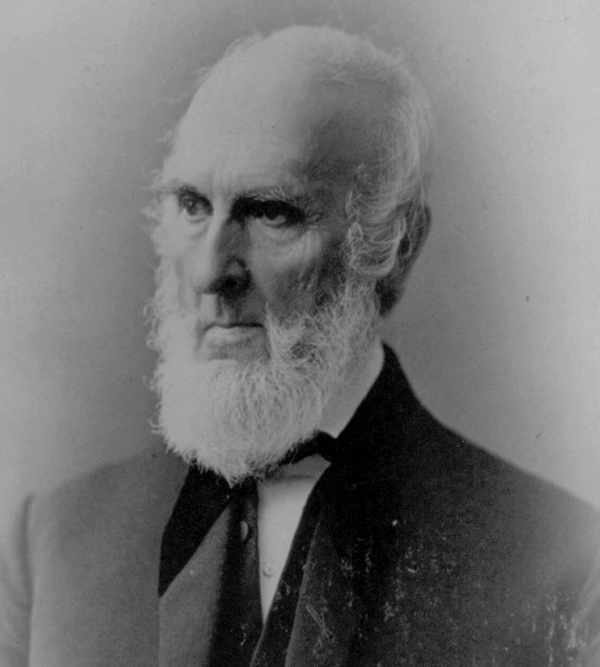
“Dear Lord and Father of Mankind” is a hymn with a fascinating backstory. It was written by John Greenleaf Whittier, a Quaker poet, in 1872. The hymn’s lyrics are derived from Whittier’s poem “The Brewing of Soma,” which criticizes the use of intoxicating substances in religious rituals to achieve a state of frenzy2.
Whittier, who valued the Quaker tradition of silent worship and inner reflection, wrote this hymn as a call for simplicity, serenity, and a deeper reverence for God. The hymn emphasizes the importance of finding peace and calm in God’s presence, rather than seeking ecstatic experiences2.
The hymn has become widely accepted and is cherished for its beautiful and contemplative lyrics, which encourage believers to seek a quiet and humble relationship with God
19How abundant are the good things
that you have stored up for those who fear you,
that you bestow in the sight of all,
on those who take refuge in you.
20In the shelter of your presence you hide them
from all human intrigues;
you keep them safe in your dwelling
from accusing tongues.
In the secret of thy presence,
Where the pure in heart may dwell,
Are the springs of sacred service
And a power that none can tell.
There my love must bring its offering,
There my heart must yield its praise,
And the Lord will come, revealing
All the secrets of his ways.
More than all my lips may utter,
More than all I do or bring,
Is the depth of my devotion
To my Saviour, Lord and King.
Nothing less will keep me tender;
Nothing less will keep me true;
Nothing less will keep the fragrance
And the bloom on all I do!
Blessed Lord, to see thee truly,
Then to tell as I have seen,
This shall rule my life supremely,
This shall be the sacred gleam.
Sealed again is all the sealing,
Pledged again my willing heart,
First to know thee, then to serve thee,
Then to see thee as thou art.
1 The Lord is my light and my salvation— whom shall I fear? The Lord is the stronghold of my life— of whom shall I be afraid?
2 When the wicked advance against me to devour[a] me, it is my enemies and my foes who will stumble and fall. 3 Though an army besiege me, my heart will not fear; though war break out against me, even then I will be confident.
4 One thing I ask from the Lord, this only do I seek: that I may dwell in the house of the Lord all the days of my life, to gaze on the beauty of the Lord and to seek him in his temple. 5 For in the day of trouble he will keep me safe in his dwelling; he will hide me in the shelter of his sacred tent and set me high upon a rock.
6 Then my head will be exalted above the enemies who surround me; at his sacred tent I will sacrifice with shouts of joy; I will sing and make music to the Lord.
A song that has become more popular over the years
Bart Millard penned a megahit in 2001 when he wrote, “I Can Only Imagine.” The song pictures how amazing it will be to be in Christ’s presence. Millard’s lyrics offered comfort to our family that next year when our seventeen-year-old daughter, Melissa, died in a car accident and we imagined what it was like for her to be in God’s presence.
But imagine spoke to me in a different way in the days following Mell’s death. As fathers of Melissa’s friends approached me, full of concern and pain, they said, “I can’t imagine what you’re going through.”
Their expressions were helpful, showing that they were grappling with our loss in an empathetic way—finding it unimaginable.
David pinpointed the depth of great loss when he described walking through “the darkest valley” (Psalm 23:4). The death of a loved one certainly is that, and we sometimes have no idea how we’re going to navigate the darkness. We can’t imagine ever being able to come out on the other side.
But as God promised to be with us in our darkest valley now, He also provides great hope for the future by assuring us that beyond the valley we’ll be in His presence. For the believer, to be “away from the body” means being present with Him (2 Corinthians 5:8). That can help us navigate the unimaginable as we imagine our future reunion with Him and others.
“Lord, There Are Times” is a beautiful and reflective song composed by Geoffrey Nobes, who has a long-standing association with The Salvation Army. The song is often performed by Salvation Army bands and choirs and is cherished for its heartfelt lyrics and soothing melody.
The song’s lyrics speak to the struggles and challenges that people face in their daily lives and how they can find comfort and strength in their faith. Nobes’ composition is known for its emotional depth and spiritual resonance, making it a favorite among many worshippers.
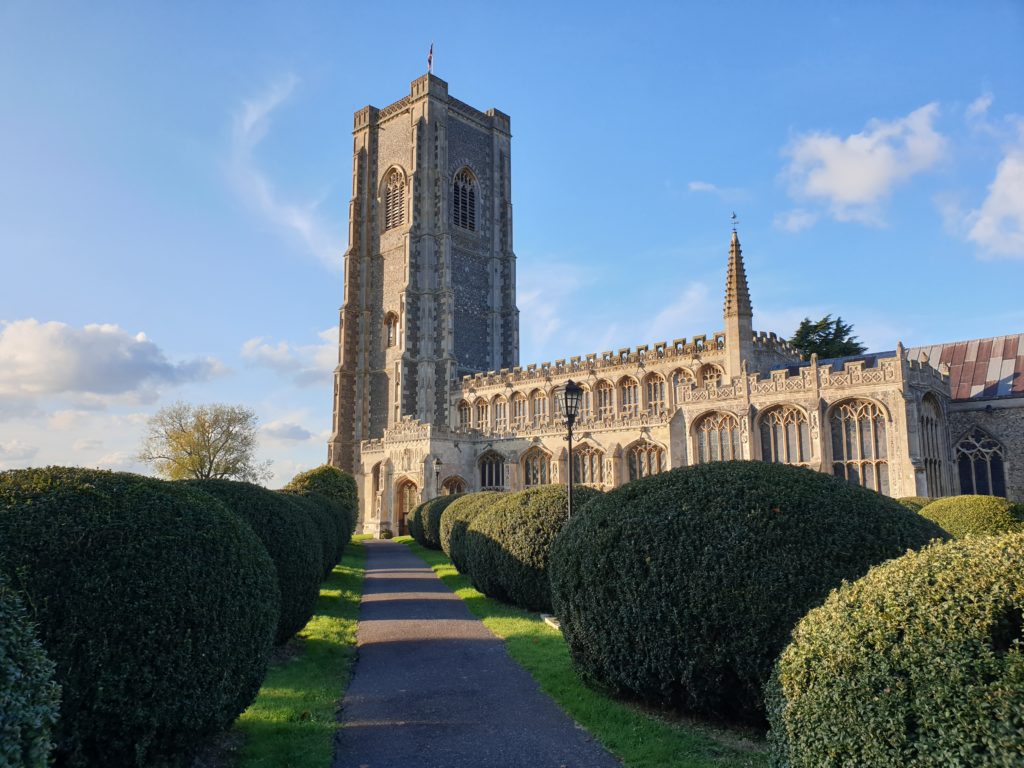
The tune “Lavenham” is often associated with this song, and it has been arranged and performed by various Salvation Army music groups. Geoffrey Nobes has dedicated this arrangement to the memory of his friend, Bandmaster Derek Wilding of Lavenham Corps.