Acts 9 New International Version
Saul’s Conversion
9 Meanwhile, Saul was still breathing out murderous threats against the Lord’s disciples. He went to the high priest 2 and asked him for letters to the synagogues in Damascus, so that if he found any there who belonged to the Way, whether men or women, he might take them as prisoners to Jerusalem. 3 As he neared Damascus on his journey, suddenly a light from heaven flashed around him. 4 He fell to the ground and heard a voice say to him, “Saul, Saul, why do you persecute me?”
5 “Who are you, Lord?” Saul asked.
“I am Jesus, whom you are persecuting,” he replied. 6 “Now get up and go into the city, and you will be told what you must do.”
7 The men travelling with Saul stood there speechless; they heard the sound but did not see anyone. 8 Saul got up from the ground, but when he opened his eyes he could see nothing. So they led him by the hand into Damascus. 9 For three days he was blind, and did not eat or drink anything.
10 In Damascus there was a disciple named Ananias. The Lord called to him in a vision, “Ananias!”
“Yes, Lord,” he answered.
11 The Lord told him, “Go to the house of Judas on Straight Street and ask for a man from Tarsus named Saul, for he is praying. 12 In a vision he has seen a man named Ananias come and place his hands on him to restore his sight.”
13 “Lord,” Ananias answered, “I have heard many reports about this man and all the harm he has done to your holy people in Jerusalem. 14 And he has come here with authority from the chief priests to arrest all who call on your name.”
15 But the Lord said to Ananias, “Go! This man is my chosen instrument to proclaim my name to the Gentiles and their kings and to the people of Israel. 16 I will show him how much he must suffer for my name.”
17 Then Ananias went to the house and entered it. Placing his hands on Saul, he said, “Brother Saul, the Lord—Jesus, who appeared to you on the road as you were coming here—has sent me so that you may see again and be filled with the Holy Spirit.” 18 Immediately, something like scales fell from Saul’s eyes, and he could see again. He got up and was baptised, 19 and after taking some food, he regained his strength.
O what a wonderful, wonderful day – day I will never forget;
After I’d wandered in darkness away, Jesus my Saviour I met.
O what a tender, compassionate friend – He met the need of my heart;
Shadows dispelling, With joy I am telling, He made all the darkness depart.
Chorus:
Heaven came down and glory filled my soul,
When at the cross the Saviour made me whole;
My sins were washed away –
And my night was turned to day –
Heaven came down and glory filled my soul!
Born of the Spirit with life from above into God’s fam’ly divine,
Justified fully thru Calvary’s love, O what a standing is mine!
And the transaction so quickly was made when as a sinner I came,
Took of the offer of grace He did proffer – He saved me, O praise His dear name!
Now I’ve a hope that will surely endure after the passing of time;
I have a future in heaven for sure, there in those mansions sublime.
And it’s because of that wonderful day when at the cross I believed;
Riches eternal and blessings supernal from His precious hand I received.
The words to the above song ‘Heaven came down’ is a brilliant and fitting song for someone who has just been converted. Below is a video of Salvation Army timbrelists doing a display to the march ‘Heaven Came Down’



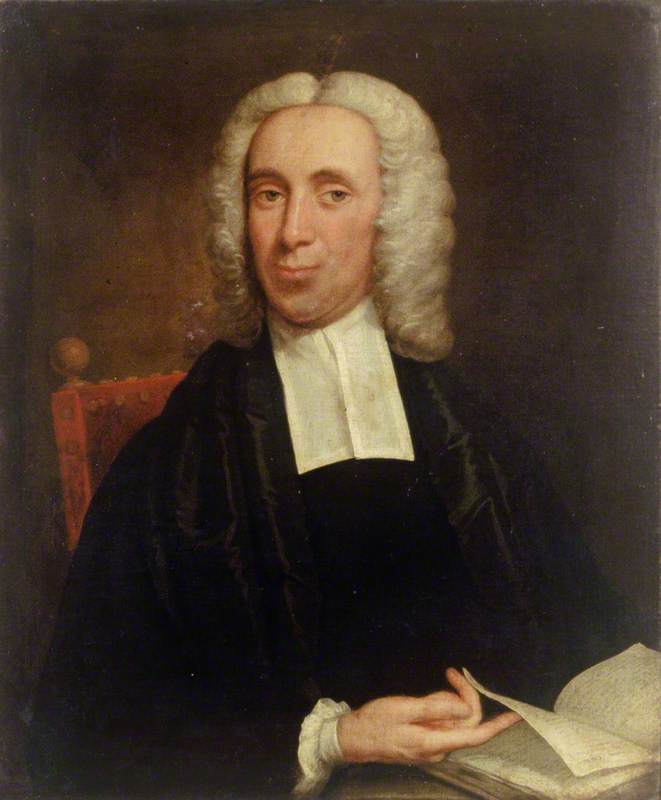 Watts was born in Southampton, England in 1674 and was brought up in the home of a committed religious Nonconformist; his father, also Isaac Watts, had been incarcerated twice for his views. Watts had a classical education at King Edward VI School, learning Latin, Greek, and Hebrew.Watts displayed a propensity for rhyme from an early age. He was once asked why he had his eyes open during prayers, to which he responded:A little mouse for want of stairs-ran up a rope to say its prayers.He received corporal punishment for this, to which he cried:O father, father, pity take And I will no more verses make.[1][2]Watts could not attend Oxford or Cambridge because he was a nonconformist and these universities were restricted to Anglicans—as were government positions at the time. He went to the Dissenting Academy at Stoke Newington in 1690. Much of the remainder of his life centred on that village, which is now part of Inner London.Following his education, Watts was called as pastor of a large independent chapel in London, Mark Lane Congregational Chapel, where he helped train preachers, despite his poor health. He held religious opinions that were more nondenominational or ecumenical than was common for a nonconformist Congregationalist.
 He had a greater interest in promoting education and scholarship than preaching for any particular sect. Watts took work as a private tutor and lived with the Nonconformist Hartopp family at Fleetwood House on Church Street in Stoke Newington. Through them, he became acquainted with their immediate neighbours Sir Thomas Abney and Lady Mary. He eventually lived for a total of 36 years in the Abney household, most of the time at Abney House, their second residence. (Lady Mary had inherited the manor of Stoke Newington in 1701 from her late brother Thomas Gunston.)On the death of Sir Thomas Abney in 1722, his widow Lady Mary and her unmarried daughter Elizabeth moved all her household to Abney House from Hertfordshire, and she invited Watts to continue with them. He particularly enjoyed the grounds at Abney Park, which Lady Mary planted with two elm walks leading down to an island heronry in the Hackney Brook, and he often sought inspiration there for the many books and hymns that he wrote.Watts lived at Abney Hall in Stoke Newington until his death in 1748; he was buried in Bunhill Fields. He left an extensive legacy of hymns, treatises, educational works, and essays. His work was influential amongst Nonconformist independents and religious revivalists of the 18th century, such as Philip Doddridge, who dedicated his best-known work to Watts.
 Christian Devotions, Health and General issues of the day