The Spirit of the Lord GOD is upon me, Because the LORD has anointed me To bring good news to the afflicted; He has sent me to bind up the broken hearted, To proclaim liberty to captives And freedom to prisoners;
Spirit of the living God,
Fall afresh on me.
Melt me, mould me, fill me, use me.
Spirit of the living God,
Fall afresh on me
I remember this was one of the many prayer choruses I came to learn of by heart as a young adult and one that has spoke a lot to me in my Christian life . It’s a prayer chorus that kind of speaks for itself, a chorus of prayer and repentance.
61 The Spirit of the Sovereign Lord is on me, because the Lord has anointed me to proclaim good news to the poor. He has sent me to bind up the brokenhearted, to proclaim freedom for the captives and release from darkness for the prisoners,[a] 2 to proclaim the year of the Lord’s favor and the day of vengeance of our God, to comfort all who mourn, 3 and provide for those who grieve in Zion— to bestow on them a crown of beauty instead of ashes, the oil of joy
7.He made known his ways to Moses, his deeds to the people of Israel: 8 The Lord is compassionate and gracious, slow to anger, abounding in love. 9 He will not always accuse, nor will he harbor his anger forever; 10 he does not treat us as our sins deserve or repay us according to our iniquities. 11 For as high as the heavens are above the earth, so great is his love for those who fear him; 12 as far as the east is from the west, so far has he removed our transgressions from us.
13 As a father has compassion on his children, so the Lord has compassion on those who fear him; 14 for he knows how we are formed, he remembers that we are dust. 15 The life of mortals is like grass, they flourish like a flower of the field; 16 the wind blows over it and it is gone, and its place remembers it no more. 17 But from everlasting to everlasting the Lord’s love is with those who fear him, and his righteousness with their children’s children— 18 with those who keep his covenant and remember to obey his precepts.
19 The Lord has established his throne in heaven, and his kingdom rules over all.
20 Praise the Lord, you his angels, you mighty ones who do his bidding, who obey his word. 21 Praise the Lord, all his heavenly hosts, you his servants who do his will. 22 Praise the Lord, all his works everywhere in his dominion.
“The angel of the Lord encamps around those who fear Him, and delivers them.”
This verse is a powerful assurance of divine protection. Here’s a breakdown of its deeper meaning:
🌟 Symbolism and Interpretation
“Angel of the Lord”: Often interpreted as a manifestation of God’s presence—some scholars even see this as a reference to the pre-incarnate Christ.
“Encamps around”: Suggests a constant, surrounding protection—like a military guard or a sheltering presence.
“Those who fear Him”: Not fear in the sense of terror, but reverence, awe, and deep respect for God’s holiness and authority.
“Delivers them”: God actively rescues and intervenes in the lives of those who trust and honor Him.
💬 Spiritual Insight
David wrote this psalm after being delivered from danger, and he uses this verse to highlight how God’s protection isn’t passive—it’s intentional and personal. The image of an angel setting up camp around someone evokes a sense of belonging, safety, and divine watchfulness.
🕊️ Encouragement
This verse reminds believers that they are never alone in their struggles. Whether facing fear, uncertainty, or spiritual battles, God’s presence surrounds and defends those who seek Him with reverence
1 Corinthians 15:12-20 12 But if it is preached that Christ has been raised from the dead, how can some of you say that there is no resurrection of the dead? 13 If there is no resurrection of the dead, then not even Christ has been raised. 14 And if Christ has not been raised, our preaching is useless and so is your faith. 15 More than that, we are then found to be false witnesses about God, for we have testified about God that he raised Christ from the dead. But he did not raise him if in fact the dead are not raised. 16 For if the dead are not raised, then Christ has not been raised either. 17 And if Christ has not been raised, your faith is futile; you are still in your sins. 18 Then those also who have fallen asleep in Christ are lost. 19 If only for this life we have hope in Christ, we are of all people most to be pitied. 20 But Christ has indeed been raised from the dead, the first fruits of those who have fallen asleep.
I love this passage from Corinthians, it gives us a reminder that Christ did die for our sins and that unless you accept him as your personal saviour you will remain a sinner.
1. O joyful sound! O glorious hour
When Christ by His almighty power
Arose and left the grave!
Now let our songs His triumph tell
Who broke the chains of death and hell,
And ever lives to save.
Refrain
He lives, He lives,
I know that my Redeemer lives.
He lives, He lives,
I know that my Redeemer lives.
2. The first begotten of the dead,
For us He rose, our glorious Head,
Immortal life to bring.
What though the saints, like Him shall die,
They share their Leader’s victory,
And triumph with their King. [Refrain]
3. No more we tremble at the grave;
For He who died our souls to save
Will raise our bodies, too.
What though this earthly house shall fail,
The Saviour’s power will yet prevail
And build it up anew. [Refrain]
Pictured in the video are The International Staff Band and The Melbourne Staff Band of The Salvation Army
11 Now faith is confidence in what we hope for and assurance about what we do not see. 2 This is what the ancients were commended for.
3 By faith we understand that the universe was formed at God’s command, so that what is seen was not made out of what was visible.
4 By faith Abel brought God a better offering than Cain did. By faith he was commended as righteous, when God spoke well of his offerings. And by faith Abel still speaks, even though he is dead.
5 By faith Enoch was taken from this life, so that he did not experience death: “He could not be found, because God had taken him away.”[a] For before he was taken, he was commended as one who pleased God. 6 And without faith it is impossible to please God, because anyone who comes to him must believe that he exists and that he rewards those who earnestly seek him.
7 By faith Noah, when warned about things not yet seen, in holy fear built an ark to save his family. By his faith he condemned the world and became heir of the righteousness that is in keeping with faith.
8 By faith Abraham, when called to go to a place he would later receive as his inheritance, obeyed and went, even though he did not know where he was going. 9 By faith he made his home in the promised land like a stranger in a foreign country; he lived in tents, as did Isaac and Jacob, who were heirs with him of the same promise. 10 For he was looking forward to the city with foundations, whose architect and builder is God. 11 And by faith even Sarah, who was past childbearing age, was enabled to bear children because she[b] considered him faithful who had made the promise. 12 And so from this one man, and he as good as dead, came descendants as numerous as the stars in the sky and as countless as the sand on the seashore.
13 All these people were still living by faith when they died. They did not receive the things promised; they only saw them and welcomed them from a distance, admitting that they were foreigners and strangers on earth. 14 People who say such things show that they are looking for a country of their own. 15 If they had been thinking of the country they had left, they would have had opportunity to return. 16 Instead, they were longing for a better country—a heavenly one. Therefore God is not ashamed to be called their God, for he has prepared a city for them.
17 By faith Abraham, when God tested him, offered Isaac as a sacrifice. He who had embraced the promises was about to sacrifice his one and only son, 18 even though God had said to him, “It is through Isaac that your offspring will be reckoned.”[c]19 Abraham reasoned that God could even raise the dead, and so in a manner of speaking he did receive Isaac back from death.
1 There is a better world, they say, O so bright! Where sin and woe are done away, O so bright! And music fills the balmy air, And angels with bright wings are there, And harps of gold and mansions fair, O so bright!
2 No clouds e’er pass along that sky, Happy land! No tear-drops glisten in the eye, Happy land! They drink the gushing streams of grace, And gaze upon the Saviour’s face Whose brightness fills the holy place; Happy land!
3 And wicked things and beasts of prey Come not there! And ruthless death and fierce decay Come not there! There all are holy, all are good; But hearts unwashed in Jesus’ blood, And guilty sinners unrenewed, Come not there!
4 And though we’re sinners every one, Jesus died! And though our crown of peace is gone, Jesus died! We may be cleansed from every stain, We may be crowned with bliss again, And in that land of Glory reign; Jesus died!
Derek Kane & The International Staff Band of The Salvation Army
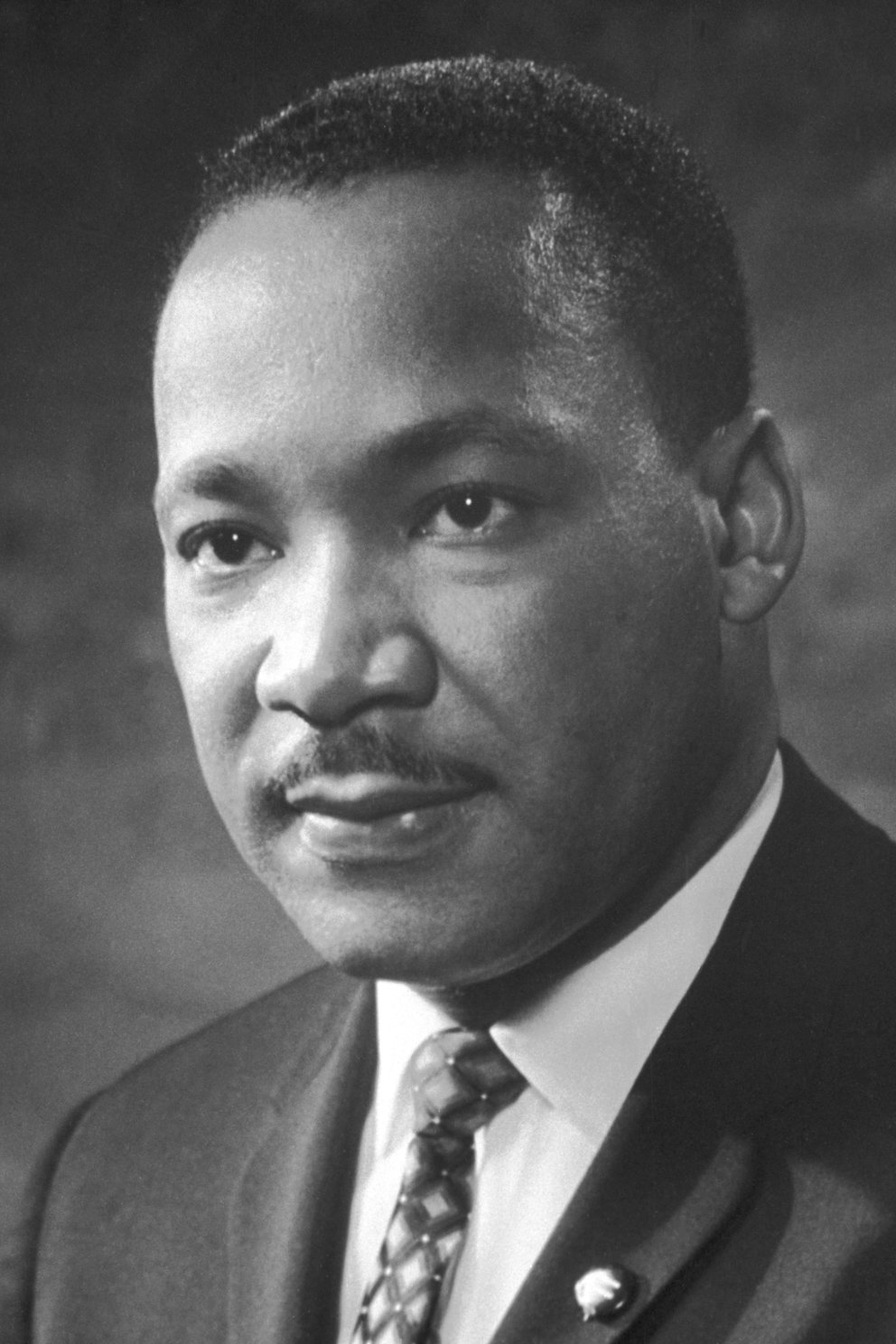
Martin Luther King, Jr., (January 15, 1929-April 4, 1968) was born Michael Luther King, Jr., but later had his name changed to Martin. His grandfather began the family’s long tenure as pastors of the Ebenezer Baptist Church in Atlanta, serving from 1914 to 1931; his father has served from then until the present, and from 1960 until his death Martin Luther acted as co-pastor. Martin Luther attended segregated public schools in Georgia, graduating from high school at the age of fifteen; he received the B. A. degree in 1948 from Morehouse College, a distinguished Negro institution of Atlanta from which both his father and grandfather had graduated. After three years of theological study at Crozer Theological Seminary in Pennsylvania where he was elected president of a predominantly white senior class, he was awarded the B.D. in 1951. With a fellowship won at Crozer, he enrolled in graduate studies at Boston University, completing his residence for the doctorate in 1953 and receiving the degree in 1955. In Boston he met and married Coretta Scott, a young woman of uncommon intellectual and artistic attainments. Two sons and two daughters were born into the family.
In 1954, Martin Luther King became pastor of the Dexter Avenue Baptist Church in Montgomery, Alabama. Always a strong worker for civil rights for members of his race, King was, by this time, a member of the executive committee of the National Association for the Advancement of Colored People, the leading organization of its kind in the nation. He was ready, then, early in December, 1955, to accept the leadership of the first great Negro nonviolent demonstration of contemporary times in the United States, the bus boycott described by Gunnar Jahn in his presentation speech in honor of the laureate. The boycott lasted 382 days. On December 21, 1956, after the Supreme Court of the United States had declared unconstitutional the laws requiring segregation on buses, Negroes and whites rode the buses as equals. During these days of boycott, King was arrested, his home was bombed, he was subjected to personal abuse, but at the same time he emerged as a Negro leader of the first rank.
In 1957 he was elected president of the Southern Christian Leadership Conference, an organization formed to provide new leadership for the now burgeoning civil rights movement. The ideals for this organization he took from Christianity; its operational techniques from Gandhi. In the eleven-year period between 1957 and 1968, King traveled over six million miles and spoke over twenty-five hundred times, appearing wherever there was injustice, protest, and action; and meanwhile he wrote five books as well as numerous articles. In these years, he led a massive protest in Birmingham, Alabama, that caught the attention of the entire world, providing what he called a coalition of conscience. and inspiring his “Letter from a Birmingham Jail”, a manifesto of the Negro revolution; he planned the drives in Alabama for the registration of Negroes as voters; he directed the peaceful march on Washington, D.C., of 250,000 people to whom he delivered his address, “l Have a Dream”, he conferred with President John F. Kennedy and campaigned for President Lyndon B. Johnson; he was arrested upwards of twenty times and assaulted at least four times; he was awarded five honorary degrees; was named Man of the Year by Time magazine in 1963; and became not only the symbolic leader of American blacks but also a world figure.
At the age of thirty-five, Martin Luther King, Jr., was the youngest man to have received the Nobel Peace Prize. When notified of his selection, he announced that he would turn over the prize money of $54,123 to the furtherance of the civil rights movement.
On the evening of April 4, 1968, while standing on the balcony of his motel room in Memphis, Tennessee, where he was to lead a protest march in sympathy with striking garbage workers of that city, he was assassinated.
22 Listen to your father, who gave you life, and do not despise your mother when she is old. 23 Buy the truth and do not sell it— wisdom, instruction and insight as well. 24 The father of a righteous child has great joy; a man who fathers a wise son rejoices in him. 25 May your father and mother rejoice; may she who gave you birth be joyful!
Saying 18
26 My son, give me your heart and let your eyes delight in my ways, 27 for an adulterous woman is a deep pit, and a wayward wife is a narrow well. 28 Like a bandit she lies in wait and multiplies the unfaithful among men.
Here we learn in verses 24 & 25 about the love and joy a father and mother has for their child, but in verse 26 we learn that if we give our hearts to God he will be with us at all times






 Christian Devotions, Health and General issues of the day