
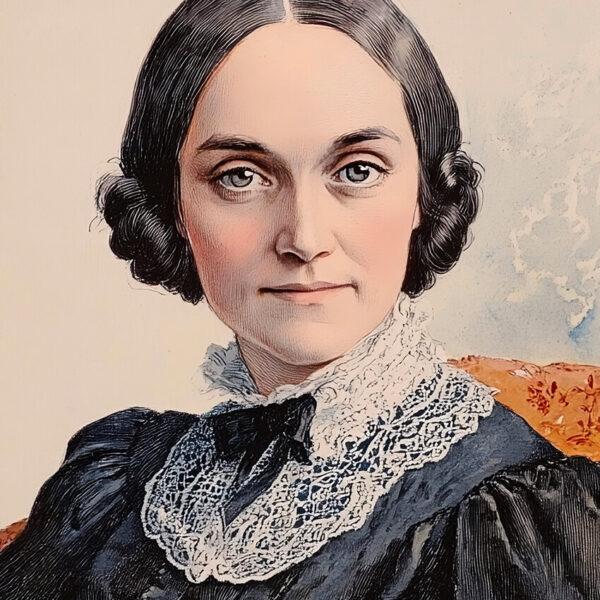
A Hymn Born in Suffering but Overflowing with Joy
The hymn was written in 1870 by Lydia Odell Baxter, a woman whose life was marked by chronic illness and long periods of confinement. For nearly thirty years, she lived as an invalid, often bedridden, yet her room became a place where pastors, evangelists, and Christian workers came not to comfort her—but to be comforted by her.
Despite constant pain, Lydia radiated a deep, unshakeable joy. Her “secret,” as she told visitors, was simple but profound:
“I have a very special armor. I have the Name of Jesus.”
Whenever discouragement crept in, she would whisper His name, and peace would return.
📖 Her Love for Biblical Names
During her years of illness, Lydia became a devoted student of Scripture, especially fascinated by the meanings of biblical names. She loved to talk about them with friends—names like Sarah (“princess”), Samuel (“asked of God”), and Isaac (“laughter”). But her favourite name, the one she clung to in suffering, was Jesus—“Savior.”
This deep affection for the name of Christ naturally blossomed into the hymn we know today.
✍️ Writing the Hymn
Lydia wrote “Take the Name of Jesus with You” just four years before her death, while still confined to her bed. The text was later set to music by William H. Doane and first published in 1871 in Pure Gold for the Sunday School.
The hymn quickly spread, becoming especially popular during the Moody–Sankey revival campaigns of the late 19th century. Its message—carry Jesus’ name as a shield, a comfort, and a joy—resonated deeply with believers everywhere.
💬 Why the Hymn Still Speaks
Knowing Lydia’s story gives the hymn a richer texture. These weren’t abstract words; they were the lived testimony of a woman who found strength in the name of Jesus when her body failed her. Her sickroom became a sanctuary of encouragement, and her hymn continues that ministry today.
It’s no wonder the Salvation Army and many evangelical traditions still treasure it—you can almost feel her faith woven into every line.
 Christian Devotions, Health and General issues of the day