Category: The Lord Jesus

“Take the Name of Jesus with You”

A Hymn Born in Suffering but Overflowing with Joy

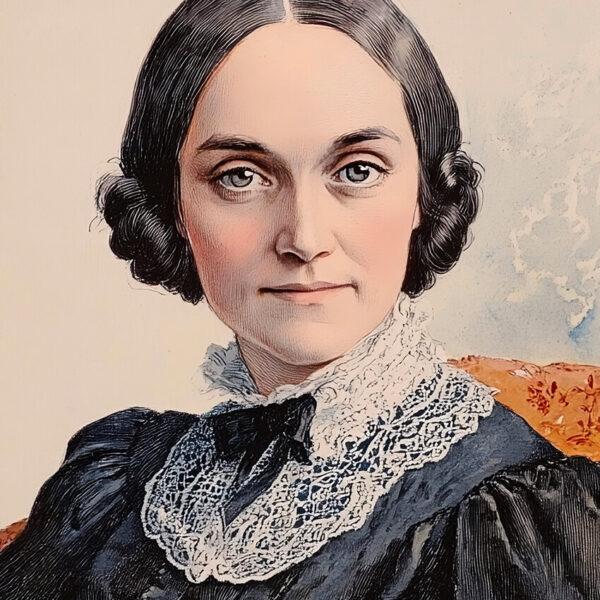
The hymn was written in 1870 by Lydia Odell Baxter, a woman whose life was marked by chronic illness and long periods of confinement. For nearly thirty years, she lived as an invalid, often bedridden, yet her room became a place where pastors, evangelists, and Christian workers came not to comfort her—but to be comforted by her.

Despite constant pain, Lydia radiated a deep, unshakeable joy. Her “secret,” as she told visitors, was simple but profound:

“I have a very special armor. I have the Name of Jesus.”

Whenever discouragement crept in, she would whisper His name, and peace would return.

📖 Her Love for Biblical Names

During her years of illness, Lydia became a devoted student of Scripture, especially fascinated by the meanings of biblical names. She loved to talk about them with friends—names like Sarah (“princess”), Samuel (“asked of God”), and Isaac (“laughter”). But her favourite name, the one she clung to in suffering, was Jesus—“Savior.”

This deep affection for the name of Christ naturally blossomed into the hymn we know today.

✍️ Writing the Hymn

Lydia wrote “Take the Name of Jesus with You” just four years before her death, while still confined to her bed. The text was later set to music by William H. Doane and first published in 1871 in Pure Gold for the Sunday School.

The hymn quickly spread, becoming especially popular during the Moody–Sankey revival campaigns of the late 19th century. Its message—carry Jesus’ name as a shield, a comfort, and a joy—resonated deeply with believers everywhere.

💬 Why the Hymn Still Speaks

Knowing Lydia’s story gives the hymn a richer texture. These weren’t abstract words; they were the lived testimony of a woman who found strength in the name of Jesus when her body failed her. Her sickroom became a sanctuary of encouragement, and her hymn continues that ministry today.

It’s no wonder the Salvation Army and many evangelical traditions still treasure it—you can almost feel her faith woven into every line.

John Samuel Bewley Monsell

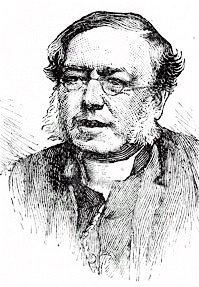
John Samuel Bewley Monsell (1811–1875) was an Irish Anglican clergyman and one of the most prolific hymnwriters of the 19th century. He wrote around 300 hymns, many of which remain in use today.

📍 Background

  • Born in St Columb’s, Londonderry
  • Educated at Trinity College, Dublin
  • Served in several clerical posts in Ireland and England
  • Later became Rector of St Nicolas’ Church, Guildford
  • Died after a tragic fall while inspecting church rebuilding work in 1875

✍️ His Hymns

Some of his best‑known hymns include:

  • Fight the Good Fight with All Thy Might
  • O Worship the Lord in the Beauty of Holiness
  • On Our Way Rejoicing
  • Sing to the Lord a Joyful Song

His writing is known for its joyful, uplifting tone and strong sense of the church year — something that aligns beautifully with your interest in Advent, remembrance, and devotional themes.

🧭 Why the Name Confusion?

“Mansell” and “Monsell” are often mixed up because:

  • The names sound similar
  • Older printed sources sometimes used inconsistent spellings
  • Handwritten parish records can be ambiguous

But all authoritative sources confirm Monsell as the correct spelling.

Who John Gowans Was

John Gowans (1934–2012) served as the 16th General of The Salvation Army from 1999 to 2002. Born in Blantyre, South Lanarkshire, he grew up in a Salvation Army family and eventually became one of the movement’s most influential leaders and creative voices.

✍️ His Creative Legacy

Gowans is especially remembered for his partnership with John Larsson, with whom he co‑wrote ten full-length Salvation Army musicals—works that shaped the worship and culture of the Army for decades. These include:

  • Take-Over Bid (1967)
  • Hosea (1969)
  • Jesus Folk (1972)
  • Spirit (1973)
  • Glory (1975)
  • White Rose (1977)
  • The Blood of the Lamb (1978)
  • Son of Man (1983)
  • Man Mark II (1985)
  • The Meeting (1990)

These musicals blended theology, storytelling, and accessible music in a way that resonated deeply with Salvationists worldwide.

📚 Writing and Spiritual Voice

Gowans also wrote the beloved “O Lord!” prayer-poem books, which many Salvationists still use devotionally. His writing style—simple, honest, and deeply human—mirrors the reflective tone you often appreciate in hymn stories and devotional writing.

🌍 Leadership and Ministry

Before becoming General, Gowans served in a wide range of appointments across the UK, France, and the USA. His leadership was marked by warmth, creativity, and a strong pastoral heart.

Homeless at Christmas

It’s that time of year again when we think of the homeless people especially at night when the temperature drops very low, very often to freezing or below.

Let us spare a thought for those who will not be able to afford a Christmas dinner as we sit down to ours on Christmas day .

I also admire those volunteers from many organisations such as The Salvation Army who give up their day to cater not just for the homeless but for the old and people on their own.

Matthew 25:34-40 Then the King will say to those on his right, ‘Come, you who are blessed by my Father, inherit the kingdom prepared for you from the foundation of the world. For I was hungry and you gave me food, I was thirsty and you gave me drink, I was a stranger and you welcomed me, I was naked and you clothed me, I was sick and you visited me, I was in prison and you came to me.’ Then the righteous will answer him, saying, ‘Lord, when did we see you hungry and feed you, or thirsty and give you drink? And when did we see you a stranger and welcome you, or naked and clothe you?

Christmas tree – Religious or not?

Photo by sergio souza on Pexels.com

Non-Christians claim that Christmas trees are a religious symbol of Christmas. Is a Christmas tree really a religious symbol of Christmas equal to a Nativity scene?

It depends on how religious symbol is defined. If it means anything to which religious significance can be attached, then yes, because many Christians have attached religious significance to the Christmas tree (e.g., the Tree of Life, both in Eden and on Calvary). But if a religious symbol of a holiday is considered a tangible object intrinsically attached to that holiday, and without which the holiday wouldn’t be the same, then no, because the celebration of Christmas does not require Christmas trees. Christmas trees are a decoration that Christians incorporated into their celebration of the holiday over the centuries. They did not become widespread in the English-speaking world until German relatives of the British royal family brought the custom to Great Britain in the 18th and 19th centuries. Christians justified the custom on religious grounds by explaining that the evergreen tree can symbolize eternal life. Even today in many traditionally Catholic countries, far more emphasis is placed on the much older Christian custom of erecting Nativity scenes, a tradition attributed to St. Francis of Assisi (1181-1226). In short, although Christmas trees are a beloved custom in much of the English-speaking world, they are not necessary to the celebration of the holiday and are not nearly as symbolic of the holiday as the crèche. If it is agreed that a religious symbol should be understood to mean a tangible object intrinsically attached to that holiday, then Christmas trees are to Christmas what dreidels are to Hanukkah—a beloved custom but not a religious symbol.

O Christmas tree, o Christmas tree
How lovely are thy branches
O Christmas tree, o Christmas tree
How lovely are thy branches

Your boughs so green in summertime
Stay bravely green in wintertime
O tannenbaum, o Christmas tree
How lovely are thy branches

Let us all remember
In our gift giving and our merriment
With our family and friends and loved ones
The real and true meaning of Christmas
The birth of our Lord and Saviour, Jesus Christ

O tannenbaum, o tannenbaum
How lovely are, are thy branches
O tannenbaum, o tannenbaum
How lovely are, how lovely are thy branches

The pillars all please faithfully
Our trust in God unchangedly
O tannenbaum, o tannenbaum
How love, lovely are thy branches

On Comet, on Cupid, on Donder and Blitzen
Ha ha ha ha

CANDLE OF HOPE

Romans 15:13

Image result for House decorated for Christmas

13 May the God of hope fill you with all joy and peace as you trust in him, so that you may overflow with hope by the power of the Holy Spirit.

Today is the first Sunday in advent ‘The Candle of Hope’

Isn’t it strange how at the lead up to Christmas you start to see adverts for donations to several charities whilst at the other end of the spectrum you see a house decorated like the one above.

Though having said that there used to be a person who lived in a nearby village to me decorated his house at Christmas to raise money for a ward in the local hospital.

God’s Time

Jeremiah 29

11 For I know the plans I have for you,” declares the LORD, “plans to prosper you and not to harm you, plans to give you hope and a future.

I have this tune on a recent CD I bought it’s a piano arrangement and I love the tune but being a musician when i looked up these words it made the tune a lot more meaningful.

As Jeremiah tells us God has plans for each of us we just need to pray for him to show and teach us the way to enable us do what he says.

In His time, in His time,See the source image
He makes all things beautiful in His time.
Lord, please show me everyday
As You’re teaching me Your way,
That you do just what You say in Your time.

In Your time, in Your time,
You make all things beautiful in Your time.
Lord, my life to You I bring,
With its winter and its spring,
May I fathom everything in Your time.

There’s a time, there’s a time
Both for sowing and for reaping there’s a time.
Time for losing, time for gain,
Time for joy and time for pain,
Every purpose under heaven has a time.

There are times, there are days,
Weeks and months we cannot understand God’s ways.
If for years we fail to scan
What is his eternal plan,
We’ll remember that He can, all the time.

God came to Earth

Lo, Jesus came heralded by a star and so, each year candles flicker and sweet carols rise. What an infinitely small view man takes of this cosmic happening and Spiritual intrusion! God came to earth. The Creator became a creature. The Prince of Peace became a pauper. The Word of God a speechless child. King […]

God came to Earth

God came to Earth

Lo, Jesus came heralded by a star

and so, each year candles flicker

and sweet carols rise.

What an infinitely small view man takes

of this cosmic happening

and Spiritual intrusion!

God came to earth.

The Creator became a creature.

The Prince of Peace became a pauper.

The Word of God a speechless child.

King he was in Heaven

Yet on earth a lowly vassal.

The Source of all knowledge

thought the world was flat!

The communicator of truth

spoke Hebrew and Aramaic.

God came to earth

to lie howling in his mother’s arms

and muzzling at her breast.

And yet,

We sing sentimental carols

of angel choirs and spotless shepherd boys

And wonder where our God has gone!