Tag: God
Prosperity and Pleasure
Job 36 New International Version – UK
36 Elihu continued:
2 ‘Bear with me a little longer and I will show you
that there is more to be said on God’s behalf.
3 I get my knowledge from afar;
I will ascribe justice to my Maker.
4 Be assured that my words are not false;
one who has perfect knowledge is with you.
5 ‘God is mighty, but despises no one;
he is mighty, and firm in his purpose.
6 He does not keep the wicked alive
but gives the afflicted their rights.
7 He does not take his eyes off the righteous;
he enthrones them with kings
and exalts them for ever.
8 But if people are bound in chains,
held fast by cords of affliction,
9 he tells them what they have done –
that they have sinned arrogantly.
10 He makes them listen to correction
and commands them to repent of their evil.
11 If they obey and serve him,
they will spend the rest of their days in prosperity
and their years in contentment.
12 But if they do not listen,
they will perish by the sword[a]
and die without knowledge.
Faith – an incredible source of strength
Faith can be an incredible source of strength during tough times. Here are a few ways it can help:

- Providing Hope: Faith often nurtures a sense of hope, reminding individuals that difficult circumstances are temporary and that better days lie ahead.
- Offering Perspective: Belief in something greater can put challenges into a broader context, offering reassurance that there’s a purpose or plan even in hardship.
- Building Community: Faith often connects individuals to supportive communities, like congregations or groups, where they can find encouragement and understanding.
- Instilling Resilience: Trust in God, or a higher power, can inspire perseverance and courage, enabling people to face adversity with greater strength.
- Encouraging Reflection: Through prayer, meditation, or worship, faith encourages self-reflection and peace of mind, which can be grounding in chaotic times.
Following God’s Commands

Deuteronomy 7 New International Version (NIV)
11 Therefore, take care to follow the commands, decrees and laws I give you today.
12 If you pay attention to these laws and are careful to follow them, then the Lord your God will keep his covenant of love with you, as he swore to your ancestors. 13 He will love you and bless you and increase your numbers. He will bless the fruit of your womb, the crops of your land—your grain, new wine and olive oil—the calves of your herds and the lambs of your flocks in the land he swore to your ancestors to give you.14 You will be blessed more than any other people; none of your men or women will be childless, nor will any of your livestock be without young.15 The Lord will keep you free from every disease. He will not inflict on you the horrible diseases you knew in Egypt, but he will inflict them on all who hate you. 16 You must destroy all the peoples the Lord your God gives over to you. Do not look on them with pity and do not serve their gods, for that will be a snare to you.
Once again as in so many other parts of the bible we are advised to follow God’s commandments and we are assured of God’s love as mentioned in verse 13.
1.
God’s love to me is wonderful,
That he should deign to hear
The faintest whisper of my heart,
Wipe from mine eyes the tear;
And though I cannot comprehend
Such love, so great, so deep,
In his strong hands my soul I trust,
He will not fail to keep.
Chorus
God’s love is wonderful,
God’s love is wonderful,
Wonderful that he should give his Son to die for me;
God’s love is wonderful!
2.
God’s love to me is wonderful!
My very steps are planned;
When mists of doubt encompass me,
I hold my Father’s hand.
His love has banished every fear,
In freedom I rejoice,
And with my quickened ears I hear
The music of his voice.
3.
God’s love to me is wonderful!
He lights the darkest way;
I now enjoy his fellowship,
‘Twill last through endless day.
My Father doth not ask that I
Great gifts on him bestow,
But only that I love him too,
And serve him here below.
Love and Hate

1 John 2 New International Version
Love and Hatred for Fellow Believers
3 We know that we have come to know him if we keep his commands. 4 Whoever says, “I know him,” but does not do what he commands is a liar, and the truth is not in that person. 5 But if anyone obeys his word, love for God[a] is truly made complete in them. This is how we know we are in him: 6 Whoever claims to live in him must live as Jesus did.
7 Dear friends, I am not writing you a new command but an old one, which you have had since the beginning. This old command is the message you have heard. 8 Yet I am writing you a new command; its truth is seen in him and in you, because the darkness is passing and the true light is already shining.
9 Anyone who claims to be in the light but hates a brother or sister[b] is still in the darkness. 10 Anyone who loves their brother and sister[c] lives in the light, and there is nothing in them to make them stumble. 11 But anyone who hates a brother or sister is in the darkness and walks around in the darkness. They do not know where they are going, because the darkness has blinded them.
Wow! what a theme to follow yesterdays blog on Reconciliation, comes right to the point doesn’t it
As the above reading is telling us, ‘As Christians we are supposed to love one another’, turn the other cheek etc.
As humans it is only natural that personalities will clash even if you are Christians in the same church.
Even I have fell out with people in my Church but I don’t like the atmosphere it creates and usually when things have calmed down that is usually when the apologies come
A little on that’s full of innocence
He doesn’t know that something’s out of place
Another one dreams murder all night
He’s been living full of hatred all his life
Well, I guess it’s always been this way
A world that’s full of love and hate
Oh God, but will it stay this way
So much love, so much hate
It goes on and on and on
Around and again
On and on and on
Around and again
It goes on and on and on
Around and again
A mother’s willing to give her life
While another one throws away her child
A son stands and he turns the other cheek
While another one spits in a face while it bleeds
Well, I guess it’s always been this way
A world that’s full of love and hate
Oh God, but will it stay this way
So much love, so much hate
It goes on and on and on
Around and again
On and on and on
Around and again
It goes on and on and on
Around and again
It goes on and on and on
Around and again
On and on and on
Around and again
It goes on and on and on
Around and again
This evil that’s within is hiding in our skin
This evil that’s within is hiding in our skin
What are we
When will we
Why are we still wondering
What are we
When will we
Why are we still wondering
Oh Jesus, I can’t take the hate anymore
Save us from ourselves before
We on and on and on
Around and again
It goes on and on and on
Around and again
On and on and on
Around and again
It goes on and on and on
Around and again
On and on and on
Around and again
It goes on and on and on
Around and again
It goes on and on and on
Around and again
On and on and on
Around and again
It goes on and on and on
Around and again

Unimaginable

Though I walk through the darkest valley, I will fear no evil, for you are with me.
Today’s Scripture & Insight: Psalm 23
Bart Millard penned a megahit in 2001 when he wrote, “I Can Only Imagine.” The song pictures how amazing it will be to be in Christ’s presence. Millard’s lyrics offered comfort to our family that next year when our seventeen-year-old daughter, Melissa, died in a car accident and we imagined what it was like for her to be in God’s presence.
But imagine spoke to me in a different way in the days following Mell’s death. As fathers of Melissa’s friends approached me, full of concern and pain, they said, “I can’t imagine what you’re going through.”
Their expressions were helpful, showing that they were grappling with our loss in an empathetic way—finding it unimaginable.
David pinpointed the depth of great loss when he described walking through “the darkest valley” (Psalm 23:4). The death of a loved one certainly is that, and we sometimes have no idea how we’re going to navigate the darkness. We can’t imagine ever being able to come out on the other side.
But as God promised to be with us in our darkest valley now, He also provides great hope for the future by assuring us that beyond the valley we’ll be in His presence. For the believer, to be “away from the body” means being present with Him (2 Corinthians 5:8). That can help us navigate the unimaginable as we imagine our future reunion with Him and others.
The Journey to Bethlehem
Luke 2:1-20 New International Version

The Birth of Jesus
2 In those days Caesar Augustus issued a decree that a census should be taken of the entire Roman world. 2 (This was the first census that took place while[a] Quirinius was governor of Syria.) 3 And everyone went to their own town to register.
4 So Joseph also went up from the town of Nazareth in Galilee to Judea, to Bethlehem the town of David, because he belonged to the house and line of David. 5 He went there to register with Mary, who was pledged to be married to him and was expecting a child. 6 While they were there, the time came for the baby to be born, 7 and she gave birth to her firstborn, a son. She wrapped him in cloths and placed him in a manger, because there was no guest room available for them.
Can you imagine the distance Mary & Joseph had to travel from Nazareth to Bethlehem (about 90 odd miles) on mostly hot days with only a donkey as a way of transport, no cars, buses, trains or planes to get there. What we must remember is it is with God’s guidance they both arrived in Bethlehem safely
How far is it to Bethlehem?
Not very far.
Shall we find the stable room
Lit by a star?
Can we see the little Child?
Is He within?
If we lift the wooden latch
May we go in?
May we stroke the creatures there
Ox, ass, or sheep?
May we peep like them and see
Jesus asleep?
If we touch His tiny hand
Will He awake?
Will He know we’ve come so far
Just for His sake?
Great kings have precious gifts
And we have naught
Little smiles and little tears
Are all we brought.
For all weary children
Mary must weep
Here, on His bed of straw
Sleep, children, sleep.
God in His mother’s arms
Babes in the byre
Sleep, as they sleep who find
Their heart’s desire.
Blest Are the Pure in Heart
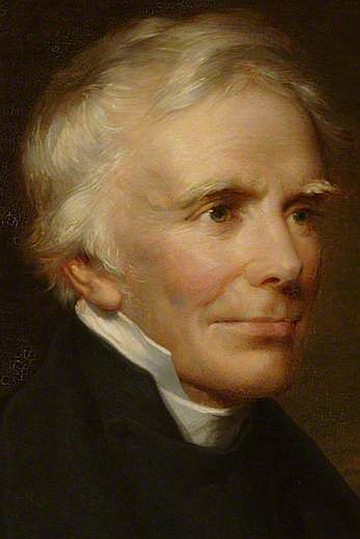
“Blest Are the Pure in Heart” is a hymn based on the Beatitude from Matthew 5:8, which states, “Blessed are the pure in heart, for they shall see God.” This hymn emphasizes the importance of purity of heart in the Christian faith, suggesting that those who maintain a pure heart will be able to see and experience God more fully.
The hymn was written by John Keble, an English churchman and one of the leaders of the Oxford Movement, which sought to revive the Catholic aspects of the Anglican Church in the 19th century. Keble’s hymn reflects his deep theological insights and his desire to inspire a sincere and devout Christian life.
The message of the hymn aligns with the broader teachings of the Beatitudes, which are part of Jesus’ Sermon on the Mount. These teachings highlight the values and attitudes that are blessed by God, such as humility, mercy, and purity of heart12.
Blessed Assurance

lessed assurance, Jesus is mine!
O what a foretaste of glory divine!
Heir of salvation, purchase of God,
Born of his spirit, washed in his blood.
This is my story, this is my song,
Praising my Savior all the day long.
Tune composer Phoebe Palmer Knapp (1839-1908) played a melody to Fanny Crosby and asked, “What does the melody say to you?” Crosby replied that the tune said, “Blessed assurance, Jesus is mine!” and proceeded to recite the entire first stanza of the now-famous hymn. Knapp was one of several tune writers that worked with Fanny Crosby. It was not unusual for one of her texts to be inspired by a preexisting tune. Knapp was the composer of more than five hundred gospel hymns and tunes.
Fanny Crosby (1820-1915), blind at the age of six weeks, was a lifelong Methodist who began composing hymns at age six. She became a student at the New York Institute of the Blind at age 15 and joined the faculty of the Institute at 22, teaching rhetoric and history. In 1885, Crosby married Alexander Van Alstyne, also a student at the Institute and later a member of the faculty. He was a fine musician and, like Fanny, a lover of literature.
An author of more than 8,000 gospel hymn texts, she drew her inspiration from her own faith. Crosby published hymns under several pen names including “Ella Dale,” “Mrs. Kate Gringley,” and “Miss Viola V. A.” Her hymn texts were staples for the music of the most prominent gospel song writers of her day.
Frances Jane Crosby’s hymns have historically been among the most popular songs sung by Methodists. “Blessed Assurance” (1873) is one of the ten most popular hymns sung by United Methodists according to Carlton Young, and it is one of eight Crosby hymns in The United Methodist Hymnal.
“Blessed Assurance” was published in 1873 in the monthly magazine edited by Joseph Fairchild Knapp and Phoebe Palmer Knapp, Guide to Holiness. Editor John R. Sweney included it in Gems of Praise (Philadelphia, 1873), and Knapp also chose it for “Bible School Songs” (1873). Perhaps the biggest boost came when it appeared in Gospel Songs, No. 5 (1887) by Ira Sankey and was sung extensively in the Moody and Sankey revivals in Great Britain and the United States. It has been a part of Methodist hymnals since 1889.
This hymn has inspired many singers ranging from those in evangelistic crusades to theologians. Don E. Saliers, William R. Cannon Distinguished Professor of Theology and Worship Emeritus at Candler School of Theology, Emory University in Atlanta, borrowed a portion of the opening stanza for his liturgical theology text, Worship as Theology: Foretaste of Glory Divine (1994). If one enters “foretaste of glory divine” into a Google search, numerous sermon titles appear that incorporate this phrase. YouTube renditions of the hymn abound.
Crosby captured the poetic essence of the Wesleyan understanding of Christian perfection in the phrase, “O what a foretaste of glory divine!” The entire hymn is focused on heaven, a place where “perfect submission” and “perfect delight” [stanza 2] will take place. The earthly existence is one of “watching and waiting, looking above” [stanza 3]. As we submit ourselves to Christ and are “filled with his goodness” and “lost in his love” [stanza 3], we are remade in Christ’s image and are moving toward Christian perfection.
This hymn appeals to the senses in a rich way. Not only do we have a “foretaste of glory,” we experience “visions of rapture [that] burst on my sight,” and we hear “echoes of mercy, whispers of love” [stanza 2].
The refrain calls us to “prais[e]. . . my Savior all the day long,” echoing I Thessalonians 5:17, “Pray without ceasing.”
Because of her long life, Fanny Crosby had an extraordinary relationship with several United States presidents, even penning poems in their honor on occasion, and she was influential on the spiritual life of or a friend to Presidents Martin Van Buren (8th), John Tyler (10th), James K. Polk (11th), and Grover Cleveland (22nd and 24th). She addressed a joint session of Congress on the topic of education for the blind.
Middle class women in nineteenth-century United States had little voice in worship, however. One of the only ways for a woman to claim the authority to be heard was by direct personal revelation from God. Fanny Crosby readily claimed God’s personal revelation as a source for her hymns; her personal revelation then became a communal inspiration as Christians throughout the world sang her hymns and confirmed her faith experience as their own.
An Almighty Hand

“It Takes an Almighty Hand” is a song by Ian White, released in 1987 under Little Misty Music and administered by Integrity Music1. The song is often associated with harvest celebrations and has been performed in various church services12.
The lyrics reflect themes of gratitude and recognition of divine power in the natural world, emphasizing the belief that it takes an almighty hand to create and sustain life. This song is particularly popular during harvest festivals, where communities come together to give thanks for the bounty of the earth2.
 Christian Devotions, Health and General issues of the day