Tag: Jesus

The Good Shepherd

John 10 V11 -18

11 “I am the good shepherd. The good shepherd lays down his life for the sheep. 12 The hired hand is not the shepherd and does not own the sheep. So when he sees the wolf coming, he abandons the sheep and runs away. Then the wolf attacks the flock and scatters it. 13 The man runs away because he is a hired hand and cares nothing for the sheep.
14 “I am the good shepherd; I know my sheep and my sheep know me— 15 just as the Father knows me and I know the Father—and I lay down my life for the sheep. 16 I have other sheep that are not of this sheep pen. I must bring them also. They too will listen to my voice, and there shall be one flock and one shepherd. 17 The reason my Father loves me is that I lay down my life—only to take it up again. 18 No one takes it from me, but I lay it down of my own accord. I have authority to lay it down and authority to take it up again. This command I received from my Father.”See the source image

In the story of the Good Shepherd we are reminded how Jesus looks after and cares for his flock. As human beings we would do well to remember that even in our darkest moments Jesus is still there looking over us and guiding us

Blest Are the Pure in Heart

“Blest Are the Pure in Heart” is a hymn based on the Beatitude from Matthew 5:8, which states, “Blessed are the pure in heart, for they shall see God.” This hymn emphasizes the importance of purity of heart in the Christian faith, suggesting that those who maintain a pure heart will be able to see and experience God more fully.

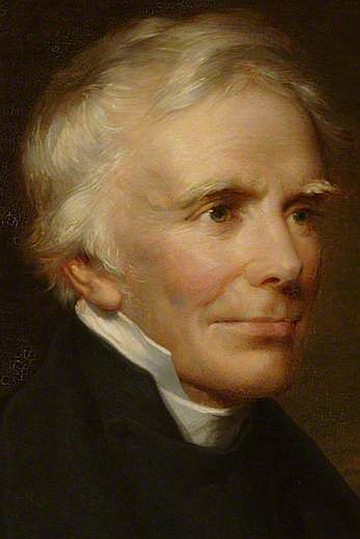
The hymn was written by John Keble, an English churchman and one of the leaders of the Oxford Movement, which sought to revive the Catholic aspects of the Anglican Church in the 19th century. Keble’s hymn reflects his deep theological insights and his desire to inspire a sincere and devout Christian life.

The message of the hymn aligns with the broader teachings of the Beatitudes, which are part of Jesus’ Sermon on the Mount. These teachings highlight the values and attitudes that are blessed by God, such as humility, mercy, and purity of heart12.

Blessed Assurance

lessed assurance, Jesus is mine!
O what a foretaste of glory divine!
Heir of salvation, purchase of God,
Born of his spirit, washed in his blood.
This is my story, this is my song,
Praising my Savior all the day long.

Tune composer Phoebe Palmer Knapp (1839-1908) played a melody to Fanny Crosby and asked, “What does the melody say to you?” Crosby replied that the tune said, “Blessed assurance, Jesus is mine!” and proceeded to recite the entire first stanza of the now-famous hymn. Knapp was one of several tune writers that worked with Fanny Crosby. It was not unusual for one of her texts to be inspired by a preexisting tune. Knapp was the composer of more than five hundred gospel hymns and tunes.

Fanny Crosby (1820-1915), blind at the age of six weeks, was a lifelong Methodist who began composing hymns at age six. She became a student at the New York Institute of the Blind at age 15 and joined the faculty of the Institute at 22, teaching rhetoric and history. In 1885, Crosby married Alexander Van Alstyne, also a student at the Institute and later a member of the faculty. He was a fine musician and, like Fanny, a lover of literature.

An author of more than 8,000 gospel hymn texts, she drew her inspiration from her own faith. Crosby published hymns under several pen names including “Ella Dale,” “Mrs. Kate Gringley,” and “Miss Viola V. A.” Her hymn texts were staples for the music of the most prominent gospel song writers of her day.

Frances Jane Crosby’s hymns have historically been among the most popular songs sung by Methodists. “Blessed Assurance” (1873) is one of the ten most popular hymns sung by United Methodists according to Carlton Young, and it is one of eight Crosby hymns in The United Methodist Hymnal.

“Blessed Assurance” was published in 1873 in the monthly magazine edited by Joseph Fairchild Knapp and Phoebe Palmer Knapp, Guide to Holiness. Editor John R. Sweney included it in Gems of Praise (Philadelphia, 1873), and Knapp also chose it for “Bible School Songs” (1873). Perhaps the biggest boost came when it appeared in Gospel Songs, No. 5 (1887) by Ira Sankey and was sung extensively in the Moody and Sankey revivals in Great Britain and the United States. It has been a part of Methodist hymnals since 1889.

This hymn has inspired many singers ranging from those in evangelistic crusades to theologians. Don E. Saliers, William R. Cannon Distinguished Professor of Theology and Worship Emeritus at Candler School of Theology, Emory University in Atlanta, borrowed a portion of the opening stanza for his liturgical theology text, Worship as Theology: Foretaste of Glory Divine (1994). If one enters “foretaste of glory divine” into a Google search, numerous sermon titles appear that incorporate this phrase. YouTube renditions of the hymn abound.

Crosby captured the poetic essence of the Wesleyan understanding of Christian perfection in the phrase, “O what a foretaste of glory divine!” The entire hymn is focused on heaven, a place where “perfect submission” and “perfect delight” [stanza 2] will take place. The earthly existence is one of “watching and waiting, looking above” [stanza 3]. As we submit ourselves to Christ and are “filled with his goodness” and “lost in his love” [stanza 3], we are remade in Christ’s image and are moving toward Christian perfection.

This hymn appeals to the senses in a rich way. Not only do we have a “foretaste of glory,” we experience “visions of rapture [that] burst on my sight,” and we hear “echoes of mercy, whispers of love” [stanza 2].

The refrain calls us to “prais[e]. . . my Savior all the day long,” echoing I Thessalonians 5:17, “Pray without ceasing.”

Because of her long life, Fanny Crosby had an extraordinary relationship with several United States presidents, even penning poems in their honor on occasion, and she was influential on the spiritual life of or a friend to Presidents Martin Van Buren (8th), John Tyler (10th), James K. Polk (11th), and Grover Cleveland (22nd and 24th). She addressed a joint session of Congress on the topic of education for the blind.

Middle class women in nineteenth-century United States had little voice in worship, however. One of the only ways for a woman to claim the authority to be heard was by direct personal revelation from God. Fanny Crosby readily claimed God’s personal revelation as a source for her hymns; her personal revelation then became a communal inspiration as Christians throughout the world sang her hymns and confirmed her faith experience as their own.

Being Wise in the Spirit

Image result for Gods wisdom

1 Corinthians 2 New International Version

God’s Wisdom Revealed by the Spirit

We do, however, speak a message of wisdom among the mature, but not the wisdom of this age or of the rulers of this age, who are coming to nothing. No, we declare God’s wisdom, a mystery that has been hidden and that God destined for our glory before time began. None of the rulers of this age understood it, for if they had, they would not have crucified the Lord of glory. However, as it is written:

“What no eye has seen,
    what no ear has heard,
and what no human mind has conceived”[b]
    the things God has prepared for those who love him—

10 these are the things God has revealed to us by his Spirit.

The Spirit searches all things, even the deep things of God. 11 For who knows a person’s thoughts except their own spirit within them? In the same way no one knows the thoughts of God except the Spirit of God.12 What we have received is not the spirit of the world, but the Spirit who is from God, so that we may understand what God has freely given us.13 This is what we speak, not in words taught us by human wisdom but in words taught by the Spirit, explaining spiritual realities with Spirit-taught words.[c] 14 The person without the Spirit does not accept the things that come from the Spirit of God but considers them foolishness,and cannot understand them because they are discerned only through the Spirit. 15 The person with the Spirit makes judgements about all things, but such a person is not subject to merely human judgements,16 for,

“Who has known the mind of the Lord
    so as to instruct him?”[d]

But we have the mind of Christ.

There’s a peace I’ve come to know
Though my heart and flesh may fail
There’s an anchor for my soul
I can say “It is well”
Jesus has overcome
And the grave is overwhelmed
The victory is won
He is risen from the dead
And I will rise when He calls my name
No more sorrow, no more pain
I will rise on eagles’ wings
Before my God fall on my knees
And rise
I will rise
There’s a day that’s drawing near
When this darkness breaks to light
And the shadows disappear
And my faith shall be my eyes
Jesus has overcome
And the grave is overwhelmed
The victory is won
He is risen from the dead
And I will rise when He calls my name
No more sorrow, no more pain
I will rise on eagles’ wings
Before my God fall on my knees
And rise
I will rise
And I hear the voice of many angels sing,
“Worthy is the Lamb”
And I hear the cry of every longing heart,
“Worthy is the Lamb”
And I will rise when He calls my name
No more sorrow, no more pain
I will rise on eagles’ wings
Before my God fall on my knees
And rise
I will rise

The Wondrous Love of Jesus

The hymn “Sing the Wondrous Love of Jesus,” also known as “When We All Get to Heaven,” was written by Eliza E. Hewitt in 1898. Hewitt, a Philadelphia native, collaborated with composer Emily D. Wilson to create this uplifting gospel song12.

Eliza Hewitt was a schoolteacher who turned to hymn writing after a severe spinal injury left her bedridden for an extended period. During her recovery, she found solace in writing hymns and became an active participant in her church’s Sunday school and other religious activities2.

The hymn reflects the revivalist spirit of the late 19th century, capturing themes of hope, faith, and the promise of eternal life. It was often sung at Methodist camp meetings and other revival gatherings, where it inspired many with its message of joyous anticipation of heaven1

When God Says No

Isaiah 25:1-5 New International Version – UK (NIVUK)

Praise to the Lord

25 Lord, you are my God;
    I will exalt you and praise your name,
for in perfect faithfulness
    you have done wonderful things,
    things planned long ago.
You have made the city a heap of rubble,
    the fortified town a ruin,
the foreigners’ stronghold a city no more;
    it will never be rebuilt.
Therefore strong peoples will honour you;
    cities of ruthless nations will revere you.
You have been a refuge for the poor,
    a refuge for the needy in their distress,
a shelter from the storm
    and a shade from the heat.
For the breath of the ruthless
    is like a storm driving against a wall
    and like the heat of the desert.
You silence the uproar of foreigners;
    as heat is reduced by the shadow of a cloud,
    so the song of the ruthless is stilled.

I’ve had many tears and sorrows,
I’ve had questions for tomorrow,
There’ve been times
I didn’t know right from wrong:
But in every situation
God gave blessed consolation
That my trials come
To only make me strong.

Through it all, through it all,
I’ve learned to trust in Jesus,
I’ve learned to trust in God;
Through it all, through it all,
I’ve learned to depend upon His Word.

I’ve been to lots of places,
And I’ve seen a lot of faces,
There’ve been times I felt so all alone;
But in my lonely hours,
Yes, those precious lonely hours,
Jesus let me know that I was His own.

Through it all, through it all,
I’ve learned to trust in Jesus,
I’ve learned to trust in God;
Through it all, through it all,
I’ve learned to depend upon His Word.

I thank God for the mountains,
And I thank Him for the valleys,
I thank Him for the storms
He brought me through;
For if I’d never had a problem
I wouldn’t know
That He could solve them,
I’d never know what faith
In God could do.

Through it all, through it all,
I’ve learned to trust in Jesus,
I’ve learned to trust in God;
Through it all, through it all,
I’ve learned to depend upon His Word.

When God says no, He has a plan. Keep trusting Him!

Holy Ground

Image result for Holy Ground

Exodus 3 New International Version 

Moses and the Burning Bush

Now Moses was tending the flock of Jethro his father-in-law, the priest of Midian, and he led the flock to the far side of the wilderness and came to Horeb, the mountain of God. There the angel of the Lord appeared to him in flames of fire from within a bush. Moses saw that though the bush was on fire it did not burn up. So Moses thought, “I will go over and see this strange sight—why the bush does not burn up.”

When the Lord saw that he had gone over to look, God called to him from within the bush, “Moses! Moses!”

And Moses said, “Here I am.”

“Do not come any closer,” God said. “Take off your sandals, for the place where you are standing is holy ground.” Then he said, “I am the God of your father,[a] the God of Abraham, the God of Isaac and the God of Jacob.” At this, Moses hid his face, because he was afraid to look at God.

The Lord said, “I have indeed seen the misery of my people in Egypt. I have heard them crying out because of their slave drivers, and I am concerned about their suffering. So I have come down to rescue them from the hand of the Egyptians and to bring them up out of that land into a good and spacious land, a land flowing with milk and honey—the home of the Canaanites, Hittites, Amorites, Perizzites, Hivites and Jebusites. And now the cry of the Israelites has reached me, and I have seen the way the Egyptians are oppressing them. 10 So now, go. I am sending you to Pharaoh to bring my people the Israelites out of Egypt.”

As I walked
Through the doors
I sensed his presence
And i knew
This was a place
Where love abounds
For this is a temple
The Jehovah God abides here
we are standing
In his presence
On holy ground

We are standing
On holy ground
And i know,
I know there are angels
All around
Let us praise,
Praise Jesus now
we are standing

On holy ground

In his presence
there is joy
Beyond all measure
And at his feet
peace of mind
Can still be found
If you have a need
I know he has the answer
reach out and claim it
For we are standing
On holy ground

We are standing
On holy ground
And i know,
I know there are angels
All around
Let us praise,
Praise Jesus now
we are standing

On holy ground

We are standing
On holy ground
And i know,
I know there are angels
All around
Let us praise,
Praise Jesus now
we are standing

On holy ground.

In his holy wonderful presence
He loves us in our hour of sorrow
He’s our hope, our hope for tomorrow
We are standing in his presence
In holy ground
Holy ground

Looking to Jesus

Romans 6:23 English Standard Version

23 For the wages of sin is death, but the free gift of God is eternal life in Christ Jesus our Lord.

Matthew 25:31-46 English Standard Version

See the source image

The Final Judgment
31 “When the Son of Man comes in his glory, and all the angels with him, then he will sit on his glorious throne. 32 Before him will be gathered all the nations, and he will separate people one from another as a shepherd separates the sheep from the goats. 33 And he will place the sheep on his right, but the goats on the left. 34 Then the King will say to those on his right, ‘Come, you who are blessed by my Father, inherit the kingdom prepared for you from the foundation of the world. 35 For I was hungry and you gave me food, I was thirsty and you gave me drink, I was a stranger and you welcomed me, 36 I was naked and you clothed me, I was sick and you visited me, I was in prison and you came to me.’ 37 Then the righteous will answer him, saying, ‘Lord, when did we see you hungry and feed you, or thirsty and give you drink? 38 And when did we see you a stranger and welcome you, or naked and clothe you? 39 And when did we see you sick or in prison and visit you?’ 40 And the King will answer them, ‘Truly, I say to you, as you did it to one of the least of these my brothers,[a] you did it to me.’
41 “Then he will say to those on his left, ‘Depart from me, you cursed, into the eternal fire prepared for the devil and his angels. 42 For I was hungry and you gave me no food, I was thirsty and you gave me no drink, 43 I was a stranger and you did not welcome me, naked and you did not clothe me, sick and in prison and you did not visit me.’ 44 Then they also will answer, saying, ‘Lord, when did we see you hungry or thirsty or a stranger or naked or sick or in prison, and did not minister to you?’ 45 Then he will answer them, saying, ‘Truly, I say to you, as you did not do it to one of the least of these, you did not do it to me.’ 46 And these will go away into eternal punishment, but the righteous into eternal life.”

Two prayer choruses that we all sing in church ‘Open our eyes, Lord and Turn your eyes upon Jesus’ we need these choruses to help us reach out to him when we pray for guidance and help, when our faith has perhaps taken a knock as well.

Perhaps we may be a little depressed, what ever the reason we must remember the Lord is there for us in times of need.

He Lives

John 14 New International Version – UK

Jesus promises the Holy Spirit

15 ‘If you love me, keep my commands. 16 And I will ask the Father, and he will give you another advocate to help you and be with you for ever – 17 the Spirit of truth. The world cannot accept him, because it neither sees him nor knows him. But you know him, for he lives with you and will be[c] in you. 1I will not leave you as orphans; I will come to you. 19 Before long, the world will not see me any more, but you will see me. Because I live, you also will live. 20 On that day you will realise that I am in my Father, and you are in me, and I am in you. 21 Whoever has my commands and keeps them is the one who loves me. The one who loves me will be loved by my Father, and I too will love them and show myself to them.’

22 Then Judas (not Judas Iscariot) said, ‘But, Lord, why do you intend to show yourself to us and not to the world?’

23 Jesus replied, ‘Anyone who loves me will obey my teaching. My Father will love them, and we will come to them and make our home with them. 24 Anyone who does not love me will not obey my teaching. These words you hear are not my own; they belong to the Father who sent me.

25 ‘All this I have spoken while still with you. 26 But the Advocate, the Holy Spirit, whom the Father will send in my name, will teach you all things and will remind you of everything I have said to you. 27 Peace I leave with you; my peace I give you. I do not give to you as the world gives. Do not let your hearts be troubled and do not be afraid.

28 ‘You heard me say, “I am going away and I am coming back to you.” If you loved me, you would be glad that I am going to the Father, for the Father is greater than I. 29 I have told you now before it happens, so that when it does happen you will believe. 30 I will not say much more to you, for the prince of this world is coming. He has no hold over me, 31 but he comes so that the world may learn that I love the Father and do exactly what my Father has commanded me.

‘Come now; let us leave.

Calvary

John 19:15 – 27

 New International Version 

15 But they shouted, “Take him away! Take him away! Crucify him!”

“Shall I crucify your king?” Pilate asked.

“We have no king but Caesar,” the chief priests answered.

16 Finally Pilate handed him over to them to be crucified.

The Crucifixion of Jesus

So the soldiers took charge of Jesus. 17 Carrying his own cross, he went out to the place of the Skull (which in Aramaic is called Golgotha).18 There they crucified him, and with him two others—one on each side and Jesus in the middle.

19 Pilate had a notice prepared and fastened to the cross. It read: Jesus of Nazareththe king of the Jews. 20 Many of the Jews read this sign, for the place where Jesus was crucified was near the city, and the sign was written in Aramaic, Latin and Greek. 21 The chief priests of the Jews protested to Pilate, “Do not write ‘The King of the Jews,’ but that this man claimed to be king of the Jews.”Image result for Calvary

22 Pilate answered, “What I have written, I have written.”

23 When the soldiers crucified Jesus, they took his clothes, dividing them into four shares, one for each of them, with the undergarment remaining. This garment was seamless, woven in one piece from top to bottom.

24 “Let’s not tear it,” they said to one another. “Let’s decide by lot who will get it.”

This happened that the scripture might be fulfilled that said,

“They divided my clothes among them
    and cast lots for my garment.”[a]

So this is what the soldiers did.

25 Near the cross of Jesus stood his mother, his mother’s sister, Mary the wife of Clopas, and Mary Magdalene. 26 When Jesus saw his mother there, and the disciple whom he loved standing nearby, he said to her, “Woman,[b] here is your son,” 27 and to the disciple, “Here is your mother.” From that time on, this disciple took her into his home.

On a hill far away stood an old rugged cross
The emblem of suffering and shame;
And I love that old cross where the dearest and best
For a world of lost sinners was slain

So I’ll cherish the old rugged cross
Till my trophies at last I lay down;
I will cling to the old rugged cross
And exchange it some day for a crown

O that old rugged cross, so despised by the world
Has a wondrous attraction for me;
For the dear Lamb of God left His glory above
To bear it to dark Calvary

In that old rugged cross, stained with blood so divine
A wondrous beauty I see
For ’twas on that old cross Jesus suffered and died
To pardon and sanctify me

To the old rugged cross I will ever be true;
Its shame and reproach gladly bear;
Then He’ll call me some day to my home far away
Where His glory forever I’ll share