2 Corinthians 5 New International Version

The Ministry of Reconciliation
16 So from now on we regard no one from a worldly point of view. Though we once regarded Christ in this way, we do so no longer. 17 Therefore, if anyone is in Christ, the new creation has come:[a] The old has gone, the new is here! 18 All this is from God, who reconciled us to himself through Christ and gave us the ministry of reconciliation: 19 that God was reconciling the world to himself in Christ, not counting people’s sins against them. And he has committed to us the message of reconciliation. 20 We are therefore Christ’s ambassadors, as though God were making his appeal through us. We implore you on Christ’s behalf: Be reconciled to God. 21 God made him who had no sin to be sin[b] for us, so that in him we might become the righteousness of God.
Most of us will have a difficult family member who basically causes trouble with everyone else in the family, Some of us may get to the point where children fall out with parents or the other way around.
It could be something else like an overpowering mother in law who though she is loved by all immediate family seems to want to take control of literally everything
Making peace
The Important thing to remember is we have to remain patient and wait God’s time in times like these. We have also got to bare in mind that reconciliation works both ways



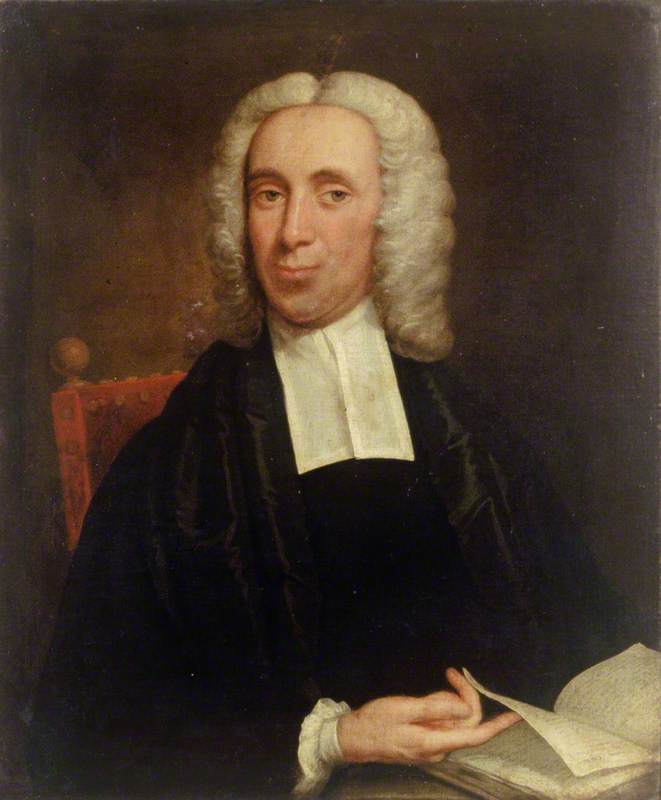 Watts was born in Southampton, England in 1674 and was brought up in the home of a committed religious Nonconformist; his father, also Isaac Watts, had been incarcerated twice for his views. Watts had a classical education at King Edward VI School, learning Latin, Greek, and Hebrew.Watts displayed a propensity for rhyme from an early age. He was once asked why he had his eyes open during prayers, to which he responded:A little mouse for want of stairs-ran up a rope to say its prayers.He received corporal punishment for this, to which he cried:O father, father, pity take And I will no more verses make.[1][2]Watts could not attend Oxford or Cambridge because he was a nonconformist and these universities were restricted to Anglicans—as were government positions at the time. He went to the Dissenting Academy at Stoke Newington in 1690. Much of the remainder of his life centred on that village, which is now part of Inner London.Following his education, Watts was called as pastor of a large independent chapel in London, Mark Lane Congregational Chapel, where he helped train preachers, despite his poor health. He held religious opinions that were more nondenominational or ecumenical than was common for a nonconformist Congregationalist.
 He had a greater interest in promoting education and scholarship than preaching for any particular sect. Watts took work as a private tutor and lived with the Nonconformist Hartopp family at Fleetwood House on Church Street in Stoke Newington. Through them, he became acquainted with their immediate neighbours Sir Thomas Abney and Lady Mary. He eventually lived for a total of 36 years in the Abney household, most of the time at Abney House, their second residence. (Lady Mary had inherited the manor of Stoke Newington in 1701 from her late brother Thomas Gunston.)On the death of Sir Thomas Abney in 1722, his widow Lady Mary and her unmarried daughter Elizabeth moved all her household to Abney House from Hertfordshire, and she invited Watts to continue with them. He particularly enjoyed the grounds at Abney Park, which Lady Mary planted with two elm walks leading down to an island heronry in the Hackney Brook, and he often sought inspiration there for the many books and hymns that he wrote.Watts lived at Abney Hall in Stoke Newington until his death in 1748; he was buried in Bunhill Fields. He left an extensive legacy of hymns, treatises, educational works, and essays. His work was influential amongst Nonconformist independents and religious revivalists of the 18th century, such as Philip Doddridge, who dedicated his best-known work to Watts.


 Christian Devotions, Health and General issues of the day