16Then the eleven disciples went to Galilee, to the mountain where Jesus had told them to go. 17When they saw him, they worshiped him; but some doubted. 18Then Jesus came to them and said, “All authority in heaven and on earth has been given to me. 19Therefore go and make disciples of all nations, baptizing them in the name of the Father and of the Son and of the Holy Spirit, 20and teaching them to obey everything I have commanded you. And surely I am with you always, to the very end of the age.”
Prayer to the Holy Trinity
Glory be to the Father,
Who by His almighty power and love created me,
making me in the image and likeness of God.
Glory be to the Son,
Who by His Precious Blood delivered me from hell,
and opened for me the gates of heaven.
Glory be to the Holy Spirit,
Who has sanctified me in the sacrament of Baptism,
and continues to sanctify me
by the graces I receive daily from His bounty.
Glory be to the Three adorable Persons of the Holy Trinity,
now and forever.
39 Jesus went out as usual to the Mount of Olives, and his disciples followed him.40 On reaching the place, he said to them, “Pray that you will not fall into temptation.”41 He withdrew about a stone’s throw beyond them, knelt down and prayed,42 “Father, if you are willing, take this cup from me; yet not my will, but yours be done.”43 An angel from heaven appeared to him and strengthened him.44 And being in anguish, he prayed more earnestly, and his sweat was like drops of blood falling to the ground.[c]
45 When he rose from prayer and went back to the disciples, he found them asleep, exhausted from sorrow.46 “Why are you sleeping?” he asked them. “Get up and pray so that you will not fall into temptation.”
Watts was born in Southampton, England in 1674 and was brought up in the home of a committed religious Nonconformist; his father, also Isaac Watts, had been incarcerated twice for his views. Watts had a classical education at King Edward VI School, learning Latin, Greek, and Hebrew.Watts displayed a propensity for rhyme from an early age. He was once asked why he had his eyes open during prayers, to which he responded:A little mouse for want of stairs-ran up a rope to say its prayers.He received corporal punishment for this, to which he cried:O father, father, pity take And I will no more verses make.[1][2]Watts could not attend Oxford or Cambridge because he was a nonconformist and these universities were restricted to Anglicans—as were government positions at the time. He went to the Dissenting Academy at Stoke Newington in 1690. Much of the remainder of his life centred on that village, which is now part of Inner London.Following his education, Watts was called as pastor of a large independent chapel in London, Mark Lane Congregational Chapel, where he helped train preachers, despite his poor health. He held religious opinions that were more nondenominational or ecumenical than was common for a nonconformist Congregationalist. He had a greater interest in promoting education and scholarship than preaching for any particular sect. Watts took work as a private tutor and lived with the Nonconformist Hartopp family at Fleetwood House on Church Street in Stoke Newington. Through them, he became acquainted with their immediate neighbours Sir Thomas Abney and Lady Mary. He eventually lived for a total of 36 years in the Abney household, most of the time at Abney House, their second residence. (Lady Mary had inherited the manor of Stoke Newington in 1701 from her late brother Thomas Gunston.)On the death of Sir Thomas Abney in 1722, his widow Lady Mary and her unmarried daughter Elizabeth moved all her household to Abney House from Hertfordshire, and she invited Watts to continue with them. He particularly enjoyed the grounds at Abney Park, which Lady Mary planted with two elm walks leading down to an island heronry in the Hackney Brook, and he often sought inspiration there for the many books and hymns that he wrote.Watts lived at Abney Hall in Stoke Newington until his death in 1748; he was buried in Bunhill Fields. He left an extensive legacy of hymns, treatises, educational works, and essays. His work was influential amongst Nonconformist independents and religious revivalists of the 18th century, such as Philip Doddridge, who dedicated his best-known work to Watts.
One of Issac watts well known hymns is the following;
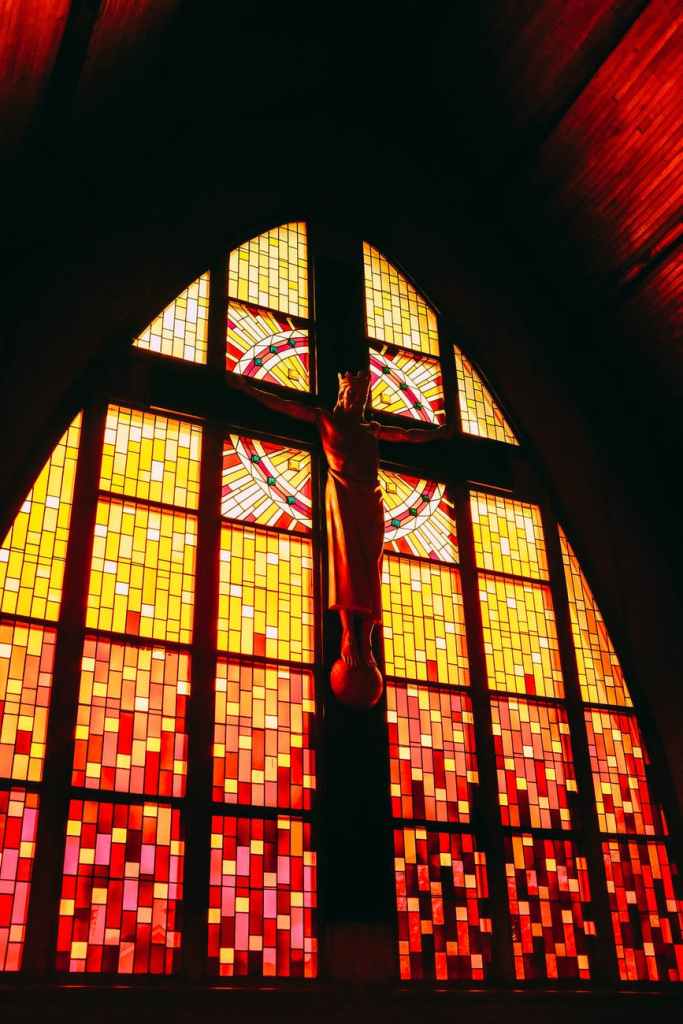
When I survey the wondrous cross
On which the Prince of glory died,
My richest gain I count but loss,
And pour contempt on all my pride.
Forbid it, Lord, that I should boast,
Save in the death of Christ my God!
All the vain things that charm me most,
I sacrifice them to His blood.
See from His head, His hands, His feet,
Sorrow and love flow mingled down!
Did e’er such love and sorrow meet,
Or thorns compose so rich a crown?
Were the whole realm of nature mine,
That were a present far too small;
Love so amazing, so divine,
Demands my soul, my life, my all.
39-40 Leaving there, he went, as he so often did, to Mount Olives. The disciples followed him. When they arrived at the place, he said, “Pray that you don’t give in to temptation.”
41-44 He pulled away from them about a stone’s throw, knelt down, and prayed, “Father, remove this cup from me. But please, not what I want. What do you want?” At once an angel from heaven was at his side, strengthening him. He prayed on all the harder. Sweat, wrung from him like drops of blood, poured off his face.
45-46 He got up from prayer, went back to the disciples and found them asleep, drugged by grief. He said, “What business do you have sleeping? Get up. Pray so you won’t give in to temptation.”
47-48 No sooner were the words out of his mouth than a crowd showed up, Judas, the one from the Twelve, in the lead. He came right up to Jesus to kiss him. Jesus said, “Judas, you would betray the Son of Man with a kiss?”
49-50 When those with him saw what was happening, they said, “Master, shall we fight?” One of them took a swing at the Chief Priest’s servant and cut off his right ear.
51 Jesus said, “Let them be. Even in this.” Then, touching the servant’s ear, he healed him.
52-53 Jesus spoke to those who had come—high priests, Temple police, religion leaders: “What is this, jumping me with swords and clubs as if I were a dangerous criminal? Day after day I’ve been with you in the Temple and you’ve not so much as lifted a hand against me. But do it your way—it’s a dark night, a dark hour.”
She is clothed with strength and dignity; she can laugh at the days to come. 26 She speaks with wisdom, and faithful instruction is on her tongue. 27 She watches over the affairs of her household and does not eat the bread of idleness. 28 Her children arise and call her blessed; her husband also, and he praises her: 29″Many women do noble things, but you surpass them all.” 30 Charm is deceptive, and beauty is fleeting; but a woman who fears the LORD is to be praised.
I thought I would share something on mother’s today (as it is Mother’s day in the UK yesterday).
The bond between a daughter/son is very special, she is there for us when we need someone to talk to she speaks to us with wise words, She is also there when we need to be loved and comforted. The words of the song ‘When Mothers of Salem’ come to mind.
When mothers of Salem their children brought to Jesus,
The stern disciples drove them back and bade them to depart:
But Jesus saw them ere they fled and sweetly smiled and kindly said,
“Suffer little children to come unto Me.”
“For I will receive them and fold them to My bosom:
I’ll be a shepherd to these lambs, O drive them not away;
For if their hearts to Me they give, they shall with Me in glory live:
Suffer little children to come unto Me.”
How kind was our Saviour to bid these children welcome!
But there are many thousands who have never heard His Name;
The Bible they have never read, they know not that the Saviour said,
“Suffer little children to come unto Me.”
O soon may the heathen of every tribe and nation
Fulfil Thy blessed Word and cast their idols all away!
O shine upon them from above and show Thyself a God of love,
Teach the little children to come unto Thee!
19 Therefore, brothers and sisters, since we have confidence to enter the Most Holy Place by the blood of Jesus, 20 by a new and living way opened for us through the curtain, that is, his body, 21 and since we have a great priest over the house of God, 22 let us draw near to God with a sincere heart and with the full assurance that faith brings, having our hearts sprinkled to cleanse us from a guilty conscience and having our bodies washed with pure water. 23 Let us hold unswerving to the hope we profess, for he who promised is faithful. 24 And let us consider how we may spur one another on toward love and good deeds, 25 not giving up meeting together, as some are in the habit of doing, but encouraging one another—and all the more as you see the Day approaching.
Two people collaborated to write “I Am Thine, O Lord”—a song that quickly became a favorite in Christian circles, and remains so in many places today. Fanny Crosby (1820-1915) wrote the words and William Doane (1832-1915) composed the music.
Doane was a successful businessman who served as the president of a Cincinnati company that produced woodworking machines. He also held a number of patents for the machines that they produced.
While he enjoyed his business, Doane enjoyed Christian music even more. During his lifetime, he composed the music for hundreds of hymns, and edited a number of hymn collections.
Crosby’s story was even more dramatic. Blinded in infancy, she had the good fortune to have a grandmother and a caretaker who dedicated themselves to helping her memorize the Bible. They assigned weekly goals for memorization, and drilled Crosby to help her reach those goals. As an adult, Crosby tapped that rich reservoir of memorized Bible verses to write her hymns.
And write hymns she did—8000 hymns and Gospel songs total—to include many of the old favorites that are still found in many hymnals a century after her death.
“I Am Thine, O Lord” grew out of a conversation that Crosby had with Doane while visiting his home. They were talking about the nearness of God when Crosby was seized by inspiration. Soon she was reciting the verses and choruses—very much as we find them in hymnals today. Doane set her words to music, and the song that they produced has blessed generations of Christians.
The song is a prayer, celebrating the joy of faith—and the desire for an even deeper faith. The chorus asks:
Draw me nearer, nearer blessed Lord,
To the cross where Thou hast died.
Draw me nearer, nearer, nearer blessed Lord,
To Thy precious bleeding side.
I can personally testify to the power of this song, having sung it often as I was growing up. If sung at a spirited tempo, it had an upbeat mood. But often the chorus—in particular the last chorus—was sung more slowly and deliberately, inspiring an introspective mood. I don’t often hear it sung today, but would be happy to have the opportunity to sing it again.
1. I am thine, O Lord, I have heard thy voice, and it told thy love to me; but I long to rise in the arms of faith and be closer drawn to thee. Refrain: Draw me nearer, nearer, blessed Lord, to the cross where thou hast died. Draw me nearer, nearer, nearer, blessed Lord, to thy precious, bleeding side.
2. Consecrate me now to thy service, Lord, by the power of grace divine; let my soul look up with a steadfast hope, and my will be lost in thine. (Refrain)
3. O the pure delight of a single hour that before thy throne I spend, when I kneel in prayer, and with thee, my God, I commune as friend with friend! (Refrain)
4. There are depths of love that I cannot know till I cross the narrow sea; there are heights of joy that I may not reach till I rest in peace with thee.
25 “‘I will make a covenant of peace with them and rid the land of savage beasts so that they may live in the wilderness and sleep in the forests in safety. 26 I will make them and the places surrounding my hill a blessing.[a] I will send down showers in season; there will be showers of blessing. 27 The trees will yield their fruit and the ground will yield its crops; the people will be secure in their land. They will know that I am the Lord, when I break the bars of their yoke and rescue them from the hands of those who enslaved them. 28 They will no longer be plundered by the nations, nor will wild animals devour them. They will live in safety, and no one will make them afraid. 29 I will provide for them a land renowned for its crops, and they will no longer be victims of famine in the land or bear the scorn of the nations. 30 Then they will know that I, the Lord their God, am with them and that they, the Israelites, are my people, declares the Sovereign Lord. 31 You are my sheep, the sheep of my pasture, and I am your God, declares the Sovereign Lord.’”
1 There shall be showers of blessing:
This is the promise of love;
There shall be seasons refreshing,
Sent from the Saviour above.
[Chorus]
Showers of blessing,
Showers of blessing we need;
Mercy drops ’round us are falling,
But for the showers we plead.
2 There shall be showers of blessing–
Precious reviving again;
Over the hills and the valleys,
Sound of abundance of rain.
3 There shall be showers of blessing:
Send them upon us, O Lord;
Grant to us now a refreshing;
Come and now honour Thy word.
4 There shall be showers of blessing:
Oh, that today they might fall,
Now as to God we’re confessing,
Now as on Jesus we call! [Chorus]
3 Praise be to the God and Father of our Lord Jesus Christ! In his great mercy he has given us new birth into a living hope through the resurrection of Jesus Christ from the dead, 4 and into an inheritance that can never perish, spoil or fade. This inheritance is kept in heaven for you, 5 who through faith are shielded by God’s power until the coming of the salvation that is ready to be revealed in the last time. 6 In all this you greatly rejoice, though now for a little while you may have had to suffer grief in all kinds of trials. 7 These have come so that the proven genuineness of your faith – of greater worth than gold, which perishes even though refined by fire – may result in praise, glory and honour when Jesus Christ is revealed. 8 Though you have not seen him, you love him; and even though you do not see him now, you believe in him and are filled with an inexpressible and glorious joy, 9 for you are receiving the end result of your faith, the salvation of your souls.
10 Concerning this salvation, the prophets, who spoke of the grace that was to come to you, searched intently and with the greatest care, 11 trying to find out the time and circumstances to which the Spirit of Christ in them was pointing when he predicted the sufferings of the Messiah and the glories that would follow. 12 It was revealed to them that they were not serving themselves but you, when they spoke of the things that have now been told you by those who have preached the gospel to you by the Holy Spirit sent from heaven. Even angels long to look into these things.
As the varied way of life we journey, Come the plains and then the mountainside, Come the days of joy when birds are singing, And the world is fair and sweet and wide; Then a deeper joy comes, overfilling, From the everlasting throne of love, And all other joy is but an echo From the ever-blessèd heights above.
There are shadows on the earthly pathway Where, at times uncertainly, we tread; In perplexity we halt and linger Till our faith again is upward led. For the heights of truth are ever calling, And celestial radiance from afar On our pilgrim way is gently falling For our comfort where the shadows are.
In the days of peace and golden sunshine, In the days of joy, or days of woe, There is confidence in Him who holds us; There is light to guide us here below. And beyond await the heights of rapture, Where all earthly joys, transcended, fade In the glory of the Saviour’s presence, In the Home eternal He has made.
25 Large crowds were travelling with Jesus, and turning to them he said:26 “If anyone comes to me and does not hate father and mother, wife and children, brothers and sisters—yes, even their own life—such a person cannot be my disciple.27 And whoever does not carry their cross and follow me cannot be my disciple.
28 “Suppose one of you wants to build a tower. Won’t you first sit down and estimate the cost to see if you have enough money to complete it?29 For if you lay the foundation and are not able to finish it, everyone who sees it will ridicule you,30 saying, ‘This person began to build and wasn’t able to finish.’
31 “Or suppose a king is about to go to war against another king. Won’t he first sit down and consider whether he is able with ten thousand men to oppose the one coming against him with twenty thousand?32 If he is not able, he will send a delegation while the other is still a long way off and will ask for terms of peace.33 In the same way, those of you who do not give up everything you have cannot be my disciples.
34 “Salt is good, but if it loses its saltiness, how can it be made salty again?35 It is fit neither for the soil nor for the manure pile; it is thrown out.
25 Large crowds were travelling with Jesus, and turning to them he said:26 “If anyone comes to me and does not hate father and mother, wife and children, brothers and sisters—yes, even their own life—such a person cannot be my disciple.27 And whoever does not carry their cross and follow me cannot be my disciple.
28 “Suppose one of you wants to build a tower. Won’t you first sit down and estimate the cost to see if you have enough money to complete it?29 For if you lay the foundation and are not able to finish it, everyone who sees it will ridicule you,30 saying, ‘This person began to build and wasn’t able to finish.’
31 “Or suppose a king is about to go to war against another king. Won’t he first sit down and consider whether he is able with ten thousand men to oppose the one coming against him with twenty thousand?32 If he is not able, he will send a delegation while the other is still a long way off and will ask for terms of peace.33 In the same way, those of you who do not give up everything you have cannot be my disciples.
34 “Salt is good, but if it loses its saltiness, how can it be made salty again?35 It is fit neither for the soil nor for the manure pile; it is thrown out.
“Whoever has ears to hear, let them hear.”
All to Jesus I surrender All to Him I freely give I will ever love and trust Him In His presence daily live
All to Jesus I surrender Humbly at His feet I bow Worldly pleasures all forsaken Take me, Jesus, take me now,
I surrender all I surrender all All to Thee my blessed Savior I surrender all
All to Jesus I surrender Make me Savior wholly thine May Thy Holy Spirit fill me May I know Thy power divine


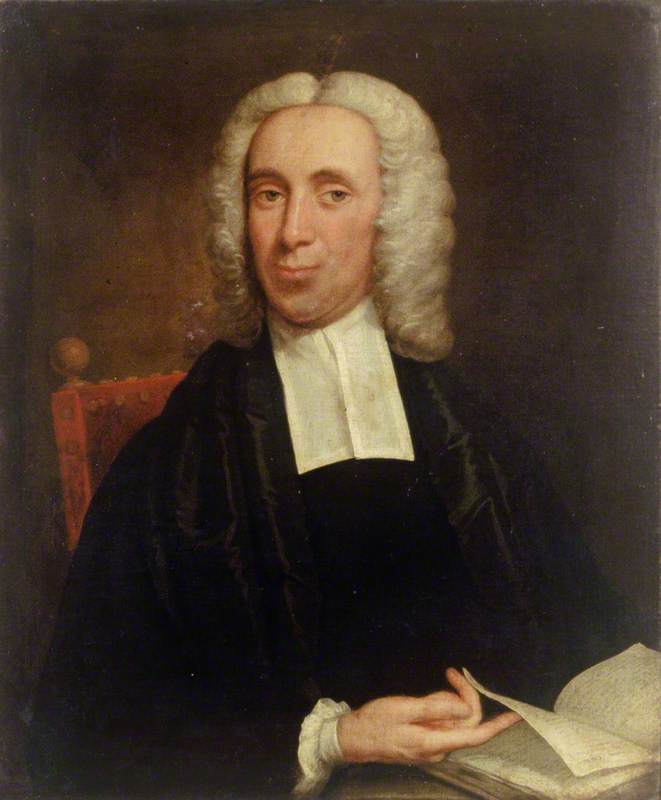 Watts was born in Southampton, England in 1674 and was brought up in the home of a committed religious Nonconformist; his father, also Isaac Watts, had been incarcerated twice for his views. Watts had a classical education at King Edward VI School, learning Latin, Greek, and Hebrew.Watts displayed a propensity for rhyme from an early age. He was once asked why he had his eyes open during prayers, to which he responded:A little mouse for want of stairs-ran up a rope to say its prayers.He received corporal punishment for this, to which he cried:O father, father, pity take And I will no more verses make.[1][2]Watts could not attend Oxford or Cambridge because he was a nonconformist and these universities were restricted to Anglicans—as were government positions at the time. He went to the Dissenting Academy at Stoke Newington in 1690. Much of the remainder of his life centred on that village, which is now part of Inner London.Following his education, Watts was called as pastor of a large independent chapel in London, Mark Lane Congregational Chapel, where he helped train preachers, despite his poor health. He held religious opinions that were more nondenominational or ecumenical than was common for a nonconformist Congregationalist.
 He had a greater interest in promoting education and scholarship than preaching for any particular sect. Watts took work as a private tutor and lived with the Nonconformist Hartopp family at Fleetwood House on Church Street in Stoke Newington. Through them, he became acquainted with their immediate neighbours Sir Thomas Abney and Lady Mary. He eventually lived for a total of 36 years in the Abney household, most of the time at Abney House, their second residence. (Lady Mary had inherited the manor of Stoke Newington in 1701 from her late brother Thomas Gunston.)On the death of Sir Thomas Abney in 1722, his widow Lady Mary and her unmarried daughter Elizabeth moved all her household to Abney House from Hertfordshire, and she invited Watts to continue with them. He particularly enjoyed the grounds at Abney Park, which Lady Mary planted with two elm walks leading down to an island heronry in the Hackney Brook, and he often sought inspiration there for the many books and hymns that he wrote.Watts lived at Abney Hall in Stoke Newington until his death in 1748; he was buried in Bunhill Fields. He left an extensive legacy of hymns, treatises, educational works, and essays. His work was influential amongst Nonconformist independents and religious revivalists of the 18th century, such as Philip Doddridge, who dedicated his best-known work to Watts.





 Christian Devotions, Health and General issues of the day