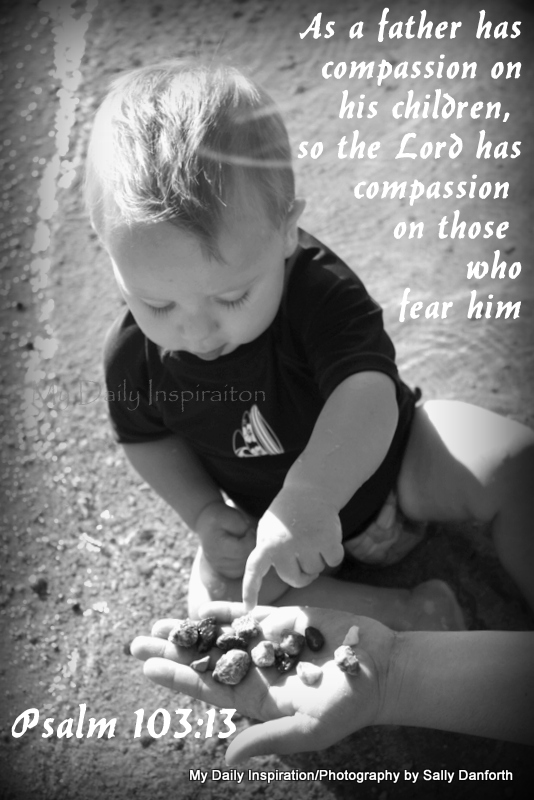
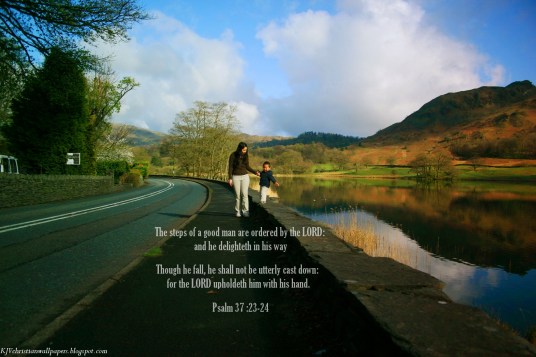
Let us pray to the Lord our God for help. He is readily listening for our words. He wants to know us, and He wants us to trust in Him. Through Him, we are safe. Through Him, we will not perish. Some trust in chariots and some in horses, but we trust in the name […]
“Can a woman forget her nursing child And have no compassion on the son of her womb? Even these may forget, but I will not forget you.
Mark 6: 34
When Jesus went ashore, He saw a large crowd, and He felt compassion for them because they were like sheep without a shepherd; and He began to teach them many things.
When I was looking for readings for today’s blog I felt I had to put both of the above readings up.
Generals John Gowans & John Larsson of The Salvation Army were two very talented officers in the Salvation Army who wrote 10 musicals. This song is from the second musical, titled “Hosea” – the story of the Old Testament prophet’s faithfulness and forgiveness towards his unfaithful wife, relating this to God’s forgiveness of His people who had broken their promises to Him.
1. If human hearts are often tender, And human minds can pity know, If human love is touched with splendor, And human hands compassion show, Chorus Then how much more shall God our Father In love forgive, in love forgive! Then how much more shall God our Father Our wants supply, and none deny!
2. If sometimes men can live for others, And sometimes give where gifts are spurned, If sometimes treat their foes as brothers, And love where love is not returned,
3. If men will often share their gladness, If men respond when children cry, If men can feel each other’s sadness, Each other’s tears attempt to dry,
Here I am! I stand at the door b and knock. If anyone hears my voice and opens the door,c I will come in d and eat with that person, and they with me.
Have you any room for Jesus,
He who bore your load of sin?
As He knocks and asks admission,
Sinner, will you let Him in?
Refrain:
Room for Jesus, King of Glory!
Hasten now His Word obey;
Swing the heart’s door widely open,
Bid Him enter while you may.
Room for pleasure, room for business,
But for Christ the Crucified,
Not a place that He can enter,
In the heart for which He died?
Have you any room for Jesus,
As in grace He calls again?
Oh, today is time accepted,
T’morrow you may call in vain.
Room and time now give to Jesus,
Soon will pass God’s day of grace;
Soon thy heart left cold and silent,
And thy Savior’s pleading cease.
Along with the Chorus ‘Behold me standing at the door’ this is one of my favourite invitation hymns of all time. As you listen to the video and if you feel the need to accept him please do as I have.
Behold Me standing at the door,
And hear Me pleading evermore,
With gentle voice: oh, heart of sin,
May I come in? May I come in?
“Cursed is the one who trusts in man, who draws strength from mere flesh and whose heart turns away from the Lord. 6 That person will be like a bush in the wastelands; they will not see prosperity when it comes. They will dwell in the parched places of the desert, in a salt land where no one lives.
7 “But blessed is the one who trusts in the Lord, whose confidence is in him. 8 They will be like a tree planted by the water that sends out its roots by the stream. It does not fear when heat comes; its leaves are always green. It has no worries in a year of drought and never fails to bear fruit.”
9 The heart is deceitful above all things and beyond cure. Who can understand it?
10 “I the Lord search the heart and examine the mind, to reward each person according to their conduct, according to what their deeds deserve.”
11 Like a partridge that hatches eggs it did not lay are those who gain riches by unjust means. When their lives are half gone, their riches will desert them, and in the end they will prove to be fools.
12 A glorious throne, exalted from the beginning, is the place of our sanctuary. 13 Lord, you are the hope of Israel; all who forsake you will be put to shame. Those who turn away from you will be written in the dust because they have forsaken the Lord, the spring of living water.
14 Heal me, Lord, and I will be healed; save me and I will be saved, for you are the one I praise. 15 They keep saying to me, “Where is the word of the Lord? Let it now be fulfilled!” 16 I have not run away from being your shepherd; you know I have not desired the day of despair. What passes my lips is open before you. 17 Do not be a terror to me; you are my refuge in the day of disaster. 18 Let my persecutors be put to shame, but keep me from shame; let them be terrified, but keep me from terror. Bring on them the day of disaster; destroy them with double destruction.
The hymn was written in 1870 by Lydia Odell Baxter, a woman whose life was marked by chronic illness and long periods of confinement. For nearly thirty years, she lived as an invalid, often bedridden, yet her room became a place where pastors, evangelists, and Christian workers came not to comfort her—but to be comforted by her.
Despite constant pain, Lydia radiated a deep, unshakeable joy. Her “secret,” as she told visitors, was simple but profound:
“I have a very special armor. I have the Name of Jesus.”
Whenever discouragement crept in, she would whisper His name, and peace would return.
📖 Her Love for Biblical Names
During her years of illness, Lydia became a devoted student of Scripture, especially fascinated by the meanings of biblical names. She loved to talk about them with friends—names like Sarah (“princess”), Samuel (“asked of God”), and Isaac (“laughter”). But her favourite name, the one she clung to in suffering, was Jesus—“Savior.”
This deep affection for the name of Christ naturally blossomed into the hymn we know today.
✍️ Writing the Hymn
Lydia wrote “Take the Name of Jesus with You” just four years before her death, while still confined to her bed. The text was later set to music by William H. Doane and first published in 1871 in Pure Gold for the Sunday School.
The hymn quickly spread, becoming especially popular during the Moody–Sankey revival campaigns of the late 19th century. Its message—carry Jesus’ name as a shield, a comfort, and a joy—resonated deeply with believers everywhere.
💬 Why the Hymn Still Speaks
Knowing Lydia’s story gives the hymn a richer texture. These weren’t abstract words; they were the lived testimony of a woman who found strength in the name of Jesus when her body failed her. Her sickroom became a sanctuary of encouragement, and her hymn continues that ministry today.
It’s no wonder the Salvation Army and many evangelical traditions still treasure it—you can almost feel her faith woven into every line.
John Samuel Bewley Monsell (1811–1875) was an Irish Anglican clergyman and one of the most prolific hymnwriters of the 19th century. He wrote around 300 hymns, many of which remain in use today.
📍 Background
Born in St Columb’s, Londonderry
Educated at Trinity College, Dublin
Served in several clerical posts in Ireland and England
Later became Rector of St Nicolas’ Church, Guildford
Died after a tragic fall while inspecting church rebuilding work in 1875
✍️ His Hymns
Some of his best‑known hymns include:
Fight the Good Fight with All Thy Might
O Worship the Lord in the Beauty of Holiness
On Our Way Rejoicing
Sing to the Lord a Joyful Song
His writing is known for its joyful, uplifting tone and strong sense of the church year — something that aligns beautifully with your interest in Advent, remembrance, and devotional themes.
🧭 Why the Name Confusion?
“Mansell” and “Monsell” are often mixed up because:
The names sound similar
Older printed sources sometimes used inconsistent spellings
Handwritten parish records can be ambiguous
But all authoritative sources confirm Monsell as the correct spelling.
John Gowans (1934–2012) served as the 16th General of The Salvation Army from 1999 to 2002. Born in Blantyre, South Lanarkshire, he grew up in a Salvation Army family and eventually became one of the movement’s most influential leaders and creative voices.
✍️ His Creative Legacy
Gowans is especially remembered for his partnership with John Larsson, with whom he co‑wrote ten full-length Salvation Army musicals—works that shaped the worship and culture of the Army for decades. These include:
Take-Over Bid (1967)
Hosea (1969)
Jesus Folk (1972)
Spirit (1973)
Glory (1975)
White Rose (1977)
The Blood of the Lamb (1978)
Son of Man (1983)
Man Mark II (1985)
The Meeting (1990)
These musicals blended theology, storytelling, and accessible music in a way that resonated deeply with Salvationists worldwide.
📚 Writing and Spiritual Voice
Gowans also wrote the beloved “O Lord!” prayer-poem books, which many Salvationists still use devotionally. His writing style—simple, honest, and deeply human—mirrors the reflective tone you often appreciate in hymn stories and devotional writing.
🌍 Leadership and Ministry
Before becoming General, Gowans served in a wide range of appointments across the UK, France, and the USA. His leadership was marked by warmth, creativity, and a strong pastoral heart.
Albert Orsborn (4 September 1886 – 4 February 1967) was the 6th General of The Salvation Army (1946-1954).
Born Albert William Thomas Orsborn, he became an Officer of The Salvation Army in 1905. Albert served as a Corps Officer and in divisional work in the British Territory of the Army. In 1909, he married his first wife, Captain Evalina Barker.
In 1925, he was sent to serve as Chief Side Officer at the International Training College. In 1933, he was farewelled to New Zealand as Chief Secretary. He then became Territorial Commander of Scotland and Ireland in 1936. In 1940, he became British Commissioner.
Albert Orsborn’s first wife, Captain Evalina Barker, died in 1942. This was a very hard time for him. Two years later, in 1944, he married his second wife, Major Evelyn Berry. They were married for just a year when she died.
In 1946, the High Council of The Salvation Army elected Albert to become the General of The Salvation Army. He married his third wife, Commissioner Mrs Phillis Taylor (a daughter of General Higgins), in 1947.
General Orsborn served as General for eight years. He was the author of The House of My Pilgrimage. He retired on 30 June 1954.
General Albert Orsborn died at the age of 80 years and 5 months.
Throughout the course of his Salvation Army life Albert wrote many wonderful songs and books.