Matthew 13:53-58New International Version – UK (NIVUK)
A prophet without honour
53 When Jesus had finished these parables, he moved on from there. 54 Coming to his home town, he began teaching the people in their synagogue, and they were amazed. ‘Where did this man get this wisdom and these miraculous powers?’ they asked. 55 ‘Isn’t this the carpenter’s son? Isn’t his mother’s name Mary, and aren’t his brothers James, Joseph, Simon and Judas? 56 Aren’t all his sisters with us? Where then did this man get all these things?’ 57 And they took offence at him.
But Jesus said to them, ‘A prophet is not without honour except in his own town and in his own home.’
58 And he did not do many miracles there because of their lack of faith.
Come, Thou long expected Jesus
Born to set Thy people free;
From our fears and sins release us,
Let us find our rest in Thee.
Israel’s strength and consolation,
Hope of all the earth Thou art;
Dear desire of every nation,
Joy of every longing heart.
Born Thy people to deliver,
Born a child and yet a King,
Born to reign in us forever,
Now Thy gracious kingdom bring.
By Thine own eternal Spirit
Rule in all our hearts alone;
By Thine all sufficient merit,
Raise us to Thy glorious throne.
11 “I am the good shepherd. The good shepherd lays down his life for the sheep. 12 The hired hand is not the shepherd and does not own the sheep. So when he sees the wolf coming, he abandons the sheep and runs away. Then the wolf attacks the flock and scatters it. 13 The man runs away because he is a hired hand and cares nothing for the sheep.
14 “I am the good shepherd; I know my sheep and my sheep know me— 15 just as the Father knows me and I know the Father—and I lay down my life for the sheep. 16 I have other sheep that are not of this sheep pen. I must bring them also. They too will listen to my voice, and there shall be one flock and one shepherd. 17 The reason my Father loves me is that I lay down my life—only to take it up again. 18 No one takes it from me, but I lay it down of my own accord. I have authority to lay it down and authority to take it up again. This command I received from my Father.”
In the story of the Good Shepherd we are reminded how Jesus looks after and cares for his flock. As human beings we would do well to remember that even in our darkest moments Jesus is still there looking over us and guiding us
15 I no longer call you servants, because a servant does not know his master’s business. Instead, I have called you friends, for everything that I learned from my Father I have made known to you.
1.
Jesus, tender lover of my soul,
Pardoner of my sins, and friend indeed,
Keeper of the garden of my heart,
Jesus, thou art everything to me.
Chorus
Jesus, thou art everything to me,
Jesus, thou art everything to me,
All my lasting joys are found in thee;
Jesus, thou art everything to me.
2.
What to me are all the joys of earth?
What to me is every sight I see,
Save the sight of thee, O Friend of mine?
Jesus, thou art everything to me.
3.
Here I lay me at thy bleeding feet,
Deepest homage now I give to thee;
Hear thy whispered love within my soul;
Jesus, thou art everything to me.
I don’t know about you but I just love to listen to a male voice choir, especially the Welsh choirs
Growing up in The Salvation Army I used to hear our band sing occasionally or sometimes if we had a visiting band there may have been a vocal item for the and to sing and it was usually songs like the one in the video.
A song that indeed tells us that Jesus is our friend.
“Blest Are the Pure in Heart” is a hymn based on the Beatitude from Matthew 5:8, which states, “Blessed are the pure in heart, for they shall see God.” This hymn emphasizes the importance of purity of heart in the Christian faith, suggesting that those who maintain a pure heart will be able to see and experience God more fully.
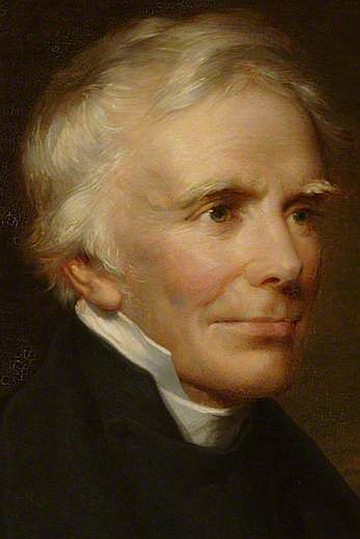
The hymn was written by John Keble, an English churchman and one of the leaders of the Oxford Movement, which sought to revive the Catholic aspects of the Anglican Church in the 19th century. Keble’s hymn reflects his deep theological insights and his desire to inspire a sincere and devout Christian life.
Today is Remembrance Day when the whole country paused in silence and thought for two minutes to give thanks to those who gave their lives not just in World war 1 and in World war 2 as well. Also the wars that went on after that and still is in some parts of the world. We will remember them!
Peace in our time, O Lord, To all the peoples – peace! Peace surely based upon Thy will And built in righteousness. Thy power alone can break The fetters that enchain The sorely stricken soul of life And make it live again.
Too long mistrust and fear Have held our souls in thrall; Sweep through the earth, keen Breath of Heav’n And sound a nobler call! Come, as Thou didst of old, In love so great that men Shall cast aside all other gods And turn to Thee again.
Peace in our time, O Lord, To all the peoples – peace! Peace that shall build a glad new world, And make for life’s increase. O living Christ, Who still Dost all our burdens share, Come now and dwell within the hearts Of all men everywhere.
lessed assurance, Jesus is mine! O what a foretaste of glory divine! Heir of salvation, purchase of God, Born of his spirit, washed in his blood. This is my story, this is my song, Praising my Savior all the day long.
Tune composer Phoebe Palmer Knapp (1839-1908) played a melody to Fanny Crosby and asked, “What does the melody say to you?” Crosby replied that the tune said, “Blessed assurance, Jesus is mine!” and proceeded to recite the entire first stanza of the now-famous hymn. Knapp was one of several tune writers that worked with Fanny Crosby. It was not unusual for one of her texts to be inspired by a preexisting tune. Knapp was the composer of more than five hundred gospel hymns and tunes.
Fanny Crosby (1820-1915), blind at the age of six weeks, was a lifelong Methodist who began composing hymns at age six. She became a student at the New York Institute of the Blind at age 15 and joined the faculty of the Institute at 22, teaching rhetoric and history. In 1885, Crosby married Alexander Van Alstyne, also a student at the Institute and later a member of the faculty. He was a fine musician and, like Fanny, a lover of literature.
An author of more than 8,000 gospel hymn texts, she drew her inspiration from her own faith. Crosby published hymns under several pen names including “Ella Dale,” “Mrs. Kate Gringley,” and “Miss Viola V. A.” Her hymn texts were staples for the music of the most prominent gospel song writers of her day.
Frances Jane Crosby’s hymns have historically been among the most popular songs sung by Methodists. “Blessed Assurance” (1873) is one of the ten most popular hymns sung by United Methodists according to Carlton Young, and it is one of eight Crosby hymns in The United Methodist Hymnal.
“Blessed Assurance” was published in 1873 in the monthly magazine edited by Joseph Fairchild Knapp and Phoebe Palmer Knapp, Guide to Holiness. Editor John R. Sweney included it in Gems of Praise (Philadelphia, 1873), and Knapp also chose it for “Bible School Songs” (1873). Perhaps the biggest boost came when it appeared in Gospel Songs, No. 5 (1887) by Ira Sankey and was sung extensively in the Moody and Sankey revivals in Great Britain and the United States. It has been a part of Methodist hymnals since 1889.
This hymn has inspired many singers ranging from those in evangelistic crusades to theologians. Don E. Saliers, William R. Cannon Distinguished Professor of Theology and Worship Emeritus at Candler School of Theology, Emory University in Atlanta, borrowed a portion of the opening stanza for his liturgical theology text, Worship as Theology: Foretaste of Glory Divine (1994). If one enters “foretaste of glory divine” into a Google search, numerous sermon titles appear that incorporate this phrase. YouTube renditions of the hymn abound.
Crosby captured the poetic essence of the Wesleyan understanding of Christian perfection in the phrase, “O what a foretaste of glory divine!” The entire hymn is focused on heaven, a place where “perfect submission” and “perfect delight” [stanza 2] will take place. The earthly existence is one of “watching and waiting, looking above” [stanza 3]. As we submit ourselves to Christ and are “filled with his goodness” and “lost in his love” [stanza 3], we are remade in Christ’s image and are moving toward Christian perfection.
This hymn appeals to the senses in a rich way. Not only do we have a “foretaste of glory,” we experience “visions of rapture [that] burst on my sight,” and we hear “echoes of mercy, whispers of love” [stanza 2].
The refrain calls us to “prais[e]. . . my Savior all the day long,” echoing I Thessalonians 5:17, “Pray without ceasing.”
Because of her long life, Fanny Crosby had an extraordinary relationship with several United States presidents, even penning poems in their honor on occasion, and she was influential on the spiritual life of or a friend to Presidents Martin Van Buren (8th), John Tyler (10th), James K. Polk (11th), and Grover Cleveland (22nd and 24th). She addressed a joint session of Congress on the topic of education for the blind.
Middle class women in nineteenth-century United States had little voice in worship, however. One of the only ways for a woman to claim the authority to be heard was by direct personal revelation from God. Fanny Crosby readily claimed God’s personal revelation as a source for her hymns; her personal revelation then became a communal inspiration as Christians throughout the world sang her hymns and confirmed her faith experience as their own.




 Christian Devotions, Health and General issues of the day