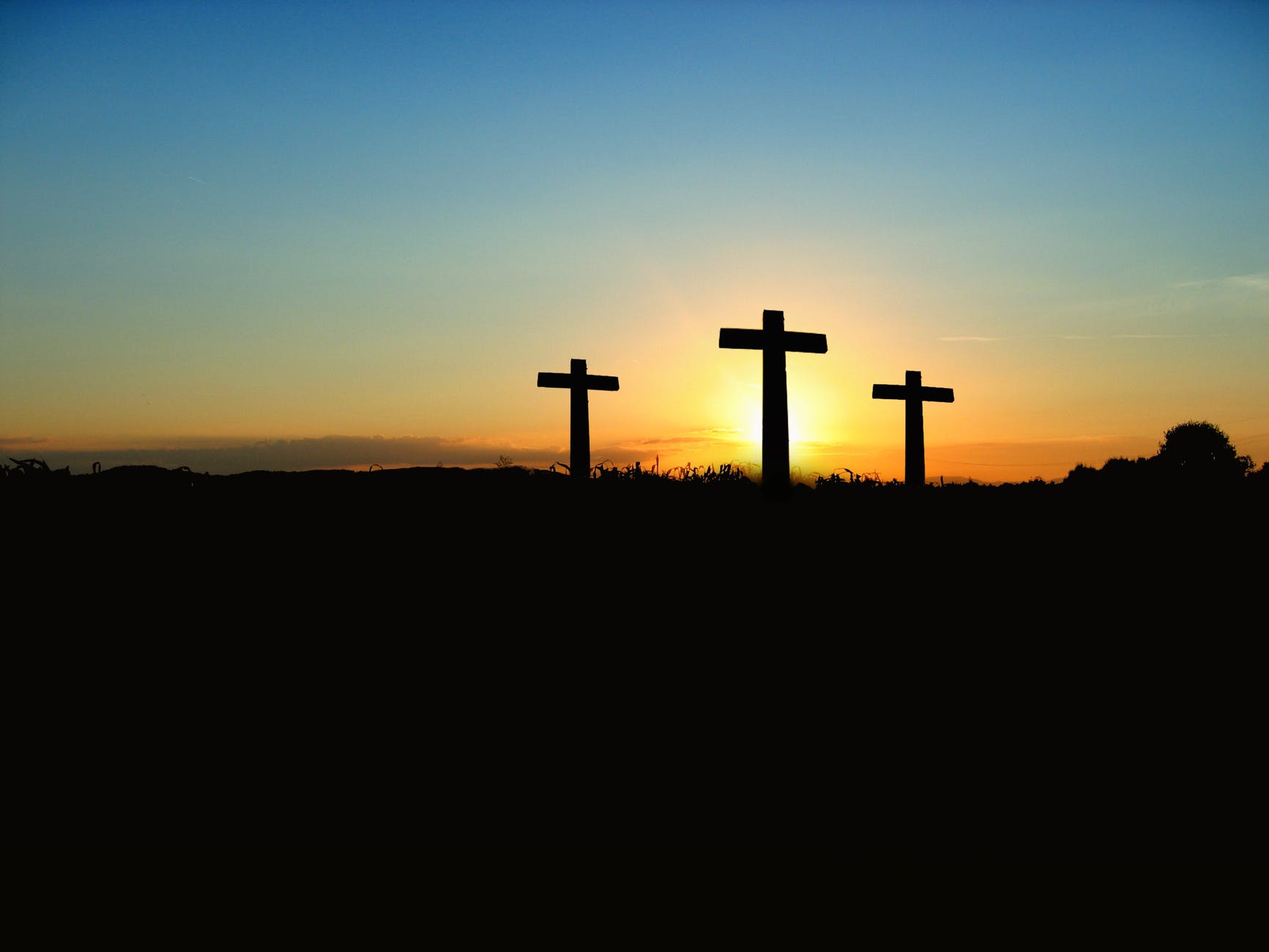
Category: Christ

Head of the Church

Image result for Christ the head of the Church

Ephesians 5 New International Version

Instructions for Christian Households

21 Submit to one another out of reverence for Christ.

22 Wives, submit yourselves to your own husbands as you do to the Lord.23 For the husband is the head of the wife as Christ is the head of the church, his body, of which he is the Savior. 24 Now as the church submits to Christ, so also wives should submit to their husbands in everything.

25 Husbands, love your wives, just as Christ loved the church and gave himself up for her 26 to make her holy, cleansing[b] her by the washing with water through the word, 27 and to present her to himself as a radiant church, without stain or wrinkle or any other blemish, but holy and blameless. 28 In this same way, husbands ought to love their wives as their own bodies. He who loves his wife loves himself. 29 After all, no one ever hated their own body, but they feed and care for their body, just as Christ does the church— 30 for we are members of his body.31 “For this reason a man will leave his father and mother and be united to his wife, and the two will become one flesh.”[c] 32 This is a profound mystery—but I am talking about Christ and the church. 33 However, each one of you also must love his wife as he loves himself, and the wife must respect her husband.

Easter Monday

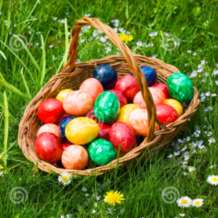
Image result for Easter egg hunt

The Bible makes no mention of Easter or Easter Monday. There is no requirement as a church to celebrate it, but there is prohibition either.

Easter Monday as we know is the day after Christ’s resurrection where he said for 40 days appearing to believers and giving ministry. He also healed the sick and proved to doubter’s he was the son of God.

Easter Monday, also called Bright Monday or Renewal Monday, is the beginning of Bright Week. It is common to douse people in water, representing the new life of baptism, and play games with Easter eggs. Such as Easter egg hunt or rolling your a hard boiled egg down a hill (which represents the stone being rolled away).

Maundy Thursday

Maundy Thursday, also known as Holy Thursday, holds deep significance in Christianity as it commemorates key events in the life of Jesus Christ. It marks the day before Good Friday and is part of Holy Week, leading up to Easter.

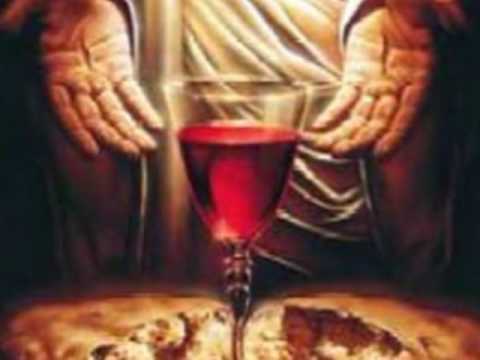
On this day, Christians remember the Last Supper, where Jesus shared a meal with his disciples. During this meal, he established the sacrament of the Eucharist (or Holy Communion), symbolizing his body and blood through bread and wine. This act serves as a cornerstone of Christian worship.

Another important event is the washing of the disciples’ feet by Jesus. This act of humility and service demonstrated his teaching that true leadership is rooted in serving others. The term “Maundy” comes from the Latin word mandatum, meaning “commandment,” referring to Jesus’ new commandment to “love one another as I have loved you.”

Maundy Thursday also reflects on the betrayal by Judas Iscariot, which set the stage for Jesus’ arrest and crucifixion. Many Christian traditions include special services, foot-washing rituals, and reflections on these profound moments.

Which is it Jehovah or Redeemer?

The alteration from “Jehovah” to “Redeemer” in the hymn “Guide Me, O Thou Great Jehovah” (sometimes titled “Guide Me, O Thou Great Redeemer”) is a choice made by certain hymnals for various reasons:

  1. Denominational Preferences: Different denominations may prefer different terms for theological or doctrinal reasons. Some denominations may prefer the term “Redeemer” as it more directly reflects the role of Christ as the savior who redeems humanity from sin.
  2. Language Modernization: The term “Jehovah” is a relatively less common usage in modern English and might be considered archaic by some. “Redeemer” is a term that resonates more clearly with contemporary language and usage.
  3. Inclusivity and Universality: Some hymnals seek to use language that is more inclusive and understandable to a wider audience. “Redeemer” might be seen as a more inclusive term that is easily recognized across various Christian traditions.

While the original text by William Williams uses “Jehovah,” different hymnals may adapt the wording to better suit their congregation’s preferences and theological emphases.

Lamb of Calvary

Hebrews 9 New International Version 

The Blood of Christ

11 But when Christ came as high priest of the good things that are now already here,[a] he went through the greater and more perfect tabernacle that is not made with human hands, that is to say, is not a part of this creation. 12 He did not enter by means of the blood of goats and calves; but he entered the Most Holy Place once for all by his own blood, thus obtaining[b] eternal redemption. 13 The blood of goats and bulls and the ashes of a heifer sprinkled on those who are ceremonially unclean sanctify them so that they are outwardly clean. 14 How much more, then, will the blood of Christ, who through the eternal Spirit offered himself unblemished to God, cleanse our consciences from acts that lead to death,[c] so that we may serve the living God!

15 For this reason Christ is the mediator of a new covenant, that those who are called may receive the promised eternal inheritance—now that he has died as a ransom to set them free from the sins committed under the first covenant.

16 In the case of a will,[d] it is necessary to prove the death of the one who made it, 17 because a will is in force only when somebody has died; it never takes effect while the one who made it is living. 18 This is why even the first covenant was not put into effect without blood. 19 When Moses had proclaimed every command of the law to all the people, he took the blood of calves, together with water, scarlet wool and branches of hyssop, and sprinkled the scroll and all the people. 20 He said, “This is the blood of the covenant, which God has commanded you to keep.”[e] 21 In the same way, he sprinkled with the blood both the tabernacle and everything used in its ceremonies. 22 In fact, the law requires that nearly everything be cleansed with blood, and without the shedding of blood there is no forgiveness.

23 It was necessary, then, for the copies of the heavenly things to be purified with these sacrifices, but the heavenly things themselves with better sacrifices than these. 24 For Christ did not enter a sanctuary made with human hands that was only a copy of the true one; he entered heaven itself, now to appear for us in God’s presence. 25 Nor did he enter heaven to offer himself again and again, the way the high priest enters the Most Holy Place every year with blood that is not his own. 26 Otherwise Christ would have had to suffer many times since the creation of the world. But he has appeared once for all at the culmination of the ages to do away with sin by the sacrifice of himself. 27 Just as people are destined to die once, and after that to face judgment, 28 so Christ was sacrificed once to take away the sins of many; and he will appear a second time, not to bear sin, but to bring salvation to those who are waiting for him.

What the Christmas tree means

Photo by Brett Sayles on Pexels.com

The Christmas tree is a symbol of the holiday season and a tradition that has been around for centuries. It’s roots come from pagan traditions, but it became a Christian symbol in the 16th century.

The Christmas Tree symbolizes the birth of Jesus Christ. It is a representation of the tree in the Garden of Eden and it is also a reminder that we are all children of God who should love one another. Read more in detail here: what does the christmas tree symbolize in the bible.

We all adore Christmas, and what is one of the most important aspects of the holiday season? Of course, there’s the Christmas tree! But what does the tree that decorates our home during the holidays really represent? What is the significance of the Christmas tree?

What Is the Origin of the Christmas Tree?

Winter celebrations were associated with the use of evergreens and greenery, since they were plants that lasted all year and were thought to protect the home from bad spirits, witches, ghosts, and diseases.

People thought that since these plants remained green throughout the year, particularly throughout the winter, they would be protected; it was not only a symbol of protection, but also of health.

What is the Christmas tree’s real origin?

Originally, the Christmas tree was a pagan religious emblem of festivity. It is mostly recognized as a German custom.

If they couldn’t locate a plant to symbolize the tree, the Christmas tree became a pyramid tree. People would make a tree-like pyramid out of wood and adorn it with nuts, gingerbread, apples, paper, and candles.

On Christmas Eve, the trees and pyramids were typically paraded throughout town to display to the other families as a symbol of good health, to ward off bad spirits. Throughout the 16th century, it grew in popularity, eventually becoming very popular among aristocracy and royalty.

Is there a religious significance to a Christmas tree?

For the Saturnalia festival, Romans used evergreens to adorn their temples, while Ancient Egyptians used green palm rushes to decorate their temples as part of devotion to the God of Ra.

It is said that a guy named Martin Luther brought the first recorded Christmas tree inside and decorated it in the 16th century. He was reported to have seen the stars through the evergreen trees on his way home and returned home to tell his children that it reminded him of Jesus. People began to decorate trees with candles as a sign of inviting Jesus into their homes after he wrote a sermon for his church about the event. For Christians, the Christmas tree symbolizes Jesus and the light he gives to the world.

Where did the tradition of putting up a Christmas tree originate from?

It originated from the custom of covering the tree or ‘Christmas pyramid’ with gingerbread, candles, and other decorations to resemble/replicate Jesus’ birth narrative. This was done so that as individuals went about presenting and showing off their Christmas trees/pyramids, they were encouraging others to come to the church to see their nativity play based on the Christmas narrative.

Though, as time passed, it became increasingly usual for households to retain their trees inside to adorn as their own, rather than as community showpieces.

Could you image trying to lug a Christmas tree around your block? It’s no wonder that we now keep our Christmas trees in our homes for our family to enjoy.

Why do we decorate our Christmas trees with ornaments?

Nowadays, decorating the Christmas tree is such a significant occasion for families; it is the time of year when they all gather together to decorate the tree, which they then sit around and put gifts beneath as the centerpiece of their holiday celebration.

However, the root of why we place ornaments on the tree may be traced back to the 16th century. Europeans would use apples to adorn their trees to represent the paradise tree in the tale of Adam and Eve, as well as to remind people of the forbidden fruit Eve ate.

Christmas trees were subsequently adorned with delectable delicacies such as gingerbread stars, angels, and holly, as we know them today.

The very first Christmas ornament

Glassblower Hans Greiner is believed to have developed the first glass ornament because he couldn’t afford to purchase apples and chose to manufacture his own. Others started to purchase his glass apples and other glass decorations that resembled fruit and nuts to symbolize the Christmas holiday after seeing his works.

Now, I’m not sure about you, but these glass apples and nuts sound very similar to the ornaments we purchase now, so it’s no surprise they were popular.

Why do we decorate a Christmas tree with lights?

Putting lights on a tree harkens back to the concept of the lights symbolizing Jesus as Light in the Dark. The stars and planets in the sky were represented by the lights and decorations on the tree. Many Christians would put a manger beneath their trees to represent Jesus Christ’s advent under the stars.

However, it wasn’t until the mid-nineteenth century that Americans and Britons began to adorn their Christmas trees! After Prince Albert, Queen Victoria’s husband, brought the custom over from Germany, it became popular. (For additional information on how to celebrate Christmas Victorian style, see How To Celebrate Christmas Victorian Style.)

In America, however, putting lights on Christmas trees (candles) needed buckets of water and sand since it was not unusual for the trees to catch fire, which they did often.

It wasn’t until 1882 when Thomas Edison’s colleague Edward Johnson adorned his Christmas tree with electric lights, earning him the moniker “Father of the Electric Christmas Tree.” The tradition of adorning Christmas trees with electric lights spread from there, and by 1920, electric Christmas lights were available in every shop.

Why do we adorn our Christmas trees with tinsel?

Tinsel was invented in the 17th century in Europe, and it was made by pounding silver alloy until it was paper-thin and then cutting it into strips. It was used as a Christmas tree ornament to reflect the flickering and glistening candle flames. They seemed as if there were sparkling stars in the sky, but they were on their trees.

Obviously, we can now buy tinsel in nearly every color conceivable, but the combination of tinsel and lights can produce a sparkling star appearance, making this time of year even more wonderful for you and your family.
Being Wise in the Spirit

Image result for Gods wisdom

1 Corinthians 2 New International Version

God’s Wisdom Revealed by the Spirit

We do, however, speak a message of wisdom among the mature, but not the wisdom of this age or of the rulers of this age, who are coming to nothing. No, we declare God’s wisdom, a mystery that has been hidden and that God destined for our glory before time began. None of the rulers of this age understood it, for if they had, they would not have crucified the Lord of glory. However, as it is written:

“What no eye has seen,
    what no ear has heard,
and what no human mind has conceived”[b]
    the things God has prepared for those who love him—

10 these are the things God has revealed to us by his Spirit.

The Spirit searches all things, even the deep things of God. 11 For who knows a person’s thoughts except their own spirit within them? In the same way no one knows the thoughts of God except the Spirit of God.12 What we have received is not the spirit of the world, but the Spirit who is from God, so that we may understand what God has freely given us.13 This is what we speak, not in words taught us by human wisdom but in words taught by the Spirit, explaining spiritual realities with Spirit-taught words.[c] 14 The person without the Spirit does not accept the things that come from the Spirit of God but considers them foolishness,and cannot understand them because they are discerned only through the Spirit. 15 The person with the Spirit makes judgements about all things, but such a person is not subject to merely human judgements,16 for,

“Who has known the mind of the Lord
    so as to instruct him?”[d]

But we have the mind of Christ.

There’s a peace I’ve come to know
Though my heart and flesh may fail
There’s an anchor for my soul
I can say “It is well”
Jesus has overcome
And the grave is overwhelmed
The victory is won
He is risen from the dead
And I will rise when He calls my name
No more sorrow, no more pain
I will rise on eagles’ wings
Before my God fall on my knees
And rise
I will rise
There’s a day that’s drawing near
When this darkness breaks to light
And the shadows disappear
And my faith shall be my eyes
Jesus has overcome
And the grave is overwhelmed
The victory is won
He is risen from the dead
And I will rise when He calls my name
No more sorrow, no more pain
I will rise on eagles’ wings
Before my God fall on my knees
And rise
I will rise
And I hear the voice of many angels sing,
“Worthy is the Lamb”
And I hear the cry of every longing heart,
“Worthy is the Lamb”
And I will rise when He calls my name
No more sorrow, no more pain
I will rise on eagles’ wings
Before my God fall on my knees
And rise
I will rise

Living like Christ

Image result for Living like Christ

Ephesians 4 New International Version – UK 

Unity and maturity in the body of Christ

As a prisoner for the Lord, then, I urge you to live a life worthy of the calling you have received. Be completely humble and gentle; be patient, bearing with one another in love. Make every effort to keep the unity of the Spirit through the bond of peace. There is one body and one Spirit, just as you were called to one hope when you were called; one Lord, one faith, one baptism; one God and Father of all, who is over all and through all and in all.

But to each one of us grace has been given as Christ apportioned it. This is why it[a] says:

‘When he ascended on high,
    he took many captives
    and gave gifts to his people.’[b]

(What does ‘he ascended’ mean except that he also descended to the lower, earthly regions[c]10 He who descended is the very one who ascended higher than all the heavens, in order to fill the whole universe.) 11 So Christ himself gave the apostles, the prophets, the evangelists, the pastors and teachers, 12 to equip his people for works of service, so that the body of Christ may be built up 13 until we all reach unity in the faith and in the knowledge of the Son of God and become mature, attaining to the whole measure of the fullness of Christ.

14 Then we will no longer be infants, tossed back and forth by the waves, and blown here and there by every wind of teaching and by the cunning and craftiness of people in their deceitful scheming. 15 Instead, speaking the truth in love, we will grow to become in every respect the mature body of him who is the head, that is, Christ. 16 From him the whole body, joined and held together by every supporting ligament, grows and builds itself up in love, as each part does its work.

Living like Jesus

Colossians 3 New International Version

Living as Those Made Alive in Christ

Photo by Pixabay on Pexels.com

Since, then, you have been raised with Christ, set your hearts on things above, where Christ is, seated at the right hand of God. Set your minds on things above, not on earthly things. For you died, and your life is now hidden with Christ in God. When Christ, who is your[a] life, appears, then you also will appear with him in glory.

Put to death, therefore, whatever belongs to your earthly nature: sexual immorality, impurity, lust, evil desires and greed, which is idolatry. Because of these, the wrath of God is coming.[b] You used to walk in these ways, in the life you once lived. But now you must also rid yourselves of all such things as these: anger, rage, malice, slander, and filthy language from your lips. Do not lie to each other, since you have taken off your old self with its practices 10 and have put on the new self, which is being renewed in knowledge in the image of its Creator. 11 Here there is no Gentile or Jew, circumcised or uncircumcised, barbarian, Scythian, slave or free, but Christ is all, and is in all.

12 Therefore, as God’s chosen people, holy and dearly loved, clothe yourselves with compassion, kindness, humility, gentleness and patience. 13 Bear with each other and forgive one another if any of you has a grievance against someone. Forgive as the Lord forgave you. 14 And over all these virtues put on love, which binds them all together in perfect unity.

15 Let the peace of Christ rule in your hearts, since as members of one body you were called to peace. And be thankful. 16 Let the message of Christ dwell among you richly as you teach and admonish one another with all wisdom through psalms, hymns, and songs from the Spirit, singing to God with gratitude in your hearts. 17 And whatever you do, whether in word or deed, do it all in the name of the Lord Jesus, giving thanks to God the Father through him.

From beginning to the end
All my life is in Your hands
This whole world may hold me down
But it can never drown You out
I’m not merely flesh and bone
I was made for something more

You are God, You’re the Great “I Am”
Breath of life I breathe You in
Even in the fire, I’m alive in You!
You are strong in my brokenness
Sovereign over every step
Even in the fire, I’m alive
I’m alive in You!

Through the dark I hear Your voice
Rising up I will rejoice
For I was lost but now I’m found
‘Cause even death can’t hold You down

You are God, You’re the Great “I Am”
Breath of life I breathe You in
Even in the fire, I’m alive in You!
You are strong in my brokenness
Sovereign over every step
Even in the fire, I’m alive
I’m alive in You!

It’s no longer I who live, but Christ
Who lives within me, Christ who lives within me
From beginning to the end You deserve the glory
You deserve the glory
It’s no longer I who live, but Christ
Who lives within me, Christ who lives within me
From beginning to the end You deserve the glory
You deserve the glory

You are God, You’re the Great “I Am”
Breath of life I breathe You in
Even in the fire, I’m alive in You!
You are strong in my brokenness
Sovereign over every step
Even in the fire, I’m alive
I’m alive in You!
You are God, You’re the Great “I Am”
Breath of life I breathe You in
Even in the fire, I’m alive in You!
You are strong in my brokenness
Sovereign over every step
Even in the fire, I’m alive
I’m alive in You!