2 Peter 1 New International Version

1 Simon Peter, a servant and apostle of Jesus Christ,
To those who through the righteousness of our God and Savior Jesus Christ have received a faith as precious as ours:
2 Grace and peace be yours in abundance through the knowledge of God and of Jesus our Lord.
Confirming One’s Calling and Election
3 His divine power has given us everything we need for a godly life through our knowledge of him who called us by his own glory and goodness. 4 Through these he has given us his very great and precious promises, so that through them you may participate in the divine nature, having escaped the corruption in the world caused by evil desires.
5 For this very reason, make every effort to add to your faith goodness; and to goodness, knowledge; 6 and to knowledge, self-control; and to self-control, perseverance; and to perseverance, godliness; 7 and to godliness, mutual affection; and to mutual affection, love. 8 For if you possess these qualities in increasing measure, they will keep you from being ineffective and unproductive in your knowledge of our Lord Jesus Christ. 9 But whoever does not have them is nearsighted and blind, forgetting that they have been cleansed from their past sins.
10 Therefore, my brothers and sisters,[a] make every effort to confirm your calling and election. For if you do these things, you will never stumble, 11 and you will receive a rich welcome into the eternal kingdom of our Lord and Savior Jesus Christ.
In Christ alone my hope is found
He is my light, my strength, my song
This Cornerstone, this solid ground
Firm through the fiercest drought and storm
What heights of love, what depths of peace
When fears are stilled, when strivings cease
My Comforter, my All in All
Here in the love of Christ I stand
In Christ alone, who took on flesh
Fullness of God in helpless babe
This gift of love and righteousness
Scorned by the ones He came to save
‘Til on that cross as Jesus died
The wrath of God was satisfied
For every sin on Him was laid
Here in the death of Christ I live, I live
There in the ground His body lay
Light of the world by darkness slain
Then bursting forth in glorious Day
Up from the grave He rose again
And as He stands in victory
Sin’s curse has lost its grip on me
For I am His and He is mine
Bought with the precious blood of Christ
No guilt in life, no fear in death
This is the power of Christ in me
From life’s first cry to final breath
Jesus commands my destiny
No power of hell, no scheme of man
Can ever pluck me from His hand
Till He returns or calls me home
Here in the power of Christ I’ll stand
I will stand
I will stand, all other ground is sinking sand
All other ground, all other ground
Is sinking sand, is sinking sand
So I’ll stand

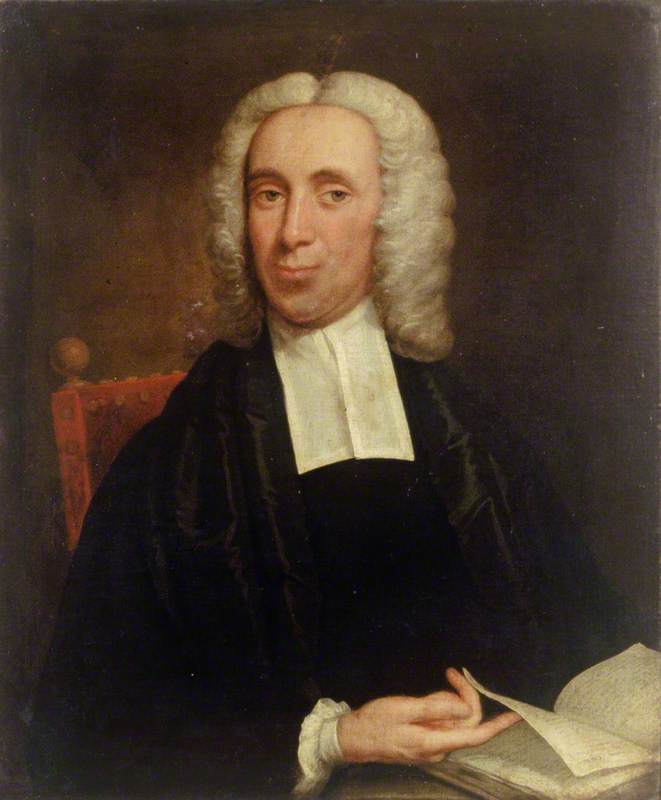 Watts was born in Southampton, England in 1674 and was brought up in the home of a committed religious Nonconformist; his father, also Isaac Watts, had been incarcerated twice for his views. Watts had a classical education at King Edward VI School, learning Latin, Greek, and Hebrew.Watts displayed a propensity for rhyme from an early age. He was once asked why he had his eyes open during prayers, to which he responded:A little mouse for want of stairs-ran up a rope to say its prayers.He received corporal punishment for this, to which he cried:O father, father, pity take And I will no more verses make.[1][2]Watts could not attend Oxford or Cambridge because he was a nonconformist and these universities were restricted to Anglicans—as were government positions at the time. He went to the Dissenting Academy at Stoke Newington in 1690. Much of the remainder of his life centred on that village, which is now part of Inner London.Following his education, Watts was called as pastor of a large independent chapel in London, Mark Lane Congregational Chapel, where he helped train preachers, despite his poor health. He held religious opinions that were more nondenominational or ecumenical than was common for a nonconformist Congregationalist.
 He had a greater interest in promoting education and scholarship than preaching for any particular sect. Watts took work as a private tutor and lived with the Nonconformist Hartopp family at Fleetwood House on Church Street in Stoke Newington. Through them, he became acquainted with their immediate neighbours Sir Thomas Abney and Lady Mary. He eventually lived for a total of 36 years in the Abney household, most of the time at Abney House, their second residence. (Lady Mary had inherited the manor of Stoke Newington in 1701 from her late brother Thomas Gunston.)On the death of Sir Thomas Abney in 1722, his widow Lady Mary and her unmarried daughter Elizabeth moved all her household to Abney House from Hertfordshire, and she invited Watts to continue with them. He particularly enjoyed the grounds at Abney Park, which Lady Mary planted with two elm walks leading down to an island heronry in the Hackney Brook, and he often sought inspiration there for the many books and hymns that he wrote.Watts lived at Abney Hall in Stoke Newington until his death in 1748; he was buried in Bunhill Fields. He left an extensive legacy of hymns, treatises, educational works, and essays. His work was influential amongst Nonconformist independents and religious revivalists of the 18th century, such as Philip Doddridge, who dedicated his best-known work to Watts.


