Category: The Lord Jesus
Gods love through Christ
The Great Physician
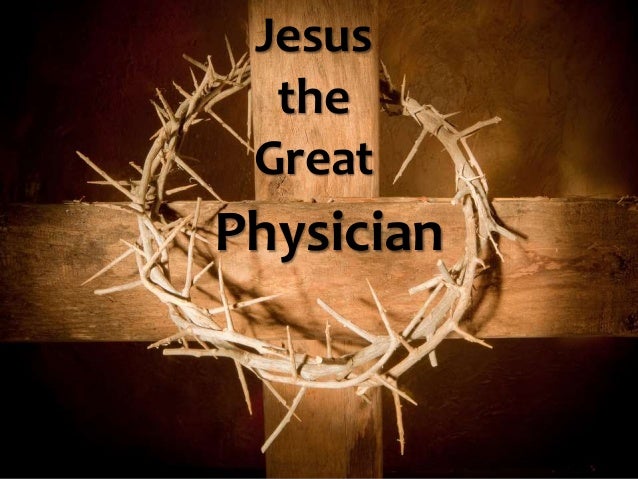
Luke 4:23 23 Jesus said to them, “Surely you will quote this proverb to me: ‘Physician, heal yourself!’ And you will tell me, ‘Do here in your hometown what we have heard that you did in Capernaum.'”
When we are ill or have to attend our GP about something we depend on him to prescribe the right medicine along with the right advice and it is like wise if we have to see a consultant at outpatients at our local hospital. The same applies if we are unfortunate enough to land in hospital for a few days or weeks we have to put our trust in the doctor and nurses looking after us.
It goes without saying that the greatest Physician of all time was Jesus himself and how he performed all those miracles such as ‘making the blind man see & the lame man walk’ etc
Which book?
The Lord’s Goodness and unfailing Love
Psalm 23 New Living Translation
A psalm of David.
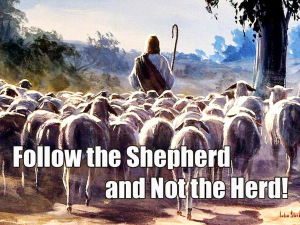
1 The Lord is my shepherd;
I have all that I need.
2 He lets me rest in green meadows;
he leads me beside peaceful streams.
3 He renews my strength.
He guides me along right paths,
bringing honour to his name.
4 Even when I walk
through the darkest valley,[a]
I will not be afraid,
for you are close beside me.
Your rod and your staff
protect and comfort me.
5 You prepare a feast for me
in the presence of my enemies.
You honor me by anointing my head with oil.
My cup overflows with blessings.
6 Surely your goodness and unfailing love will pursue me
all the days of my life,
and I will live in the house of the Lord
forever.
I feel there’s only one video that can go with this popular Psalm and that is Stuart Townend’s Song of the Psalm.
Light of the World
One of my favourite Salvation Army Band pieces is called ‘The Light of the World’ writtten and composed by Dean Goffin. I suppose one of the reasons I like this piece is the main hymn/theme going through it which is O Jesus, thou art standing. You will also hear the chorus Behold me standing at the door come in the piece and if you listen carefully you will hear the bottom end of the band emphasise the knocking.
Holmun Hunt also painted a picture of Jesus sanding outside a door knocking and I believe this can be seen in St Paul’s Cathedral, London.

O Jesus, thou art standing,
outside the fast closed door,
in lowly patience waiting
to pass the threshold o’er:
shame on us, Christian brothers,
his Name and sign who bear,
O shame, thrice shame upon us,
to keep him standing there!
O Jesus, thou art knocking;
and lo, that hand is scarred,
and thorns thy brow encircle,
and tears thy face have marred:
O love that passeth knowledge,
so patiently to wait!
O sin that hath no equal,
so fast to bar the gate!
O Jesus, thou art pleading
in accents meek and low,
“I died for you, my children,
and will you treat me so?”
O Lord, with shame and sorrow
we open now the door;
dear Savior, enter, enter,
and leave us never more.
I always watch my videos before putting them up and I had seen many videos of the Light of the World but not this one and I got to admit i was moved to tears.
Endoscopy
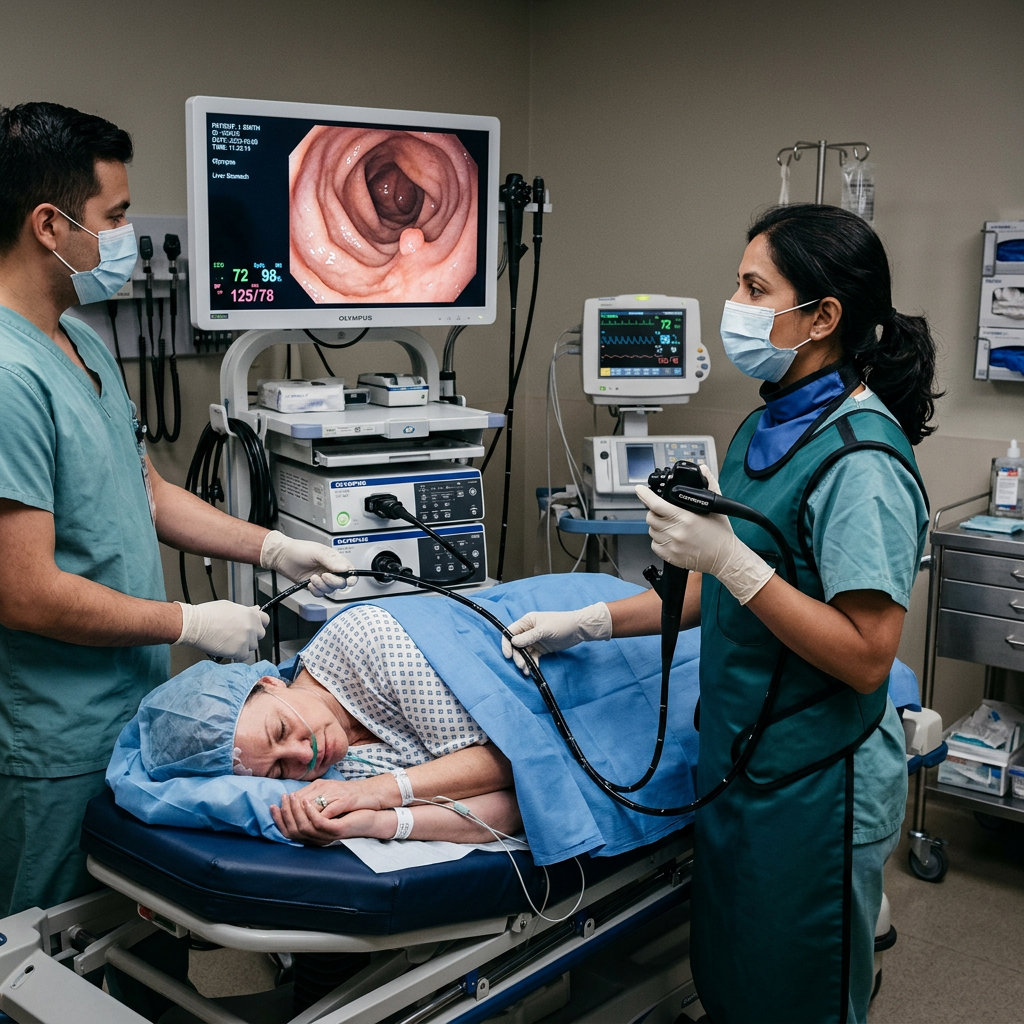
An endoscopy is a medical test that lets doctors look inside your body using a thin, flexible tube with a camera on the end, called an endoscope. It’s used to investigate symptoms, diagnose conditions, and sometimes even treat problems without surgery.
🩺 What an endoscopy does (in simple terms)
- A long, thin tube with a light and camera is gently passed into the body through a natural opening (mouth, nose, or bottom)
- The camera sends live images to a screen so the doctor can see what’s going on inside
- Tools can also be passed through the tube to take biopsies, stop bleeding, or remove small growths
Harvard Health
Credible health information source
Upper endoscopy (esophagogastroduodenoscopy or EGD)
This test inspects your esophagus, stomach, and the first section of intestine (the duodenum) using an endoscope. An upper endoscopy allows the doctor to explore the cause of such symptoms as difficulty swallowing, abdominal pain, vomiting up blood, or passing blood in the stool. It can also diagnose irritation, ulcers, and cancers of the lining of the esophagus and stomach. During this type of endoscopy, the doctor can also take biopsy samples of tissue.See more
🔍 What it’s used for
According to the NHS, endoscopy is used to look inside areas such as the oesophagus, stomach, bowel, bladder, womb, lungs, and more. It helps diagnose things like:
- Difficulty swallowing
- Stomach pain or indigestion
- Bleeding
- Anaemia
- Suspected cancer
🧪 Common types of endoscopy
Different names are used depending on the part of the body being examined:
- Gastroscopy / Upper endoscopy (EGD) – through the mouth to look at the oesophagus, stomach, and upper small intestine
- Colonoscopy – through the bottom to look at the large bowel
- Bronchoscopy – into the lungs
- Cystoscopy – into the bladder
- Hysteroscopy – into the womb
⏱️ How long it takes
Most endoscopies take 30 minutes to 2 hours, depending on the type.
😌 Does it hurt?
You’re usually given sedation or local anaesthetic, so you shouldn’t feel pain—maybe just pressure or mild discomfort.
If you want, I can also explain:
- The difference between endoscopy and colonoscopy
- What happens before or after the procedure
- What type you might need based on symptoms
Would you like a simple explanation, or more detail?
Lydia Baxter
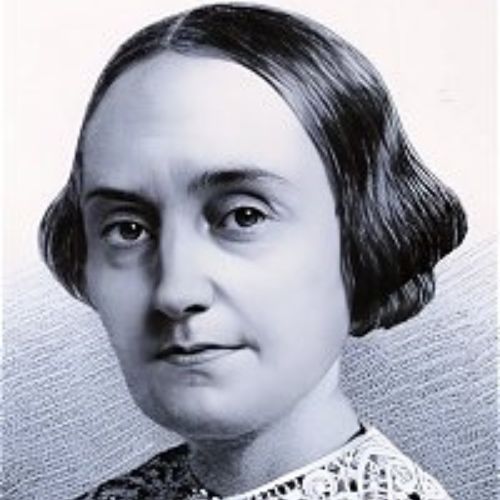
Lydia Baxter (1809–1874) was an American poet and hymnwriter, best remembered for deeply devotional hymns that became staples of 19th‑century Sunday School and evangelistic movements.
Who She Was
- Born: Lydia Odell, 2 September 1809, Petersburgh, New York
- Died: 23 January 1874, New York City
- Affiliation: Baptist
- Spouse: Col. John C. Baxter
She became a Christian at a young age under the ministry of Rev. Eber Tucker, a Baptist missionary. Her conversion, along with her sister’s, helped lead to the formation of a Baptist church in her hometown.
After marriage she moved to New York City, where her home became a gathering place for ministers, musicians, and writers—despite her being bedridden for nearly 30 years due to chronic illness.
Her Hymn Writing
Lydia Baxter wrote many hymns for:
- Baptist Sunday School Unions
- Evangelistic services
- Annual hymn collections in New York churches
Her writing is marked by:
- Simplicity
- Emotional warmth
- Strong devotional focus on Jesus’ name, comfort, and hope
Most Famous Hymns
1. “Take the Name of Jesus with You” (1870)
Her best‑known hymn today, written for composer W. H. Doane. It reflects her personal reliance on the name of Jesus as a source of comfort during illness.
2. “There Is a Gate That Stands Ajar” (c. 1872)
Written for S. J. Vail, later popularised by Philip Bliss and Ira Sankey. It became widely sung in the U.S., England, and Scotland.
3. “The Gate Ajar for Me”
Another widely‑loved hymn, influential in the early ministry of Ira D. Sankey.
Other notable hymns include:
- One by One We Cross the River
- In the Fadeless Springtime
- Cast Thy Net Again, My Brother
Publications
- Gems by the Wayside (1855) — a collection of religious poetry
Legacy
Despite lifelong suffering, Lydia Baxter’s hymns radiate hope, patience, and confidence in Christ. Her work became central to the Moody–Sankey revival era and remains beloved in many hymnals today.

